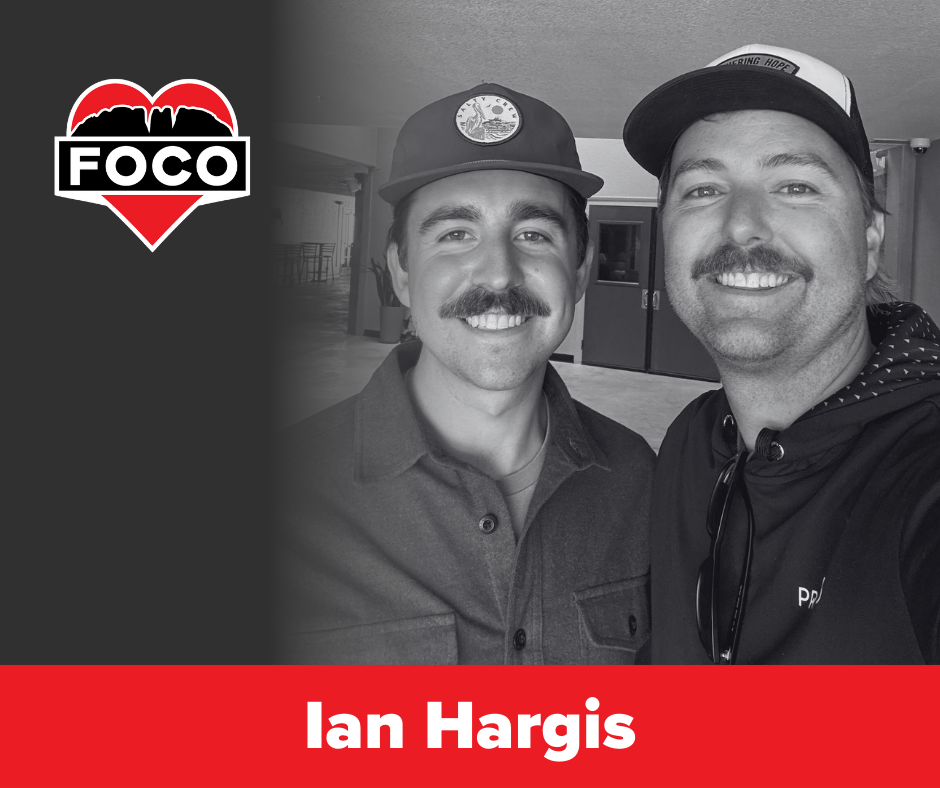

*Jeff’s audio isn't perfect on this episode, but the conversation with Ian is GOLD! Thanks for your patience as we improve.
Here's a fun way you can support neighbors in need while bidding on amazing rewards! Introducing foco.gives, a charity auction with a twist! Every bid is a donation to Love FoCo… a new resource center that will serve 1,500 families each month. Browse unique auction items, place your bid, and earn FREE bids along the way! Whether you win or not, you're making a real difference. So visit foco.gives today, where every bid builds hope.
Ian Hargis is the Director of Young Life Capernaum in Fort Collins, Colorado, a ministry that serves youth and young adults with disabilities through friendship and inclusive community. Ian's journey from a single semester at CSU to leading this transformative work has shaped the last decade of his life. Outside of his professional calling, Ian is a new dad, an avid runner, and someone who seeks to remain interruptible for those who need him most.
How can communities foster true belonging for individuals with disabilities that benefits everyone involved?
According to Ian Hargis, who directs Young Life Capernaum in Fort Collins, it begins with relationships rooted in mutual transformation. Through years of direct care, caregiving, working in special education classrooms, and serving in various roles across the disability community, Ian has learned that his friends with disabilities are not just recipients of help—they are leaders in vulnerability, authenticity, and joy.
On this episode of The Love FoCo Show, Jeff Faust welcomes Ian Hargis for a powerful conversation about inclusion, friendship, and faith in action. Ian shares his unexpected journey from an 18-year-old following a girl to CSU, through financial hardship and a divine calling, to leading a ministry that serves 120+ families in Northern Colorado.
Discover how Capernaum creates belonging through friendship, integrates students with disabilities into mainstream Young Life programs, and supports entire family systems in ways that transform everyone involved. Ian discusses the power of vulnerability, the importance of being interruptible, the neuroscience behind inclusive programming, and how his friends with disabilities have been his greatest teachers.
Learn about summer camps at Crooked Creek Ranch, and how Capernaum fills critical gaps between schools, state agencies, and faith communities in the Northern Colorado disability community. Whether you're interested in volunteering, supporting this vital work financially, learning about inclusive practices, or simply discovering how to love your neighbors better, this episode offers valuable insights and practical wisdom for loving Fort Collins—and everyone in it—one life at a time.
Narrator: This is the Love Foco Show.
Ian Hargis: I have a student with a disability who's stimming and dancing and clicking and clapping and interrupting the talk all the time, but when the leadership of that room welcomes that person in and allows them to be sometimes offensive themselves, then I'm a high school student and we see people they would stand up and they would interrupt the talk and be like, you just said the word faith again? What does that word actually mean? And we were watching that our friends with disabilities were leading with their vulnerability and their peers were like, oh, if it's safe for them to be here, then maybe I can be here.
Narrator: Welcome to the Love Foco Show. Our podcast highlights the incredible people who make Fort Collins the place we're proud to call home. Each week, your host, Jeff Baust, sits down with local leaders, community champions, and change makers to share their stories, what they love about our city, and how they're helping it thrive. So whether you're out on the trail, at a brewery, or walking through Old Town, thanks for tuning in.
Jeff Faust: Hey, everyone. Jeff Faust here, your host for the Love Foco Podcast. Every episode, we sit down with business owners and entrepreneurs, nonprofit leaders, influencers, and other amazing humans who are making a difference in and around Fort Collins. It doesn't matter if they're selling, serving, building, brewing, or anything in between. We hope these conversations will inspire you to get involved, share your own story, and make a difference by loving our city one life at a time.
Today, we're sitting down with Ian Hargis from Capernaum Ministries, which is an extension of young life right here in Fort Collins. And he does incredible work with kids and young adults in our community with disabilities. Ian is an incredible leader who's well thought out and filled with compassion. He's a runner, a new dad, a caring neighbor, and has a unique ability to see beauty in everyone he meets. Ian's story and his service to our city will inspire you to be a better person. I know it did to me, and I can't wait to share this conversation with all of you.
Narrator: Hey, listeners. Before we start today's episode, I want to tell you about a fun way you can support neighbors in need while bidding on amazing rewards. What if you could support neighbors in need while bidding on amazing rewards? Introducing foco.gives, a charity auction with a twist. Every bid is a donation to Love Foco, a new resource center that will serve 1,500 families each month.
Browse unique auction items, place your bid, and earn free bids along the way. Whether you win or not, you're making a real difference. So visit foco.gives today where every bid builds hope.
Jeff Faust: Ian, thank you so much for joining me for this conversation, this interview on our podcast. Like, all week long, I have been looking forward to this conversation with you. I've been watching your work kind of from a distance. I've been proximate to your work and been so impressed and inspired. And so I'm thrilled that you're gonna be able to share time with our audience and just share more of your story and what you're doing in our city.
Plus bonus, I mean, one can see us right now, but we have the best mustaches
Speaker 3: on the podcast.
Ian Hargis: Oh, hands down.
Jeff Faust: I mean, no one else has had a mustache yet. So we're we're one zero one.
Speaker 3: It's a
Ian Hargis: pretty small pool.
Jeff Faust: I I've got one and you've got a killer mic. Yes. In some You inspired me to grow my mustache.
Ian Hargis: I'm honored.
Jeff Faust: And so
Ian Hargis: What an honor.
Jeff Faust: It is great that you're here and you know this podcast is dedicated to really helping tell people stories who are making a difference our community, who are loving our city one life at a time, is the tagline for Love FoCo. You are doing that. I can't wait to get into that story
Ian Hargis: Yeah.
Jeff Faust: And have you share that with our our community. But we start every podcast the same way. I just wanna hear like what is your Fort Collins origin story? How did you land in this lovely town? And and tell me like where you came from and how you how you got here.
Ian Hargis: Totally. Yeah. Thank you for having me on the podcast. I'm excited. It's my first podcast. I've never really been on one.
So, yeah, I actually this fall have been in Fort Collins for ten years now. And I somewhat classic came up here for CSU. I was gonna be a student. And I followed a girl that I had a crush on in high school and
Jeff Faust: I know a lot of stories to you.
Speaker 3: Yeah. I know. That's a whole
Ian Hargis: lot of I know. Totally. So I applied to one school, CSU. They accepted me, thankfully, and I didn't have we didn't have lots of money growing up, and so I knew that I wasn't gonna have money for college, but we were trying it out. As an 18 year old, I figured I could get all the debt and pay it back later.
And the girl actually paid my registration fees, which is kinda funny. So got up here and, I was really worried that I was going to be swept up into a partying scene where I was doing things that I wasn't excited about doing or that I was nervous about. And so I was like, I need to find some people that love Jesus in in this town and and got connected pretty quickly with Young Life College and I was a pastor's kid growing up and so I was around the church my whole life, but the way that they talked about God when I met them was, like, this relationship that they were excited to be a part of, a participant in, rather than this scary stepfather god, “he's gonna come home and get you” type thing. Was like, I was spending time with my god and that blew me away. And so I I just came to everything.
Jeff Faust: No longer like this theistic observation. Right?
Speaker 3: Yes.
Jeff Faust: Maybe there's a god out there. I can learn something about him.
Ian Hargis: Yep. Stay in line and you'll be okay.
Jeff Faust: Right.
Ian Hargis: Yeah. So and and it was like this vibrant like friendship but also there is this respect and and so I was really intrigued by the community here, and that was back in the day when Jason Swain, who pastors at Two Rivers, he was also helping with Young Life College at the time, and he was a a big part of of helping me feel welcome in in some places that I just I needed I was far away from home. I'm from Littleton, so not that far. But just a a good place for someone to speak into my into my life in a positive way and really grateful for that.
Jeff Faust: So you said you said a lot of things. I have like I have like five Yes. Six other questions
Speaker 3: Yeah.
Jeff Faust: Running through my head right now. Is the girl just going to remain a girl?
Speaker 3: Does the
Jeff Faust: girl become a fiance, become a wife, or is that like somewhat she can just remain a girl and it's just
Ian Hargis: She was a girl that I haven't talked to since probably week two of CSU. Yes. Yes. So, yeah,
Speaker 3: she was
Ian Hargis: a girl.
Jeff Faust: Every girl story you know. You never know. Totally. Okay. So, she can just remain anonymous girl.
Ian Hargis: Yes. Not my wife Alyssa. Yes. Okay. That's right. Yeah.
Jeff Faust: That's what I was gonna ask.
Jeff Faust: And I know you're married. Yeah. And so not Alyssa. Yes. But you know the Lord works in mysterious ways.
Ian Hargis: He does.
Speaker 3: Sure does. Yes.
Jeff Faust: You also mentioned a couple other things. One, grew up in Littleton.
Speaker 3: Yep.
Jeff Faust: But you grew up a pastor's kid. Yes. I mean, that's kind of
Ian Hargis: Yeah.
Jeff Faust: I've met some pastor's kids. Mhmm. I'm a pastor. Now I have children of my own. Yep.
I've heard a lot of different stories about being a pastor and some of them are amazing and wonderful, some of them are challenging. How do you think that without going to maybe into all the detail, but like how do you think that shaped you?
Speaker 3: Yeah.
Jeff Faust: As a young Yeah. Boy and then a young man as and as a follower of of God?
Ian Hargis: Yeah. Oh, great question. I think watching my dad do ministry was one of the coolest things, like, of the memories of watching how he would take kids repelling. He's a youth pastor.
Jeff Faust: Okay.
Ian Hargis: He'd take them repelling, and he would say, you don't know that the rope can hold you until you put your full weight on it. Yeah. That's like following Jesus. Yes. Right.
Yeah. So I just watched him take all these things in everyday adventurous life and, show how God was very much a part of all those things and watching transformation happen both in his life and the in the the helpers like the leaders lives, and the kids lives even from a young age. Was like, cannot wait to be in my dad's youth group. I can't wait to maybe do that one day and and I definitely think that is is that has been a big inspiration.
Jeff Faust: And also it helps you in Colorado. So like I grew up in the Midwest. Yes. Youth pastors don't get to like hike mountains and repel. Correct. They like corn Yes. They're like let me tell you about Exactly.
Jeff Faust: And the organization of farm you know, I I wasn't in church when I was younger but
Ian Hargis: Totally.
Jeff Faust: They're not going, you know, mountain climbing and repelling but they're… it helps. So you have like this wonderful landscape your backdrop that you can be inspired by as well.
Ian Hargis: But It sure did. Yeah. Yeah. I would say it informs a lot of my ministry now in for better or worse, like, you know, he's he did a really good job as a dad and as a pastor. And and it is I we just had a little baby nine weeks ago.
Jeff Faust: Congratulations.
Ian Hargis: Thank you, little baby boy.
Jeff Faust: So this is
Ian Hargis: I mean Real fresh.
Jeff Faust: Now off paternity leave.
Ian Hargis: Yes. That's right. Yeah. Thanks for it's good to be back. But yeah, it it definitely having a son of my own, there are some things I'm hoping to learn from and he and I talk about it all the time. We have a good relationship.
But definitely, yeah, the the ministry background has definitely informed kinda what I do today.
Jeff Faust: Yeah. Well, it's interesting too because as a we're we're both married. We both have kids now. We're both in ministry as well.
Ian Hargis: Yep.
Jeff Faust: There's this really interesting idea to where where in reality ministries never like finished. Right. There's always and there are other jobs like this in the world too. Yep. But there are some jobs that are clearly like when you clock out you're kind of finished.
Ian Hargis: Yep.
Jeff Faust: Ministry doesn't always lend itself to that way and so learning how to live a balanced life, how to pour in to all these different lives, but also not neglect your own family at the same time. Mean, that's not
Ian Hargis: Yeah.
Jeff Faust: That is a that's a challenge that I don't think everyone always realizes. Then in some ways you're at the beginning of that journey.
Ian Hargis: Yes.
Jeff Faust: And so it'll be it'll be fun to keep having conversations with you about Yes. Like how is this looking now? Kids grow fast and they have different seasons of life. Mhmm.
Ian Hargis: Yeah. My hope is to not be so good at being a minister that I am not a good husband and not not a good dad. I'm hoping to, yeah, strike a balance where my job costs my family sometimes.
Jeff Faust: Yep.
Ian Hargis: And my family costs my job. Probably more times. We'll
Jeff Faust: see. I have a I have a good friend of mine, Matt Farrand, who's on who's on the staff at Vineyard Church of the Rockies here And in Fort he always talks about how that balance is like walking a tightrope. Mhmm. Sometimes you're gonna lean one way.
Ian Hargis: Yeah.
Jeff Faust: And if you're not careful, you'll lean too far. Yeah. So you need to lean the other way and sometimes but the idea is to keep moving forward. Yeah. Yeah.
But you know, it's really funny. We we can learn these lessons through others or we can learn them ourselves.
Ian Hargis: Mhmm.
Jeff Faust: So I'll share this unsolicited piece of advice with you because my wife, you know, I learned the lesson the hard way. So in our twenties, we had a startup nonprofit in Kansas City. We were working with gang members in the inner city and and spending a of time in that community. And we were having children and we had two children at the time. We had a a third on the way.
And my wife one night looked me dead in the eyes. And it was just one of those moments where your your wife is speaking to you. But it's also, you know, I took it as God is speaking to me through my wife right now. Her name is Natalie.
Natalie looked at me and she goes, Jeff, there will always be someone to pastor. You have to come home. And I remember that just hit me like a gut punch and I was like my wife is just speaking truth right now. Yeah. And and I think I think it needed to be her.
I think it needed to be her telling me that and I repented and I I just said you're right and I can get caught up in work identity and performance identity and and and sometimes my family hasn't just sacrificed they've suffered
Ian Hargis: Yes.
Jeff Faust: Because of that.
Ian Hargis: Yes.
Jeff Faust: And sometimes, you know, there there are times that that I I am pulled away in a unique kind of moment. Yep. But when those stack on top of each other for any length of time, it's not healthy and so
Ian Hargis: Totally.
Jeff Faust: Just needed her to speak to me.
Ian Hargis: Oh, that's so good. I'm glad that it's so helpful to have someone my wife does the same thing to speak something that maybe I don't wanna hear but needed to. Yep. That's really that's really rich.
Jeff Faust: Yeah. And like some random person I have no relationship with, I don't know. I mean, maybe it lands, maybe it's Yeah. Maybe I get offended. Right.
But when it's someone I deeply care about and and just could hear it in that moment is really
Ian Hargis: Yeah. That's huge.
Jeff Faust: Okay. So back to your story because you also said, so you grew up as a pastoral skater and then you're like coming to college and I heard an inkling. I I don't, you know, wanna put my words into you, but I heard an inkling of like, I think you said, I don't wanna just like start partying and go like Yeah. Was there some kind of moment in your life where you started to drift from God or or the fear that that might have, like where did that phrase come from when you said that? What did that mean for you?
Ian Hargis: Yeah. I I probably wouldn't have had good words for it as an 18 year old, and more and more into my adult life, I've gotten better language for it. But, I think that knowing where we come from is is important to, yeah, just kinda learn some things of of what our ancestors are like, what what kind of lives they lived, what relationships they had, and Yep. And as I've done that more and more, learning both the the fun stories and the, oh, that's good to know, but also the the things they struggled with. Yeah.
And we talk about the field of epigenetics is really taking getting some steam these days, which is really great. Sometimes in the church, call it generational sin. Yep. That's just something I Yes. Like that.
Yes. Exactly. So that has been something I've felt my whole life because there there have been some pretty significant generational wounds that have affected the lives of people in my family on both sides for a long time. And I have felt that my whole life and have gotten better language for it and learn more about it. But I just was really scared of what would happen if I kind of always viewed myself when I was younger as there's some kind of monster sounds intense, but I was more about protecting others for myself and I was worried if I did drugs or alcohol or anything.
It it was not so much about like breaking the rules. It was like, what is gonna happen if I am not in control of myself? And I've really, you know, approached that from a more curious place as I've gotten older, but that was what I was responding to was just fear.
Jeff Faust: Right. Yeah. Yeah. Well, and when there are like real stories
Ian Hargis: Yeah.
Jeff Faust: You know, I mean, it it can bring it home in a little bit of a different way.
Ian Hargis: Totally. Yeah.
Jeff Faust: Okay. So let's let's fast forward a little bit then. So you're 18.
Ian Hargis: Yeah.
Jeff Faust: You you land at CSU. Yep. Sounds like you followed a girl who shall remain
Ian Hargis: Yes. Yes.
Jeff Faust: Up here. And and like did you jump head into like what did you start studying?
Ian Hargis: Yeah.
Jeff Faust: You did you just I rework one of those kids like this is my major and I'm sticking to it. Yeah. Like what were what was your first kind of landing in Collins like at CSU?
Ian Hargis: Yeah. So I was really interested in physical therapy. I I did a bunch in high school. I had a bone disorder growing up and so I did a lot of physical therapy and and spent a lot of time in in kind of sports medicine because I was an athlete trying to be an athlete. And so that was what I was gonna do.
My first semester I got there and they're like, oh, so you're pre med. Right? And I was like, pre what are you talking about? And they're like, have to do med school after this to be a PT. I was like, oh, no, I can't even afford normal school.
And so I was in the process of switching my focus and, CSU after first semester, I hadn't paid them anything. Like, no money from me or my family because we couldn't afford And just this girl had paid my registration fees and they were like, yeah, actually you have to pay as you go. And 18 year old me was like, what? And so I always joke, depends on who you ask. Did they kick me out?
Did I leave? Did I drop out? Didn't feel like much of a choice. It was like you pay us these thousands of dollars or Yes. Or you leave.
And I was like, well, I'm gonna have to leave then. So I made it one semester.
Jeff Faust: Nice.
Ian Hargis: And that was devastating to me as an 18 year old. My identity is like, who am I? Where do I fit in the world? What am I? Like, what's my purpose?
And so I I went home, to my parents house in in Littleton and just pouted for a long time. I was like, what is going on? Like, my life is being ruined. I just found all these awesome people and now I can't go back. And basically, long story short, it it felt like the Lord, there's this thought that came into my mind of, well, it was through a song by Jen Johnson called “In Over My Head” and it just this thought as I was listening to this song, you never taste a miracle if you never leave the boat in reference to Peter walking on the water and and it was almost like this invitation to what do you say? You wanna go on an adventure. Yep. And it was the scariest thing I had ever done in my life because I was choosing it. A lot of scary things had happened to me, but I was choosing this one.
And so I moved back to Fort Collins. Not as a student, worried that my friends would see me as a loser, but I slept on my small group leader’s couch for a couple weeks. Yeah. And then I got placed as a young life leader.
Jeff Faust: That’s like every 20 year old dude’s situation Yes. Almost at least one
Ian Hargis: Totally. So that was one of my times. And
Ian Hargis: Right. Yeah. We won't get into that. But, I became a volunteer leader with Young Life up here.
Because I had done the training that first semester and got placed on the Capernaum team, which we can get into in a second, but that was not my first choice. I would not have chosen Capernaum for myself. And within that first week of being placed, I got a job, a house to stay at, and a car for a dollar. Yes. A dollar from my friend. But it was still a car.
Jeff Faust: Some good people in your
Ian Hargis: Yeah.
Jeff Faust: Girl paid you registration.
Ian Hargis: Yes. Right?
Jeff Faust: And gave you all this stuff.
Ian Hargis: Wouldn't be here without them. That's right. We need we need people. Yeah, And, I just felt like the Lord was like, this is where I want you. Yeah.
And then not long after that, I just had this moment where I was up in the middle of the night. Still complaining about like, yeah, but what about PT though? Like, that's the thing. It felt like there was again, the clouds didn't part and God wasn't like, Ian, here's my plan for it. But I just had this the best way I can put it is like this feeling in my bones that I needed to release what I thought I wanted and just leave my hand open for a little bit. And as I was doing that, it took a couple hours, like honestly, of just sitting there in the dark in my new apartment, basement apartment, helping a family with a a man with disabilities. And it just felt like the disability community in Northern Colorado was what the Lord was putting back into my hand of, this is what I'm asking you to do.
And I said out loud, Lord, I want what you want. And since then, that was in February 2016. Since then, have not looked back. I've just been looking looking for what God is doing in the midst of the disability community and then have just been serving in various roles in different institutions in the disability community since then.
Jeff Faust: Yep. Well, and I wanna talk a lot about Capernaum and I wanna talk about your involvement in Young Life. That that's why I initially wanna do this. But I I I do find myself a little curious about a couple of things. One, it's really interesting hearing your story. Yes. At the beginning of this conversation, we were talking about how your faith went from like some theistic observation mode to like Yeah. Participatory, relational Yep.
Kind of times we've got. I I don't know that you get to like the stuff you're talking about where like I just knew in my bones or it seemed like God just kept opening these door like if you stay in observation mode. Yep. Learning facts about this God that that could be out there. Yes.
So that's a really interesting part of your story.
Ian Hargis: Yeah.
Jeff Faust: How did those dots get connected for you? I mean, it sounded to me like Young Life college and this community started to help make this more relational for you.
Ian Hargis: Yeah.
Jeff Faust: Probably your family and your upbringing. I mean, like, what were some of the things that really lent yourself to being receptive to a personal
Ian Hargis: Yeah.
Jeff Faust: Relationship with this this god that you follow?
Ian Hargis: Yeah. I mean, being a pastor's kid, service was was such an important thing. You are you are a servant, servant leadership, and any of those kind of buzzwords, that was a big part of growing up. And so I probably started with this is just what I do. I serve.
It wasn't about like, I'm gonna give my life away as an act of obedience or anything like that. It it it started, and I think God can work with that. Started with this like, well, my friends are doing it. And this is I'm used to this. I grew up doing this.
So I'm gonna do this. And fortunately, because God is really good at his job, he, brought along a vehicle to pursue this, a vehicle that I call Young Life. That's that's how I talk about it sometimes where he's like, this is how I'm gonna ask you to partner with me. Yep. And, getting in that vehicle brought me alongside other people and other things that I never would have run into had I just been like, yeah, God, I agree you are who you say you are. And, and I go to church and I do the things.
Our friends in the East know this much better than we do here in the West, but they they think about to do is to know so much. And and learning is more experiential than, like, discovery based rather than, explanation. And, and so I I did some things that that kinda changed some things in me as I went, and I was like, wow. And then I think of Peter's words where he says, Lord, where else would I go? You have the words of eternal life. And so I think I
Jeff Faust: I think of your dad's words of like, hey, you got I mean, you gotta get off the the cliff here. I mean, you gotta like lean into this rope. You gotta like, it is not going to happen.
Ian Hargis: Yeah.
Jeff Faust: You can learn a lot about repelling from a book.
Ian Hargis: Yes.
Jeff Faust: But eventually, you have to like Yeah. Let it hold your weight. Yes. And you have to start moving.
Ian Hargis: You'll never know the strength of the rope until you are it is keeping you from your death.
Jeff Faust: Right.
Ian Hargis: Totally.
Jeff Faust: Oh, that's good stuff. And and you know, it seems like community has been a big part. I mean, it
Ian Hargis: Totally.
Jeff Faust: We live in an amazing city.
Ian Hargis: Mhmm. We really do.
Jeff Faust: But this city, I keep running into, like all these really cool little things. Yeah. I was in old town the other day. Was like, didn't even know there's a water feature in a median. Yeah. Crossing College on I mean, this is like, there's fascinating little beautiful intricacies of our city. Yeah. But the people
Ian Hargis: Yeah.
Jeff Faust: Make this place come alive.
Ian Hargis: Yes.
Jeff Faust: And you were surrounded with some key people Yep. When you first moved here
Ian Hargis: Yep.
Jeff Faust: That invited you in to an adventure with God but also with other humans
Ian Hargis: Yep.
Jeff Faust: In a way that seems like it really catalyzed some of this journey for you.
Ian Hargis: Yes. Yes. Yeah. The people make the place, we say often and and the people in a really formative time and a vulnerable time of my life where I was like, I have to decide who I am and and I have to this is, you know, I have to figure out my future. Yeah.
Some really helpful people came around me and invited me into something. And the the longer I did that and the more I have done that over the years, the more I have watched myself become someone that I'm grateful for. And I couldn't have done that if I had learned about it through hearing about it or any like, it has been along the way I have become someone that I'm grateful for and I couldn't have done that without the people that that carried me there.
Jeff Faust: Right. Yep. Well, I know you now as the leader of Capernaum.
Ian Hargis: Yeah.
Jeff Faust: So I'd love to talk about Young Life. I'd love for you to share about what's happening there. As as kind of a segue into that, I'm curious because you kind of have this positional title now
Ian Hargis: Yeah.
Jeff Faust: Leader of Capernaum is that…
Ian Hargis: Capernaum director, yes.
Jeff Faust: Capernaum director. When did you first did you like stumble into leadership or was there a moment when you were younger where you're like noticed I'm leading something. I don't even, you know, even before Capernaum, like
Ian Hargis: Yeah.
Jeff Faust: Where did these, like, leadership qualities or characteristic kind of first emerge in your life?
Ian Hargis: Yeah. I think that's one of the complicated things about being a pastor's kid was from before I even had words probably, I always knew that how I behaved affected my dad's job and I was expected because he was in leadership, as a kid, I was always expected to be a leader of my peers.
Jeff Faust: Yeah. And Sometimes spoken, sometimes unspoken.
Ian Hargis: Yes. Yes. And so that was a constant thing from my childhood. And again, there are pros and cons to that. That's kind of a desirable trait, like someone who's been a leader for a long time, has lots of reps in it, and that's that's good.
And and I am grateful for those reps, and that that comfort of kind of, being a model and living in a fishbowl, as some people say. But then there's also a cost to it of feeling like I'm not able to take off this responsibility that I've had for as long as I can remember. And and so I would I would say it's a a big part there.
Jeff Faust: Probably a very different I mean, like so I'd only been to church a couple of times when I was younger.
Ian Hargis: Yeah.
Jeff Faust: One of the times, I got kicked out for body slamming a kid on a table.
Ian Hargis: Nice.
Jeff Faust: Like a young like a youth thing. I mean, I didn't even know it was a youth group at the time. So who invited me I'd body slam this kid on the table because we had a riff at school.
Ian Hargis: Okay.
Jeff Faust: And then I was never invited back again. You can imagine.
Ian Hargis: Yeah.
Jeff Faust: So, you know, you and I don't know. I mean, we get along now.
I don't know if we’d have gotten along.
Ian Hargis: Totally. Yeah. You would have been like, this guy's a loser. I was such
a goody two shoes. Oh, man. That's really good.
Jeff Faust: Well, so early on, the kind of spoken or unspoken
Ian Hargis: Yeah.
Jeff Faust: Expectations, you get plugged into young life, you start serving Yeah. And you get connected with some friends of disabilities and in that kind of community. And you think you even said just a few moments ago, wouldn't have been the thing I would have chosen. Yes. But it's kind of where I found myself.
Yep. So kinda take me from those early volunteering dates to
Ian Hargis: Yeah.
Jeff Faust: How director of Capernaum.
Ian Hargis: Yeah.
Jeff Faust: Which is like a thing that you're I mean, you're really leading this whole
Ian Hargis: Oh, I'm in my dream job.
Jeff Faust: Tell me about that journey. Then I wanna get I wanna, like, really zero in on Tell stuff that you're doing in our city to love our city really well.
Ian Hargis: Yeah.
Jeff Faust: But tell me, like, get me to the space where you're at today.
Ian Hargis: Totally. So if if you had asked me in the moment, in those first kind of three, four years out of college, working in various I had multiple jobs, multiple part time jobs. I was working at a middle school here in town for a couple years in the severe emotional disorder room. I worked as for an agency in town as a direct care professional is the technical term. Basically, in home support.
Yeah. I lived with a family for about four and a half years on and off of a guy who's a little bit older than me that has a disability. He's one of my dear friends, a brother to me, would even say. He was co-best man at my wedding. And so I kind of was bouncing around different roles.
But if you had asked me at the time, I would have just told you I am paying off what felt like insurmountable debt to CSU. And I I talked about that all the time. Like, I
Jeff Faust: Just pay as you go, but you were you did have one semester…
Ian Hargis: Yes. And once I was no longer a student, had to pay it back pretty soon. And so the loans and all those things, it was like, alright, you gotta pay it back. And so I was working my buns off trying to get everything paid back to them, but I also didn't know that I was being prepared. It probably wasn't until three years later that I was in a parent meeting for Capernaum sitting with some parents who feel like they have more resources than they know what to do with for their kid with a disability and, other parents that are like, I'm drowning.
I have no I don't even know which way is up right now. And sitting in that meeting, running that meeting and it was as if the Lord tapped me on the shoulder and was like, this is what it was all about. I had worked with the state funded agencies. I had done nonprofit things. I had worked with Capernaum, which is in the nonprofit Christian sector.
I had done I had been on staff at my church, helping with this. I had lived with people and seen upfront what happens when a young adult, when the services kind of run out and they kind of go off what we call the cliff, where it's like, so what is left for my son or daughter? And and so I had seen all these things and that really informed not even just like classroom information, but like we talked about, living it and doing it and being in a classroom at a middle school and watching someone have a really bad day and then learning from almost like, I can't believe you're treating the classroom this way or or you just said that or did that. And then over the years, all the time, the Lord, again, not through the clouds or anything. It just was this quiet thought in the back of my mind of does this sound familiar?
Because I gave a worksheet, it was torn up and given back to me and I'm like, yeah, didn't do this right and they have a really bad time and, have, you know, have an outburst and and I'm sitting there as the teacher being like, if you just listen to me, you wouldn't have been in this situation. And there's this voice in the back of my head of like, that sounds familiar. Like, I wonder if and it was kind of like, you are like your your friend here, but you're just you're just better at hiding. Like, they're struggling with the same thing that you're struggling with. Yep.
You're just better at hiding it. And who is better off in that situation is a good question there because he needs help and is getting it. And I'm struggling with the same stuff and yes. So so it really was me giving my life away in the direction of the disability community but as I was going I was being mentored by them. I was learning wow you and I are not so different And as I drew near to their vulnerability and their humanity and their the things that that, they really needed their support, they were leading me with their humility.
They were leading me with their vulnerability and drawing me near to myself, drawing me near to the Lord and it has changed me from the inside out and has equipped me.
Jeff Faust: This is the best nonprofit work, man. I'm like convinced. Oftentimes people think they're going somewhere to serve.
Ian Hargis: Yes.
Jeff Faust: Going somewhere to give back and those things can be true. It's a great way to get started. The best nonprofit work, the best kind of of servant leadership and care is mutually transformational.
Ian Hargis: Yes.
Jeff Faust: And oftentimes Yes. You are more transformed. Yep. Especially if you walk in with a humble heart and you're just like like and sometimes, you know, you gotta hit the wall a few times.
Ian Hargis: Totally.
Jeff Faust: You have to be shaped and sometimes chiseling.
Ian Hargis: Yes.
Jeff Faust: That comes with that. Yeah. I'm sure you had moments like that as well.
Ian Hargis: Oh, yes.
Jeff Faust: But don't you think it's true? Like, mean, it's the transformation is often Yeah. Internal and then it reinforms your life.
Ian Hargis: Yep.
Jeff Faust: Almost in an incredible way. And I know I've been gifted with that. Many people I've talked to in that space are like Yeah. Actually this was like my seminary.
Ian Hargis: Yes.
Jeff Faust: This is my grad school. This was my whatever it like I've been changed.
Ian Hargis: Yes. It has made me look back and if someone was like go back to 2015 and choose going into school for disability and and all of these things or do what you did. I would choose what I did every time. Yep. Not that school has nothing to offer.
I love learning and if a door opens down the road, will go through it. Yep. It just hasn't. And so I I am it's been a really valuable learning process. And I always say to my volunteers, a lot of them are college students who don't have experience with people with disabilities.
They expect this training like, alright, tell me what to do. Yeah. And I'm like, your friendship is your training. Because if I tell you this is oh, with people with autism, this is what you do. And then you're gonna meet someone who's autistic and they that doesn't work for them or they do or don't do the thing that I told you to look out for and then you feel whether that's ill equipped or betrayed or any of the things that it really I'm just like of course I'll give them a few pointers.
It's not like, yeah, go get them.
Jeff Faust: But I mean, the kids that don't fit the stereotypical boxes
Ian Hargis: Yes.
Jeff Faust: Aren't gonna fit the boxes.
Ian Hargis: Exactly. So don't give a box for them to fit into.
Jeff Faust: Yeah. That's not gonna work
Ian Hargis: that way. And sometimes, like, diagnosis is helpful of, hey, here are some things to look for, but we don't lead with that. That kinda comes in when necessary. And and I've found that as, yeah, my favorite form of both training, but I I just love watching my volunteers come in. Maybe whatever reason I'm ill equipped for this or I shouldn't even be here if someone just told me that I should be doing this or I'm here to help.
And watching as that becomes, I am, as I help you, you are helping me and we are actually becoming friends and there's a mutuality in it and a mutual respect rather than this, I rescued a puppy and it rescued me. It's it's different. It's it's like a you have become my friend and you have changed me. Yep. And I think Richard Rohr talks about that's the second level of vulnerability is I will let you change me.
And it's my favorite one of my favorite parts of my job to get to watch young people experience that. And a young person with a disability is their life is improved, but also a student without a disability, their life is improved as well.
Jeff Faust: You're shaping lives. You're shaping worldview. I mean, I I have to imagine young people who are operating under your leadership are being shaped in so many different ways. That's why I was I was so excited about this interview. Mhmm.
I do realize that we kind of buried the lede a little bit.
Ian Hargis: Yeah.
Jeff Faust: Yeah. So talk about your life which is great.
Ian Hargis: Totally.
Jeff Faust: but can you kind of summarize simply tell us what exactly like how would you kind of describe what it is you do?
Ian Hargis: Yeah.
Jeff Faust: And your role, your title and then just tell us, yeah, for a moment. I mean, we're catching it. Yeah. Working with kids
Ian Hargis: Yep.
Jeff Faust: Who have various different levels of disabilities and things. Mean, what does that mean? Yep. Yeah. So fill us in on that a little bit.
Ian Hargis: Totally. Yeah. So Young Life Capernaum, kinda starting 30,000 foot view, started in the eighties in California. It's the branch of Young Life that does ministry to and with people with disabilities. A guy named Nick Palermo started it out in, I think, Santa Barbara.
And he went into a high school and he saw some kids in the cafeteria that had disabilities and he was like, oh, wonder if anyone's asking them their name and becoming their friends. Because that's so much of what we do in young life and he started Capernaum back then. My boss Jodi Green started Capernaum here in Fort Collins in 2007 and I joined
Jeff Faust: Another amazing person.
Ian Hargis: Yes.
Jeff Faust: I will have to have her on.
Ian Hargis: I was gonna say that's a big recommendation totally. So she started it and then she was part of how I became a part of Capernaum and
Jeff Faust: And the listeners out there can you Yeah. Tell us why Capernaum? Where do you know I mean Yes. What's the history of that name?
Ian Hargis: Yes Totally.
Jeff Faust: And fill our listeners in on
Ian Hargis: Yeah. We we actually always joke. People in different places in the mission of young Life. They say Capernaum. They say Capernaum.
And it's kind of this like joking debate and they're like, which one is it? And really, I'm pretty sure it's Kefarnacum. And so all of us are equally wrong. And so my version of wrong, Capernaum is what I've chosen. Go to
Speaker 3: our eastern plans and tell us
Jeff Faust: like how actually should we go
Ian Hargis: Exactly. Exactly. And I probably butchered it even then but that was actually one of the it was pretty much the home base for Jesus' ministry back in the day and and it gets its name the ministry Capernaum gets its name from Mark two when Jesus is teaching in a house and four friends carry their friend on a mat and their friend can't walk and and they basically rip the roof off and lower their friend to Jesus' feet in the hopes that their friend can taste full life. Yeah. And that's that's kind of where Capernaum gets its name and and we as Capernaum leaders hope to do that, hope to both bring Jesus to our friends and sometimes bring our friends to the feet of Jesus and and we do that through the method of friendship.
That is everything we do. Relationship.
Jeff Faust: Bringing friends to Lord. Yes. Yes. It is like one of my favorite passages in the Bible. Yeah.
And partly because I didn't grow up in the church and
Ian Hargis: Yeah.
Jeff Faust: I I didn't get invited to many faith based things Mhmm. And stumbled into the Christian faith, you know, by God's grace when I was in college.
Ian Hargis: Yeah.
Jeff Faust: And it and immediately just felt like other people need to know about this.
Ian Hargis: Yeah.
Jeff Faust: I've been living in in this broken kind of
Ian Hargis: Yeah.
Jeff Faust: Like, facade forward type of life, and I'm finding real freedom in my relationship with Jesus. I've got to tell always about it. And so I I really resonate with that and I I've always loved that that is part of the inspiration behind this name. And if if you're listening to this and you don't read scripture, you've never read the bible. I mean, this is a this is a story Yeah.
To just go check out. Mark 2. Yep. Watch a little bit of the life of Jesus in action, but also watch a little bit of the people who are on proximity to Jesus Yeah. In action as well. And I I love that.
Ian Hargis: Yeah.
Jeff Faust: That's part of you guys' inspiration.
Ian Hargis: Totally. And a quick thing on that, if you go and read that story, notice how it's not just that man's legs who are healed. He's welcomed back into a community. He can go and have a job. His family welcomes him back. So it's it's this whole Life restoration. Yes. It's not just the medical healing. It is a restore restoring wholeness.
Jeff Faust: Yep.
Ian Hargis: So Yeah. Really good.
Jeff Faust: That is rich.
Ian Hargis: Yep.
Jeff Faust: Okay. So you're now so Capernaum Yes. And you you're kinda telling us eighties, nineties, that kind of and so you are finding yourself in this role
Ian Hargis: Yep.
Jeff Faust: Where as a branch of young life Yep. A faith-based nonprofit helping people find a life with God, but specifically working
Ian Hargis: Yep.
Jeff Faust: With friends and kids and and young adults Yep. Who have disabilities and then probably recruiting a bunch of people to help you do that too.
Ian Hargis: Yes.
Jeff Faust: So tell us a little bit about, know, what how are you working in our city?
What's your day to day like? Yep. What are those kind of programs and ministries and services look like? Fill me in on on some of that.
Ian Hargis: Yeah. So practically Capernaum, because Young Life as a global organization is a student based organization. And so we are tied to kind of our mission. Our target is students. And so we serve anyone from 12 to 22.
It's technically 21, but we kind of try to expand it as much as possible. But really, that's just because in the state of Colorado, services to students go until age 21. And so let's say I have a kid with a disability and they need a little bit extra help after high school. A transition program will help them until age 21. Yeah.
And then it's kind of like, alright. You are seen as an adult, and and then they're it's it's pretty much adult only programs after that. And so Capernaum is kind of from, age 12 when they are in sixth grade about to that kind of 21 drop off, and we try to do the summer camp after their 22nd birthday
Jeff Faust: Yep.
Ian Hargis: Just to make it like an even yeah. Yeah. It's it's one of the biggest, debates in both the mission of Capernaum, like, how do we serve families? Because we aim to serve the whole family unit. Not just, hey, we're gonna become friends with your your son or daughter, but also we have noticed that it it blesses the family. It blesses the brother, the sister, the parents. Some families are like, I need some babysitting. Can you take care of them? We would love to.
Hey, I want my kid to know Jesus. Great. We would love to. I don't even know what I want. Can you please take my kid?
Yep. All of those, we love to.
Jeff Faust: Our community. Right? I mean, for bringing friends.
Ian Hargis: Exactly. We Our kids can be kids.
Jeff Faust: Yeah. Build friendships.
Ian Hargis: Yes. Yeah. Yeah. So we serve 12 to 22 anyone with a disability that is cognitive or developmental in nature. And so kind of the distinction there is someone who's in a wheelchair but has no cognitive disability of any kind, they can go to a Young Life club, and that's not the target of what Copernum was made for.
But even then, that kind of gets fuzzy because one of the things that I've been really trying to implement up here since 2022 has been this more of a model of belonging. And what I mean by belonging is we are not us without you. And for years, I had been doing this, both ministry and other programs where there was a place for people with disabilities to go, which has not always been the case. And so that is a huge step forward from historically where we've been as people. So that's really good and that's not I'm not bashing on that.
But I did feel like there was just something more. I was like, I'm tasting this bubble of heaven and I just feel like other people should be feeling this. Kinda like what you felt around, yeah, finding your faith for the first time. And so I went to a conference and they talked about a study that showed that the brain chemistry of the students that had their peers with disabilities in a classroom with them compared to, other students who had maybe a special ed room that was often tucked away. Those students with their peers with disabilities in the room, their brains were more robust and they were more able to engage with difference and empathy and relationally they just were more equipped.
And that I heard that study.
Jeff Faust: Yeah. I know. And we're we're like we all know
Ian Hargis: Yeah.
Jeff Faust: Emotional intelligence and the of things like empathy and include all these things you up for success as a young adult in our way more. Yeah. Than like even an IQ test. Yes. Yes.
Totally. That's fascinating. Neuroscience behind that kind of integrated care. Yes. Is that's really that's really rich.
Ian Hargis: Yeah. Yeah. So I I went to that conference, that was in 2019, and I came away with this kind of revelation of it's not just good for my friends with disabilities to be with their peers because I know that's a big thing that we're always pushing for of, like, peer interaction, but it's also good for their peers for them to be together. And and so I was like, oh, man. What how can we do that?
And it it was practically hard to implement until 2022. It felt like, there was just another one of those movements where it just felt like, alright. I think now is the time. And so we we shifted our programming so that our friends with disabilities instead of meeting weekly all of our friends with disabilities at the same time each week, we were gonna bring them to where their peers were. So whether they're at a young life club or a wildlife, so middle school club or young life college, we were gonna bring our friends with disabilities, our Capernaum students to those places so that they could enjoy relationship with their friends, and their friends could be in relationship with them as well.
And it has been practically hard to coordinate, but we've watched
Jeff Faust: I bet it has brought complexity.
Ian Hargis: Yes. Definitely complexity and I get why people don't wanna do it. It's it's not simpler, but it just we've seen the fruit of it already where I'm in a room and I have a a student with a disability who's stimming and dancing and clicking and clapping and interrupting the talk all the time. But when the leadership of that room welcomes that person in person in and allows them to be sometimes offensively themselves Yeah. Then I'm a high school student, and we see people, they would stand up, and they would interrupt the talk and be like, you just said the word faith again?
What does that word actually mean? And we were watching that our friends with disabilities were leading with their vulnerability. Yes. And their peers were like, oh, if if it's safe for them to be here, then maybe I can be here. And it was kind of this, if we reach for the furthest out that we can think of, it welcomes everyone from the center to the margin in.
And so maybe I don't know your diagnosis. I don't have to know your diagnosis. You're welcome here. I just need to know your name. And maybe your name changes based on, you know, maybe you're lying to me or whatever.
It doesn't matter. I just wanna be your friend. So then someone else comes in and they don't know what they identify as or who they are that day as a student without a disability, they can be welcomed there too. Yep. Or, oh, smell because I have hygiene issues.
As as someone with a disability, it's kinda hard for me to stay on top of that. Someone experiencing homelessness, they also can be welcomed in. And someone who speaks with a speech impediment or I I jokingly call it like their accent is just different. Maybe someone else who speaks a different language or is harder to verbally communicate with. Maybe they can still be welcomed in and friendship is still there for them.
And that was kind of the the gamble that we took.
Jeff Faust: Oh, that's rich, I mean, I'm remembering like something you said earlier in our conversation of Yeah. There's there's a beauty
Ian Hargis: Yeah.
Jeff Faust: In our friends with disabilities, they're they're not actually putting up a facade. They're just willing to say like I just need help in this area. Yes. Where we mask, where we hide, where we maybe have the social awareness to try to detect some of those things because we're we're insecure or we're not sure how that's gonna be received.
Ian Hargis: Yep.
Jeff Faust: Those are the places where we actually need help and we're not wanting help to be there. Yes. Know, whatever social constructs we're afraid. Yeah. We lack courage in some ways.
Yep. Our friends with disabilities, by including them in the room, they're creating a wake.
Ian Hargis: Yes.
Jeff Faust: So the waters are just a little bit easier for everyone to jump in.
Ian Hargis: Yes.
Jeff Faust: And there's a there's a beauty to
Ian Hargis: that. Yeah.
Jeff Faust: There's a richness to that.
Ian Hargis: Yeah. Henri Nouwen talks about his friend Adam who had profound disabilities and he says, Adam is exactly who God made him to be every single day and he's not trying to be anyone else. Yeah. And when I look at Jesus' life that is exactly what he did. He came to earth and was exactly who his dad asked him to be.
Yep. And he wasn't trying to be anyone else. Right. And I look at myself and other people around me and I see all kinds of people trying to be someone else and I have something to learn from my friends who as Henri says, we're clothed in humility and he says it way better of course but I think that's one of the one of the benefits of having our friends with disabilities at every level of the programming that we do. So that's kind of the stuff that we do where it's like, we're gonna, here's where we're meeting, but the whole heart of Young Life is going where kids are.
And so we also are in the schools as much as we can, not so that we can get them to come to our stuff. Yep. But we go to a school and we say, how can we be of service and how can we help you? Because we know that when we care for parents, we also care for kids. When we care for kids, we care for parents.
It's it's a whole we're all connected. And so caring for teachers and faculty at schools also cares for our friends and their families. And so that's that's the other thing that I think is really unique to Capernaum is is we we try to partner with schools and after school programs as much as possible so that we can really fill in fill in some gaps that other systems maybe aren't able to
Jeff Faust: relieve some pressure Yes. To add some life.
Ian Hargis: Exactly.
Jeff Faust: I mean, every time I'm at a young life thing, I I'm having a good time.
Ian Hargis: Yeah. Yeah.
Jeff Faust: You guys really do.
Ian Hargis: We like to have fun. Yeah.
Jeff Faust: Like the party follows young life and so
Ian Hargis: Yeah.
Jeff Faust: I imagine someone at the end of their day who's in a school system and they're just Yeah. Just having a hard because everybody's got hard days, hard weeks, they can stack.
Ian Hargis: Yep.
Jeff Faust: When young life comes, I would imagine it brings a breath of fresh air.
Ian Hargis: Yes.
Jeff Faust: It will leave some of that pressure Yes. Offers a a sense of life and vitality to that community.
Ian Hargis: Yeah. Yeah.
Jeff Faust: I think that's great. I and I think it's one of the things that I've you've been in Fort Collins a little bit longer than I. I've been in for about eight years. K.
But one of the things I learned early on is, you know, every school district has things they would wanna improve on Yeah. And things like but I'd met people who had moved to Fort Collins because of the way that they can offer care to their child with a disability. Mhmm. And growing up where I grew up, it it was not the same level of care.
Ian Hargis: Yeah.
Jeff Faust: And there's been some intentional investment from great leaders in our city who have said, actually we wanna be a space Yeah. Where we can offer the most excellent care that we can. Yep. And what I love in hearing your story is where there are gaps, we're not gonna be so arrogant to to say, well, there's nothing we can do. Yeah.
We're gonna be humble enough to say, hey, will you come and help us with us?
Ian Hargis: Yes.
Jeff Faust: And will you fill in some of these gaps? And so I I would imagine there's a there's been a a sweet relationship there.
Ian Hargis: Yeah.
Jeff Faust: Like you said, to administrators, to parents Yes. And to kids Yes. These friends and these these volunteers that you're working with. It just created a really what feels like a really beautiful symbiotic relationship.
Ian Hargis: Yes.
Jeff Faust: Everybody's getting to win a little bit.
Ian Hargis: Yeah. Even logistically, like, I'm a state-funded agency, and let's say I can only provide a service if it gets funding from the state. Yeah. And it's not that those people don't want to help. It's there's there's all kinds of red tape is maybe a negative term, but there's all kinds of checks and balances of things that need to be in place for them to provide that service.
And at a school, there's there's it's it's a location where it's like when you're at school, we can we can give you these these supports. And it's a little more limited when it's off school grounds. There's some wiggle room there, but there's limits there. And so we with Capernaum, our hope is or even a church, it's like, I don't always know what to do or or how do we like, maybe your family doesn't go to our church because the biggest unchurched population in the world is people with disabilities. And so
Jeff Faust: Wait. Can you say that again? I just wanna make sure that I hear that correctly. Yeah. And everyone who's listening has a chance here because that that was a big statement. Want to
Ian Hargis: The highest unchurched population in the world is people with disabilities. Same with highest incarceration rate, homeless rate, jobless rate, what's the unemployment rate? There we go. Our friends with disabilities, it is a massive category, yes. But they're they just are really hurting in all directions.
Jeff Faust: Yeah.
Ian Hargis: And so, and not every institution, is able to they can kind of find their corner, and then they can provide help there, whether that's the church or the state or school districts or things like that. And our hope with Capernaum is to kind of bounce in in the space between and say, hey. Do you need a ride to school? We got you. Hey your the parents, car broke down. We are in friendship, and we've earned the trust of all the adults around these kids because we want to be there for everyone in the in the picture. So we're like, yeah. We I can take them to school today. Or we've had, people from the school say, hey.
We know that you, have a good relationship with the family and with, our friend here, and maybe they've had a bad day and could you just take them and and go and do something that they would like just to that nothing is working at school today?
Jeff Faust: You have to be interruptible then. Yes. I mean, I would imagine like you have meetings.
Ian Hargis: Yes. Yes.
Jeff Faust: Things you have to take care of.
Ian Hargis: Yes.
Jeff Faust: You're a non profit, so you have to fundraise and you have to
Ian Hargis: Yep.
Jeff Faust: Track receipts and do all that stuff and you get a call from a school.
Ian Hargis: Yeah.
Jeff Faust: And you just gotta be interruptible.
Ian Hargis: Yeah.
Jeff Faust: Because that that's your top priority. That's your value. And so. Might be making an unexpected visit to a school to be someone or
Ian Hargis: Yeah. It's one of the things that has changed in me. I I love being prompt and organized, and and that's not a bad thing. But then my friends with disabilities interrupt me all the time, and life just happens. And and I was so frustrated by it and so I studied the gospels watching how Jesus responded to interruption and I did a little study because I couldn't find it online so I like I'll do my own.
Yeah. And I just found that 46% of the time Jesus does anything, any interaction, he is interrupted by someone. And he's interrupted by everybody. He allows everyone to interrupt him. The only demographic that he says, no, you don't get to interrupt me is demons. That's the only only demographic.
His friends, his enemies, nature, people who know what they're talking about, people who don't know what they're talking about.
Jeff Faust: The powers of darkness. I'm drawing a hard line
Ian Hargis: Yeah. He's like, you're done. And they're like, they have nothing to say. And so and that changed me the longer I looked at that because it it and you have to be going somewhere to be interrupted. So it's not like I just wait around for a call.
Yep. But there is this flexibility that I'm grateful to have in my job that I can drop things. And whether that's going and helping my wife with something with our newborn or going in, someone's like, hey, something's happening at the school. Can you drop by? Yeah.
That's one of the gifts that I think we both have with Capernam, but also get to bring to our community.
Jeff Faust: Well, and I just I imagine, and this is just a mental exercise in the imagining, but I also imagine what a gift to a mom or a dad of of a child with a disability to know there's a guy like you in in their child's life.
Ian Hargis: Yep. Mhmm.
Jeff Faust: Because you can be flexible in ways that sometimes a mom or a dad who's, let's say they got a business meeting in Denver.
Ian Hargis: Yes.
Jeff Faust: And their kids having a bad day. It's it's hard Yeah. For everyone to always be able to drop that. That can be exhausting in and of itself. Yep.
And so to have a nonprofit, faith-based, life giving organization that's like, hey, I don't just have your kids back, I gotta have your like family system’s back. Like, I'm there for this whole family unit.
Ian Hargis: Yes.
Jeff Faust: That has to be a sense of release, a pressure valve, you know, but again, we're back to relationship. Yes. People make the city go and we are surrounded by a community of witnesses that are lifting one another up. I mean, that is Yeah. I'm so grateful. I'm so grateful for you and
Ian Hargis: Thank you.
Jeff Faust: So you're you're all around the city. You're in the schools. You're doing all this work. We're in part of the Young Life office right now as we're this. And just right off Riverside, you guys are are here.
Ian Hargis: Yes.
Jeff Faust: And we've had some proximity because this is the Love FoCo podcast where we're trying to really, you know, celebrate change makers in our city and influencers in our community. But my day job is I'm a pastor right next door to your office. Yeah. Vineyard Church of the Rockies. And so we kind of share this space sometimes. And I've been able to get kind of a first hand look of some of the work that you do in your office here.
Ian Hargis: Yeah.
Jeff Faust: And in some of the youth building and youth space that you have here.
Ian Hargis: Yeah.
Jeff Faust: Where you can also just pack it out and throw a party.
Ian Hargis: Yes.
Jeff Faust: And and have a have a a dance party or a great time whatever that is. And I would imagine that's a that's a mixture of college students and volunteers and parents Yep. And also friends with disabilities who are utilizing this space to kind of build some of this community and
Ian Hargis: Yeah.
Jeff Faust: I'm so grateful that you guys are using this space and putting it to work and
Ian Hargis: Yeah. We're grateful that you let us use the space too. It's it's been such a gift to be able to welcome our friends in. Like, tomorrow night, we have Capernaum's Got Talent. And basically, it's super simple.
You just kinda have a clipboard and you sign up for whatever talent, usually karaoke. And we just have a mic and and a sound system to have kids be up on stage and they just share their talents with us and we cheer them on. Yeah. And they they just have space to be where they need to be with trusted adults and there's a time and a place where it's like I'm not with my parents. Yes, need them but I need to have a safe space to go that isn't necessarily them for both of our sake.
Jeff Faust: Right.
Ian Hargis: And we love providing that and some parents will come and stay and and there's a place for them too and so it is we have loved using this space.
Jeff Faust: Capernaum's Got Talent.
Ian Hargis: Yes. It's one of our favorite events we do. Yeah.
Speaker 3: It's gonna be a rowdy time.
Ian Hargis: Yes, sir.
Jeff Faust: And and so you're creating like these these beautiful moments of probably a lot of laughter.
Ian Hargis: Oh, yeah.
Jeff Faust: I would imagine someone singing pit bull karaoke like
Ian Hargis: just Guaranteed pit bull. Yes.
Jeff Faust: But on a softer side of
Ian Hargis: it too. Yeah.
Jeff Faust: I've also been part of a memorial service that Capernaum and young life has led. Yep. For a friend who had a disability that passed away.
Ian Hargis: Yep.
Jeff Faust: And I'm telling you, I loved Capernaum
Ian Hargis: Yeah.
Jeff Faust: Before I went to that memorial service. But this was the most beautiful service I think I'd ever been to.
Ian Hargis: Yeah.
Jeff Faust: And I'm a pastor by trade soI I I've been a lot of funerals, been a lot of memorial services. I've seen them done a thousand different ways.
Ian Hargis: Yep.
Jeff Faust: This arrested my heart in a different kind of way.
Ian Hargis: Mhmm.
Jeff Faust: So can you tell us a little bit about how you share the more tender spaces with this community?
Ian Hargis: Yeah.
Jeff Faust: And the more and how you can demonstrate empathy in in the midst of hardship.
Ian Hargis: Yep.
Jeff Faust: Yep. Because this this part of all of our lives too. Yeah. Creating space like that has got, I mean, incredibly special.
Ian Hargis: Yeah. Oh, it's it's the highest honor to be invited into one of the worst days of someone's life. Just this last summer while I was on parental leave, we had a family where the the mom had lost her husband in a car accident and she called and was like, I don't know how to tell my son. Like, I don't know. There's no handbook for this. What do we…
Jeff Faust: Yeah.
Ian Hargis: And it's not that I know how to say it, but I have been friends with him since he was in seventh grade, and he's now almost he's now 21. And getting to step into that space. And, because we've had a relationship where we've had fun together, we've had stern talks, because I'm like, you can't do that, bro. Like, that is not okay. And also, like, man, this is not working.
What do we like, there's it is really just doing life together. And we think about it like the ministry of presence. You look at Jesus. There's not really anything he that it's written that he says to Zacchaeus when he has dinner with him. He just goes to his house, has dinner with him, and the guy comes out transformed.
Jeff Faust: Changed. Yeah.
Ian Hargis: And he didn't give him this wonderful speech, show him how wrong he was and how right Jesus was. It was, I am going to come to your house and eat a meal with you. Yeah. That's what we try to do because some people may see it as wasting time. We say creatively wasting time until something real bubbles up to the surface.
And then we get to enter in into there in the safety of a trusted relationship and ask God, where would you have me be? Where are you working in this moment? And, many instances like that where when one body one part of the body hurts, the whole body hurts and we get to, gather around that part and and, say, hey, we see you and we're with you.
Jeff Faust: Yeah. When it goes back to this dude in California who was trying to do Young Life stuff and walk into a cafeteria and was like, I wonder if anyone sees those kids at that table. Yeah. And I'm gonna do something about that. Make sure that they feel seen.
Yep. I'm telling you this this this memorial service that I went to, I couldn't stop thinking about it for months. I still I still think about it. Yeah. Because, you know, at different funeral services, memorial services that I've been to, some families wanna do an open mic, some don't.
Yep. And it all depends on the family system and the crazy uncle who might be there.
Ian Hargis: Yeah. Who knows what he's gonna say?
Jeff Faust: Sometimes it's like open mic except for this person. Right. Okay. Know I'm there to serve the family. The open mic that day at this service was anybody can share from the disability community.
Ian Hargis: Yeah.
Jeff Faust: And the mic was just passed around and the emotion, the rawness, the beauty Yeah. The way that life was celebrated. Yes. My wife and I were a mess Mhmm. In the back row.
We were just a mess and we something was solidified that day of Mhmm. This is a nonprofit we have to be a part of.
Ian Hargis: Mhmm.
Jeff Faust: This is a nonprofit we have to continue to create space for.
Ian Hargis: Yeah.
Jeff Faust: There are other nonprofits in this space. I I understand that. But you guys fit these gaps so beautifully. Yeah. And you merge family and and friends and college students which is, you know, the university is also a big part of our city
Ian Hargis: Yeah.
Jeff Faust: With our community and friends with disabilities
Ian Hargis: Yeah.
Jeff Faust: In such an incredible way. It was just like, man, I've we've got a mix. Whatever we gotta do to help Yeah. Your story be told and and what you guys are doing, we have to Yeah. We have to do that. So…
Ian Hargis: Thanks for that.
Jeff Faust: All of that's happened. And then I also know, because I've had some friends go up the mountain with you
Ian Hargis: Yes.
Jeff Faust: That you'll let go to a center up in the mountains. Yep. And and have a party.
Ian Hargis: Yeah.
Jeff Faust: And and and have like invite community and and have Capernaum
Ian Hargis: Yes.
Jeff Faust: Up in the mountains.
Ian Hargis: Yes.
Jeff Faust: Which I'm sure also brings complexities. Yeah. And challenges and and different things you think But a way for people to just go and and have this really rich experience in this beautiful state that we live in as well.
Ian Hargis: Yes. Yeah. We do camping twice a year. We do a week long camp trip in the summertime and then a weekend long in the fall school season time. We have ours next next month.
And we go to it's called a camp. It's more like a resort where there's just a really wonderful property that Young Life owns up there, Crooked Creek Ranch, and, we take our friends up there. And pretty often, it's, mostly people without disabilities and our friends with disabilities are kind of brought in. A Capernaum leader's role is teaching everyone how to, enjoy the same thing together, even if that means changing the thing and kind of like adapting as like a school para, would would sometimes. And it is one of those times where we get to see kids maybe for the first time in their whole life be away from their parents overnight and we often see the parents have a harder time than the kids do.
They're having so much fun they don't even realize, but the parents can maybe for the first time since they had their kid with a disability they have this place for some rest and some relaxation and yes some worrying like oh my gosh what's gonna happen and that's that's normal but we get to give them a gift of hey why don't you go and take a trip or go and take care of yourself and we've got your kid and our job is to take care of them and make sure that they thrive here. And that is one of our favorite gifts that we give to families.
Jeff Faust: Well, right now, if it's just the modern era and current events
Ian Hargis: Yeah.
Jeff Faust: Like stress and anxiety.
Ian Hargis: Yeah.
Jeff Faust: There's just an undercurrent in everyone's life.
Ian Hargis: Yes.
Jeff Faust: And then moments happen and and tragedies happen and and there's spikes of that kind of undercurrent of anxiety.
Ian Hargis: Yeah.
Jeff Faust: I I would imagine too that there's a level of anxiety and stress that I'm unaware of with three kind of able-bodied children.
Ian Hargis: Yeah.
Jeff Faust: Seeing that stress level of reprieve again for a weekend or a week.
Ian Hargis: Yes.
Jeff Faust: That is a gift.
Ian Hargis: Yes.
Jeff Faust: You just go and sip coffee, have a glass of wine, do whatever you're gonna do.
Ian Hargis: Yeah.
Jeff Faust: And those when those levels get recalibrated Yeah. You can see a little bit more clearly.
Ian Hargis: Yes.
Jeff Faust: You can connect, you know, maybe with your spouse or your friends in a way that Yep. When those currents are running high, it's just hard to do that.
Ian Hargis: Yep.
Jeff Faust: This is incredible.
Ian Hargis: Yeah. And and quick thing here, I I one of the things we aim for is is we never we don't need anyone to pass a test on who Jesus is or on what they learned while they're with us. We know that they understand they have a friend there. They are loved there. And we know that not everything is cognitive.
So we just know that our friends know that they're loved. When they come home from camp, sure they're probably really tired from having so much fun, but, we hear from parents all the time that, wow, I could they either whether if that's how they work, they never stop talking about it. Or if they don't use words to communicate, there still is something different about them where they just feel satisfied. Yep. And that blesses both us to be like, oh, I'm so glad to hear that.
And parents where they're like, you cared for my kid. Thank you. What a gift that is. And and yeah, it's our it's our honor to do that.
Jeff Faust: Background. Right?
Ian Hargis: Mean, like That's right.
Jeff Faust: You are a faith-based nonprofit. Yes. Yes. You know, helping people find a life with God Yeah. But not demanding that they have a life with God to come and participate.
Yes. And so I think that's a really rich thing too that, like, really, you're inviting anyone no matter the faith background into
Ian Hargis: Yes.
Jeff Faust: Community to be loved and Yes. Cherished and
Ian Hargis: Yeah. Yeah. Our mission statement for Young Life is introducing adolescents to Jesus and helping them grow in their faith. And that's that is our mission and our target, but it's not our requirement. And so Yep.
We have kids come all the time who are like, I just had nowhere to be tonight. Or we for Capernaum, we had a a family who they were practicing Muslims, and they were hesitant at first. But once they felt that we were gonna care for their son and they were gonna care for them, they really we loved them and they loved us. They would bring us treats and when we drop him off and and he would come to camp with us for almost ten years and they now they live in Libya but every time they come back to The US they visit us because they are we are people that love them and they are they love us and and we don't actually need their son to agree with with how we see things. We're like, we're gonna love you regardless.
Right. So, yeah, that's Yeah.
Jeff Faust: That's Oh, I think that's
Ian Hargis: exciting for us.
Jeff Faust: Ian, this has been a really good conversation. I I as we kind of wrap this up Yeah. A couple of things are on my mind. One, we should probably do this again.
Ian Hargis: Yeah.
Jeff Faust: You know, like, in a year to interview you again. Yeah. Get an update on on things that are happening and Yeah. And what else you're learning. I have to say it's been a rich conversation for me. Imagine for our listeners…
Ian Hargis: Yeah. Likewise.
Jeff Faust: One semester of college, but you're a very well thought out guy who's done his work, who's done his research. You name job like, you know, Henri Nouwen. I mean, like, if you haven't read Henri Nouwen, and this would be worthwhile.
Ian Hargis: He's a hero of mine.
Jeff Faust: And so you've obviously been a continued learner, which has been part of your journey. I'm curious not only for me but for anyone who's listening to this. Yeah. Nonprofit stuff costs money.
Ian Hargis: Yeah.
Jeff Faust: Caring for families costs money. Yeah. Throwing parties and and Capernaum's Got Talent.
Ian Hargis: Yep. That costs money.
Ian Hargis: Yeah. Does.
Jeff Faust: It's actually gonna have
Ian Hargis: good Yeah.
Jeff Faust: Taking kids to a mountain retreat cost money.
Ian Hargis: Yes.
Jeff Faust: So we'll put a link and probably a bunch of different things. Yep. In the show notes of this.
Ian Hargis: Yep.
Jeff Faust: But tell me how people can give.
Ian Hargis: Mhmm.
Jeff Faust: And really maybe even like unashamedly just like how much if if I wanted to scholarship a kid Yeah. To go up to the mountain. Like Yeah. What's that number?
Ian Hargis: Yeah.
Jeff Faust: And how can I come alongside of you? Not just in support and not just in telling your story. Yeah. But also financially knowing that. Yeah.
Although it's nonprofit, it does still take money to do this work.
Ian Hargis: Yes. That's right. Yeah. We're not trying to make any money, but we do need money to make things happen.
Yeah. Yeah. I appreciate that. The link being in the show notes. It it costs about especially with post-COVID and all kinds of things, we we used to use buses to get up there and bus the bus industry really skyrocketed.
And so we're trying to get more creative around transportation things, but it costs about a thousand year or thousand dollars Yep. Per year to go to both things. So it's about 200 for one, about 800 for another, kinda has fluctuations. Yep. So for one student
Jeff Faust: a thousand bucks, I could make sure one student
Ian Hargis: Yeah.
Jeff Faust: Gets both of these incredible experiences. Yes.
Ian Hargis: Yes. So that's that's one thing that's like a really simple practical thing. We also just need people who are willing to and everyone that comes in is around our friends with disabilities is background checks. So there's there's some things to to kind of
Jeff Faust: It's a process onboard.
Ian Hargis: Exactly. You can't just show them and be like, I'm here to help. We have. But we do need more people. That's that's probably the biggest thing that we run into is we never have enough volunteers.
We have the wonderful problem of knowing too many families to know what to do with. We know a 120 families right now. In our age window, it's probably closer to 200 outside of people that aged out over the years. But, we know a lot of people, but we only have a team of 11 right now. And, so having people that are willing to because we are a faith-based organization, you you do have, there are some faith and conduct things that we that we have.
But, for people to come in and even if it's not like, hey, I can show up every week, like, have a family, let's say, You can come monthly to our monthly events with only people with disabilities there because that's our classic Capernaum, month monthly on Thursdays. You can come to that and and help out and your kids can, enjoy a time there and and so we're really flexible. I didn't talk about this at all, but, we tried to make volunteering with Capernaum as accessible as possible. We have had leaders with disabilities in our our program since 2022, and and we have two more kind of onboarding this fall. And so we're trying to make it if they can come and lead, and we can ask questions about what is leadership and what is supervision, we've hopefully made that accessible to other people.
Maybe I have a full-time job or I'm a high school student or a college student or any of those things. So our biggest need I would say is people that are willing to learn about people with disabilities through one or two friendships. Yeah. And it doesn't take a special type of person. It just takes someone who is willing.
Jeff Faust: Well, think I mean, I you know, if another podcast for another day that I wanna do is like, don't suck in your fifties.
Ian Hargis: I love it.
Jeff Faust: It's an because I've been around some incredible men and women who are older than me that I just look up to.
Ian Hargis: Yeah.
Jeff Faust: And I think that you'll be one of those guys. You're younger than that now. You're one of those guys.
Ian Hargis: I hope so.
Jeff Faust: And you know, one of I I would say one of the things that we would encourage the eighteen, nineteen, twenty-somethings is you just got jump in man. You'll be amazed at how your life has changed.
Ian Hargis: Yes.
Jeff Faust: And we've heard that through your story a lot
Speaker 3: and yeah.
Jeff Faust: And so if someone were to wanna learn more about volunteering, do they just check out your website? Like what could I put in the show notes that would direct them?
Ian Hargis: Yeah. I think I think putting the link to our website and maybe putting, like, my phone number or email down. Yeah. Just to reach out. Because that way I can kinda explain what a of next best step would be.
Yeah. Because it really depends on who is coming. If it's a college student, that's a different next step
Jeff Faust: than I'm I an onboarding process for this is normal and natural.
Ian Hargis: Yes.
Jeff Faust: That feels very Yeah.
Ian Hargis: Yeah. We wanna protect our families.
Jeff Faust: Your email in there. Yeah. We'll put a link for people to give. Great. And I'm sure there's more options even, you know, $25 a month Yeah.
Like that
Ian Hargis: Yes.
Jeff Faust: Up to, you know, a thousand scholarship this kid.
Ian Hargis: Yeah. Anything helps.
Jeff Faust: I'm telling you that this is I've been looking forward to this. Likewise. I tell people your story whenever I get a chance, and I and I hope this interview helps tell it even more.
Ian Hargis: That'd be cool.
Jeff Faust: Because what you guys are doing is incredible. You are loving our city one life at a time, one family at a time, and we're so grateful.
Ian Hargis: Yeah.
Jeff Faust: You're in our city and and you're helping love Fort Collins.
Ian Hargis: Thank you, Jeff.
Jeff Faust: Thank you so much.
Ian Hargis: Yeah. Thank you.
Jeff Faust: And, man, I look forward to doing this again.
Ian Hargis: Yeah. Likewise. Thanks for having me.
Jeff Faust: Of course.
Narrator: Thanks for listening to the Love Foco Show. If today's conversation inspired you, share it with a friend who loves Fort Collins as much as you do. Don't forget to subscribe so you never miss an episode, and leave us a review. It helps more people discover us. To learn more about Love FoCo and find opportunities for loving our city one life at a time, visit lovefoco.com.
For now, keep loving Fort Collins well.

