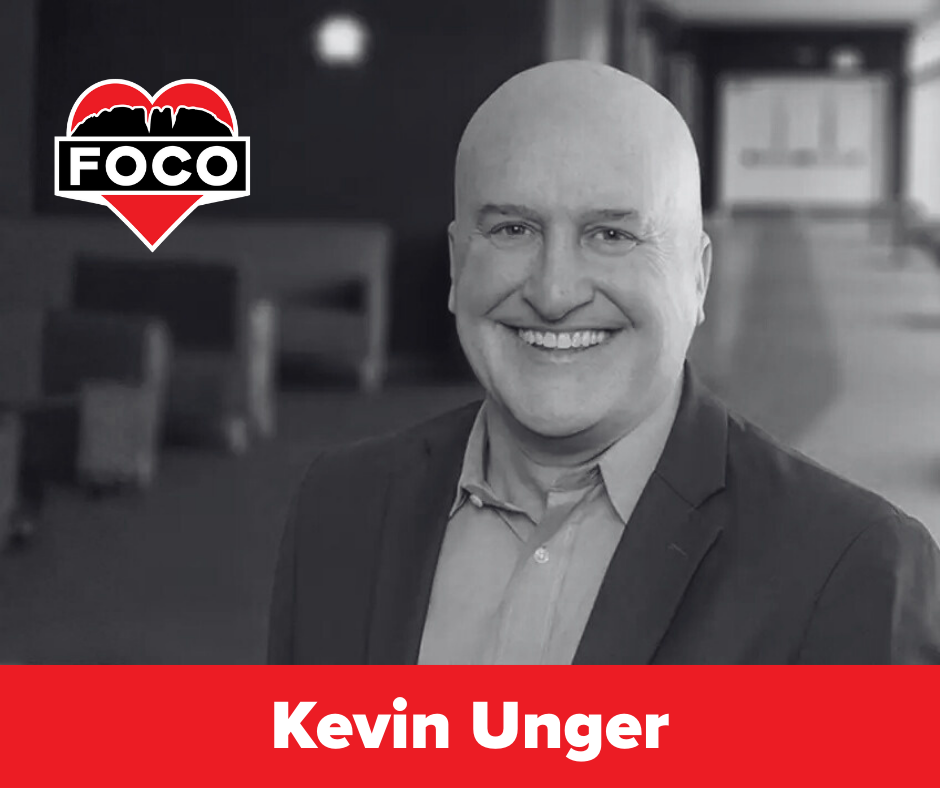

Kevin Unger is the President and CEO of the North Market for UCHealth. A Fort Collins native, he was born at Poudre Valley Hospital—one of the hospitals he now leads. Unger holds a Ph.D. in Organizational Development and Change from CSU and has overseen transformational growth at UCHealth, guiding innovation in access, technology, and community care. His leadership emphasizes team collaboration, community impact, and evolving healthcare to meet the needs of Northern Colorado.
Healthcare continues to undergo rapid transformation driven by innovation, demand, and changing community needs. Leaders must not only adapt to the pace of technological advancement but also prioritize human connection and purpose. How can healthcare organizations remain people-centered while navigating complex systems, policy shifts, and workforce challenges?
According to Kevin Unger, who leads the North Market as President and CEO for UCHealth, the answer lies in staying grounded in service. His leadership centers around access, equity, and growth—balancing cutting-edge innovations like AI-assisted charting and robotic surgeries with grassroots programs like school health partnerships and a food bank. By fostering a culture of collaboration, UCHealth continues to grow alongside Northern Colorado’s evolving needs.
On this episode of The Love FoCo Show, Jeff Faust welcomes Kevin Unger for a conversation about healthcare innovation, leadership rooted in community, and how UCHealth is meeting the growing demands of Northern Colorado. Kevin shares his Fort Collins upbringing, career journey, and vision for a future where healthcare is both accessible and compassionate.
Narrator: This is the Love FoCo Show.
Kevin Unger: We also have seen people putting off medical care because they can't afford it. Or they're afraid to come in because of their immigration status or they're afraid about that bill that they're gonna get. But delaying medical care is never a good idea.
Narrator: Welcome to the Love FoCo Show. Our podcast highlights the incredible people who make Fort Collins the place we're proud to call home. Each week, your host, Jeff Faust, sits down with local leaders, community champions, and change makers to share their stories, what they love about our city, and how they're helping it thrive. So whether you're out on the trail, at a brewery, or walking through Old Town, thanks for tuning in.
Jeff Faust: Hey, everyone. Jeff Faust here, your host for the Love FoCo Show. So excited about today's conversation. I sit down with Kevin Unger, the president and CEO of UCHealth. I think you're gonna love this conversation. I know I did. We got to talk about organizational change, innovation, the coming, changes to the medical world and providing medical care for our growing community and all of the ways that UCHealth under Kevin's leadership are giving back to our community. I hope you enjoy this conversation as much as I did, and thanks for listening.
Jeff Faust: Well, Kevin, thank you so much for sitting down with me. I've been looking forward to this conversation all week, because the work that you and your your organization is doing our city is incredible.
For those of you who are tuning in, Kevin is the we we call you CEO?
Kevin Unger: Yep. President and CEO of our North Market for UCHealth.
Jeff Faust: For UCHealth. So an incredible employer. Obviously, a lot of lives impacted by hospitals and medical care in Northern Colorado. And so, like I said, I've been looking forward to this conversation. But I start every kind of podcast on the Love FoCo Show the same way.
Uh-huh. I just try to dig in a little bit to your Fort Collins origin story. So tell me a little bit like did you transplant in? Were you born here? Tell me, yeah. What is your Fort Collins origin story?
Kevin Unger: Well, sounds good. Yeah. My story, actually started at Poudre Valley Hospital. My parents moved here in 1967. They honeymooned, they're they're both originally from Nebraska. They went to University of Nebraska at Carney, and, after they got married, they honeymooned up in Estes Park. And so they rolled through Fort Collins and decided that's where they wanted to call home. So 1967, they moved here in '69, which I'm, you know, given my age. But Yeah.
You just dated yourself on the Exactly. I I was born at Poudre Valley Hospital and then of course grew up in in Fort Collins with Griffinburg Elementary School and then Lesher Junior High at the time now middle school. Yep. And then Fort Collins High School. After graduation, just proceeded to go to Colorado State University and got my
Jeff Faust: True hometown guy.
Kevin Unger: Very hometown. And then I I did my grade to Denver for six to eight years. I can't remember. I'll have to ask my wife exactly how long we lived down there. I did get my master's degree down in Denver at University of Colorado at Denver and then migrated back to Fort Collins and got my PhD and my doctorate at CSU. And so definitely a Ram and you know love Fort Collins and have seen a lot of changes.
And so when I was young and once again dating myself, Harmony Road was in real it was a dirt road and there were just firms out on Harmony. Yeah. And I remember the stories about the McDonald's on college that is by the new King Soopers now. You know, they built that in the middle of nowhere. And everybody's wondering why would they build it so far out of town which is of course the center of town right now.
Right. So so a lot of changes in Fort Collins and you know got a great education here and still have family. My sister, she runs the alumni association over at CSU. Okay. Christie Bolender.
And my dad was superintendent of schools for quite a while and was always with Poudre School District. So truly, you know, a lot of deep roots here here in the Fort Collins.
Jeff Faust: Sounds that way. It sounds like I mean, obviously, you and and all these schools, Riftenberg and and Lesher and Yep. Did you say Fort Collins?
Kevin Unger: Fort Collins. See.
Jeff Faust: Grand CSU. But that's a little interesting part of your family history that your dad's always been involved in the city too. I mean, I don't blame them. First of all, driving from Nebraska to like, let's figure out how we can move today.
Kevin Unger: That's a good place.
Jeff Faust: You know what mean? Yeah. I grew up in the Midwest and so I've done the trip back to see family Right. Through Nebraska and god bless it. I mean Right.
We can't imagine being like, let's hunker down here. No, you're gonna keep driving. You're gonna get to the front range. Yeah. But he's been involved in this I mean, superintendent. That's a that's a quite the leadership role as well. So Yep. You grew up I mean, you must have in your family system or your family DNA or something. Leadership, giving back to the community, having a role in the community you live in. Tell me a little bit about like even growing up and seeing that modeled Mhmm.
That had to have an impact on you as a as a as a boy and a young man and as an adult in our community as well.
Kevin Unger: Well, absolutely. Well, my parents were you know, very involved in everything from, you know, the rotary clubs to the food banks to the Poudre School District Foundation to the hospitals, you name it. They had kind of their fingers in in all of it. And so definitely role modeled, you know, that giving back to the community. I don't know. It's just when you and I trust me, I've been outside of Fort Collins.
But it's it's you're hard pressed to find a better place than you know Northern Colorado to live. I haven't found it yet. So, you know, as you travel around, there's a lot of great places in The United States but none of them kind of add up to to what we have here.
Jeff Faust: So There's a lot of things tipped in our favor. I agree. I've just I met a lot of people that have transplanted in, of course. But I've Sure. I've also met a lot of natives like yourself
Kevin Unger: Yep.
Jeff Faust: Who, you know, born, raised here, whatever, went to college here and maybe left for a season.
Kevin Unger: Mhmm.
Jeff Faust: But they there's just like a magnetic pull back to this space. Yep. And it's what we love about this. I mean, it's an incredible place to live.
Kevin Unger: It is. And you know, it seems like a lot of students, you know, they can't wait to get out of here. It's like, as soon as they graduate from high school, they're going out of state and they're doing this and that. But then they quickly realize, you know, just it's a special place. Yeah.
And it it's home. So, of course, we're biased. But I always view Northern Colorado and kind of this community as a petri dish. Anything's possible. So if something doesn't work somewhere else in The United States, that doesn't mean that you can't make it happen here in Northern Colorado just because everybody's know, their heart's in the right place and everybody's kinda rowing in the same direction.
And I think things are possible here that aren't possible in other communities.
Jeff Faust: I I think that. So I've been here for about eight years. Mhmm. And I've learned so much about kind of like what you said, what's in the water. Just in the cultural DNA.
Kevin Unger: Mhmm.
Jeff Faust: We're rowing in the same direction. There's big thinkers. There's innovative thinkers. I mean, there's you know, even back to the McDonald's that seemingly was put in the middle of nowhere. Well, someone had the foresight to say actually
Kevin Unger: They need
Jeff Faust: Like everything's growing this way. Exactly. I don't know though. It doesn't seem like every city can capture that.
Kevin Unger: I agree.
Jeff Faust: So there is something really unique. Of course, people who predated us and our leadership. But there's something about this area. It attracts thinkers that I Mhmm. That kind of thinking is rewarded.
What what do you think kind of makes up some of that culture? Because I I just people have to wanna replicate that and somehow they can't.
Kevin Unger: Right. Well, I think there was some very brave individuals that, you know, we benefited from. The Everett's, you know, they came, they developed Fort Collins, but they also gave back, you know, the Jean Markleys. The the everybody who kind of preceded us had a vision for what they wanted this community to look like, and then they put their money where their mouth was. And so they invest in things that are important and they're always there.
I mean, and and were always there. They, you know, many of our founders have have passed, but they were just really good people that wanted the best for Northern Colorado. And they put that interest above their own and helped kind of develop that that that culture that I think we're still benefiting from today.
Jeff Faust: Yeah. That's incredible. May we continue that legacy in our own
Kevin Unger: Of course.
Jeff Faust: Roles and everybody who's who's leading anything. Maybe they could just continue on. I I'm curious. So, you know, Rifenberg, Lester Lesher, excuse me, Fort Collins, then CSU. Now you're the president and CEO of UCHealth, is a really large employer and organization.
What are you studying in college? And and like where did this like gear to lead and and you know take the reins of things? Where'd that come from? I mean, was it always there or did you begin to did it emerge over time or
Kevin Unger: I don't I think I think that's a that's an interesting question. I always wanted to get so I meandered around in my career and, you know, kinda was trying to to figure out what I wanted to do. And my wife was ready to, you know, strangle me because I kept going back to school and then I changed my mind and I do this and do a little of that and I worked with, you know, some real estate development companies. I worked with Oppenheimer Mutual Funds. I ran limousine service there for a short stint.
Did all sorts of different things and then was drawn to healthcare. Mostly just because I felt like I had some leadership skills, maybe business skills that could be transferable. Healthcare, we get to help people. It is this pure service industry, the people that are drawn to healthcare, they're there to do good work and to help fellow human beings.
And so, I've been fortunate enough to, you know, you can tell the culture of a place almost immediately when you walk through the doors whether there's eye contact, people are friendly, they're willing to walk you to where you need to go, you know, they having fun together, are they talking to each other, you can tell they're taking care of each other and they're there truly to serve our patients and so you know, it was such a nice fit when I finally kind of landed in the the health care space. And then my goal, from day one was to get back to Poudre Valley Hospital. And so when, an opportunity presented itself and I was too young and didn't have the experience, but, you know, you need somebody to take a chance on you. And I was, hired at at PVH. I've been able to really grow in place, meaning that, as the system's grown, I've been able to grow into to new different roles and different experiences.
And it's been a really, really fun journey. And we have remarkable people that are living our mission every single day. We're a private not-for-profit entity, meaning we see anybody that walks through our doors regardless of their ability to pay, your gender, your faith, your your background, you're gonna you're gonna be treated, if you need health care. And so that is quite rewarding, as well. And then, it is complicated health care.
And so, you know, it's in my time, keep saying I should be more competent than I am at this stage in my career. But healthcare changes so dramatically and so rapidly that it gives me an opportunity to continuously learn. And as soon as you think you kind of have it figured out, the rules change and you have to kind of reinvent yourself in new technologies, new providers, you know, different challenges just just keep popping its head So so it's it's been a good fit for me.
Jeff Faust: Well, gotta talk about all of that.
Kevin Unger: I wanna
Jeff Faust: get into that, but I wanna circle back to something because we're I mean, we're sitting across from each other
Kevin Unger: Mhmm.
Jeff Faust: Recording this podcast. Not everybody can see this. But I I I asked, you know, what did you study and how did you find
Kevin Unger: Oh, yeah.
Jeff Faust: Where and you kind of smirked just just a little bit. So I take it that you weren't you weren't like a a biology major, double like No, no, like the typical medical route maybe you didn't take so so I mean tell me about like what what did you study? Did you business administration or or what was it?
Kevin Unger: Kinda. So, well, my teachers growing up are absolutely shocked that I get to do what I do because I was not the best student. I wasn't the worst student, but I wasn't I wasn't like they would not have pegged me as like, okay, well. Yeah. That that guy is gonna you know, in the
Jeff Faust: He's gonna run a huge company. So, yeah,
Kevin Unger: No, no, no. That it was none of that. As a matter of fact, when I got the job back at Poudre Valley, a number of my former teachers were
Jeff Faust: Which is where you were born.
Kevin Unger: Which is
Jeff Faust: where I was born. It's all full circle. I mean, it's all coming back.
Kevin Unger: Yep. But they were shocked. And so they were like, yeah, Well and it was those teachers and professors that, you know, spent a little extra time with me. Yep. And kinda help Now was it were you just like in
Jeff Faust: the back of the room, like messing around or was it a GPA thing?
Kevin Unger: No. I I I wasn't always messing around. I just wasn't the greatest student. Yeah. And I just didn't see the need to learn a lot of that stuff I guess.
But yeah, my sister, my younger sister, know, she used to be my math like she'd help me with my math and I was like, this is you know humiliating. But you know, it it just didn't necessarily click and so the people part of it did, of leadership. So Yep. That's kinda how I made my living is you know connecting and then doing what you say you're gonna do following through And, you know, we're only as good as our word. And so as an administrator, that's like your currency.
And so I've been able to, you know, connect with people. And, you know, we we have a vision within the health system. We have, great people, helping us do good work. And really the bottom line is we always think that if you're providing the highest quality care, everything else falls into place. And so that's, you know, you have to build the culture to allow that to to happen.
Yep. So
Jeff Faust: Yeah. It's it's interesting too. Right? Like in the more leaders I meet, sometimes I meet the leaders, who run-in a company or organization. Inventor, innovator, whatever And it they were like always the smartest kid in the room.
I found though that that's rare. That's unique. That's exception not the rule. That more often, it's this EQ not necessarily IQ. It's this ability to manage people, work with people.
Right. Call out the best in them. You know, hold people accountable in not weird ways but like really appropriate ways. That begins to differentiate maybe from the smartest people in the room to the best leaders in the room.
Kevin Unger: Yep. Because you can hire the smartest person, perfect grades, blah blah blah. But if they can't work in a team or they can't get along with people, it's not gonna work. It doesn't matter what degree, what GPA. Yeah.
Jeff Faust: Well, I've only had someone ask me what my GPA is one time. Right. It was the first job I got. And then after that, they didn't make it that far down on my resume. They just wanna know what I did last.
Kevin Unger: Yeah. I think.
Jeff Faust: How it worked?
Kevin Unger: I've had my degree validated that I did actually get the degree. But I I don't think everybody's ever looked at my GPA nor real care.
Jeff Faust: But it's interesting because part of your story so you went back to school. Yep. And you got more degrees. Correct. So like you must have always been a learner or something that that threw you back into
Kevin Unger: I wonder if it was because I wasn't a great student that going back and getting the next degree kind of validated. Sure. Maybe potentially. Yeah.
Jeff Faust: But
Kevin Unger: but yeah, I was so I was a business major and then I had the opportunity while I was a senior to go on a program called Semester at Sea where we were able to get on a ship and travel around the world and experience different cultures. So it was, ninety days of traveling around the world. I know very rough, but it was very enlightening and very eye opening just to realize how fortunate we are to live in The United States and what we've been given and take for granted on a daily basis. I was a kind of a business major going into that, but in order to graduate on time, a a gentleman, Dr. Jack Breett and, doctor Breett still in the the community, he said, you know, if you he was he had been on semester at and he said, if you, if you transfer into the sociology department, you'll be able to graduate on time because the business school will not take your, credits from semester at sea. And I said, I'm ready to get out of here.
So I graduated with a sociology degree from CSU and then went back, got my master of science in health administration and my MBA from CU Denver and then came back and got my Ph. D. In organizational development and change. Yep. And so it was…
Jeff Faust: Boy, that is a, I bet that's a fascinating Ph. D. It's pretty intriguing. Especially now everything's changing. 100 There's organizational change all the time and how you manage change and you because anxiety always spikes when there's I mean, that has to be paying dividends in spades for you.
Kevin Unger: It's all changed. Yep. And, you know, specifically during the pandemic, it was amazing the rate of change. So things that would take us six months traditionally, you know, were taking us a month, stuff that would take us a month, take it as a week, you know, stuff that took us a week takes us hours. And it was intriguing to see how quickly we can move when we need to move and the kind of the the the thinking that goes around that.
And so, you know, we're in in we're very good at rolling things out continuous We're not always great at managing the change that goes along with that or smoothing the workflow to make sure that you know it's all working together.
Jeff Faust: So I I just find myself curious. I I read this book called “Canoeing the Mountains” by Bustlayer. It was a lot about change and Mhmm. Navigating change. Do you have like a go to like if I were to like, I wanna learn more about this.
Kevin Unger: Right.
Jeff Faust: I I lead a smaller organization than you do, but we're always dealing with change. COVID was interested because I I actually came to my leadership position pre COVID.
Kevin Unger: Right.
Jeff Faust: And everybody said, hey, we never have done it like we've never done it like this. The last guy never did it. And then COVID hit and that phrase never got used to do everything was like, what on earth do we do now? Right. But do you have like a go to?
I mean, there What's some great stuff out there that I could pick up and read or Research when it comes to change?
Kevin Unger: Oh, you know. I I'm into this podcast called “Acquired” and what they do is they dig deep into very highly successful organizations. And so, a lot of them are in the tech industry. Sometimes it's you know Costco.
They dug into Microsoft to Apple. They just recently looked at Epic Systems which is our electronic health record. They've done Hermes which is a fashion company. They've done Louis Vuitton. They've done Taylor Swift and kind of dug into to her success.
But they go super deep like three and a half, three to four hour kind of in-depth soup to nuts.
Jeff Faust: Yep.
Kevin Unger: And just there's some lucky breaks along the way. Sure. There are some you know being positioned for when the right time hits and you realize that there really aren't any overnight successes. Everybody has been every kind of company that's that's had success, they had a good strong foundation and then you know good things happened. Yep.
Just because they got breaks.
Jeff Faust: Or they they're It's really interesting though because I you know I even though people I I think they kind of intuitively know overnight success or self made man or woman or or is a lie. Sure. There's still an allure to that. Oh, yeah. There's still like maybe a shred of belief that that could be true.
No. It turns out we should listen to the podcast Acquire and realize, no, that's not true. That doesn't actually happen that
Kevin Unger: way. Yeah. Very rarely, you know, they did a podcast on Porsche and basically, they ended up with a contract where they got I think a $100 or 5% of every Volkswagen sold through the German government and that's what allowed them to stay in business.
Jeff Faust: Really?
Kevin Unger: Yeah. Without that like break, they would not be here. Of course, Bill Gates, he was if you've read, “Good to Great.” He had, you know, he had done his I don't remember the secret number, but he had had x number of hours programming, and he was poised when you know the time was right. Yeah.
And so there's usually very few absolute overnight successes I guess unless you you win win the lottery. Yeah. But but for the most part everybody, you know, they worked hard and they, you know, really were passionate about what they did and when the timing was right, they're ready to to to make hay where the sun was up.
Jeff Faust: Let me ask a leadership question Sure. For you because you're obviously, you know, you're a a big leader in our community. You had mentioned something just a few minutes ago that when the position opened at at PVH Mhmm. You know, you jumped into that. What what role was that by the way?
Kevin Unger: It was a vice president in a planning and strategic development.
Jeff Faust: Okay.
Kevin Unger: And so I had come from a
Jeff Faust: Not an entry level position.
Kevin Unger: No. And Rulin Stacy, who was the president of the hospital at the time, he took, I think I was cheap. I think that he could save some dollars plus he knew my father, which I think helped.
Jeff Faust: Sure.
Kevin Unger: And then that that opened some doors and he was just willing to take a chance on me. And then and then shortly after that, was in that role for about two years and then jumped into a vice president of operations role. And I didn't really have pretty big role for not having operations experience. And so people kind of rallied around me. They knew I was young, green bean, and I didn't act like I knew everything.
I relied on good people to do their jobs and kind of kept out of their way and learned along the way. But it was more of that EQ than you know knowledge that allowed me to to kinda pursue some of these different positions.
Jeff Faust: Well you had you had mentioned in that journey that you you got in and you were able to grow as the system grew. Yep. But not everybody can do that. I mean, we we we probably we won't name any name, but we could probably like cycle through names of people who actually they just fit here. Like it Yep.
It's just where they you know, and they can't morph with the times. They can't transition with the time. Sure. What do you think helped you do that? Probably
Kevin Unger: stupidity to some degree.
Jeff Faust: But That was not the answer. That was that's great. Well, that's a great answer.
Kevin Unger: Well, I was always willing to apply and do things I didn't know how to do. And I'd kinda learn along the way. I think I was curious just how stuff worked. When you come out of school, they give you a very good theory, but the practical pieces, you know, the day to day is not what you walk away with. And so I was just curious how how stuff worked and people were willing to to help me and give me time to to learn along the way.
And so I was just blessed that way. But I always encourage young leaders to apply for positions they're not qualified for and then work hard. Too many people are looking too far down the road. If you do your job today really, really well, good things will happen. Doors will open, and you become reliant on person x.
You know, we can't live without them because everything we've given them, they just knock it out of the park no matter how big, how little it is. And so, you know, just make sure you're doing a good job and and good things will happen. And with that said, I I also envy those people that they just find their deal. And, that's what turns them on. They don't need the next promotion.
They're they're very happy and content doing doing what they do. And so this is a mini city that UCHealth. We have people Yeah. That do all sorts of different things and bless them because there are things that you know I'd last ten minutes doing that that people have, you know, done for thirty five, forty, forty five, fifty years. And, it just takes different personalities and, putting together the right teams and making sure, you know, everything we're we're we're working as a team and run-in the same direction.
Jeff Faust: Well, it's an interesting position that you're in because you you do have so many different types of employees. And of course, you know, there's an organization this size. There's there's a lot of different leaders
Kevin Unger: You bet.
Jeff Faust: In this organization. It's not like everybody reporting No. Directly to you. No. Mean, it's impossible.
Kevin Unger: Not even close.
Jeff Faust: But, you know, my dad was a doctor and so I I know just growing up in my home that sometimes the the hospital administration office worked well with the doctors and sometimes he come home cranky. Yep. You know, but it's not just doctors that work here. You've got kitchen staff and security staff and maintenance staff. Got I mean, it really I think you're right on.
I mean, is like a mini city. Yep. And multiple cities by the way. Yep. Because you guys are all over Northern Colorado at this point.
Mean, what a what a fascinating role that you get to find yourself in.
Kevin Unger: Oh, it's great. It's all. Impacting
Jeff Faust: all kinds of of different folks.
Kevin Unger: Yep. And I love this role because I kinda have a short attention span. And so, you know, I could be interfacing with community or with employees or with our physicians or you name it. Every day is a new day and that's what's really keeps me getting out of bed in the morning and being excited to come to work. Yep.
And it is work. So some days are better than others. But for the most part, I get you know, I got one of the the greatest jobs in Northern Colorado for sure.
Jeff Faust: That's good. I wanna I wanna ask about something that you had mentioned we were talking around the COVID time about how things were changing and they're changing quickly. Yep. That probably hasn't slowed down for you in the medical world. I mean with AI, with robotic surgery, with transplants, with I mean, gosh, my son has a medical diagnosis and it seems like since he was diagnosed, the advancements in that field are incredible.
Kevin Unger: Off the charts.
Jeff Faust: How do you keep up? Well, you've gotta be learning stuff all the time. I mean, they Yep. Everything's changing. I guess that's the That's what we organizational change background.
So that that might help.
Kevin Unger: Yep. Well, I don't know if it does or not. But, yeah, the medical field is changing so rapidly. It's you you can't keep up. AI is awesome.
We're doing what's now called ambient AI for charting. So your your primary care doctor, your specialist may ask if they can record the visit on their cell phone. It has the ability to do some amazing things. My last primary care visit, I visited my my my doctor and we talked about a lot of different things and that's how my visits go. You know, we're we're talking about a call agreement or we're talking about x y and z or changes within the health system.
He used this ambient AI and he showed me my chart at the end of our visit and somehow it was able to weed out all of our chitchat even though it was still medical related. It only documented my medical our medical discussion, and he said it charted much more accurately than he would have been able to by going back. The the beauty of that is that he's now having dinner with his family instead of charting for two and a half, three hours to catch up from the day that he or she just had. And then, robotic surgery. Yeah.
That, you know, that's come a long ways. Just tonight, we're gonna be having what's called robot night. I or I don't know what it is. But, basically, da Vinci has a surgical robot that, we're bringing into one of the the, meeting rooms here, and, students in the community and staff can go and play with this robot. But it's quite amazing what they can do.
So it's moved from laparoscopic surgery to robotic surgery where we can get into locations you couldn't before and minimizes blood loss and just does a little bit of a cleaner job potentially by using that technology. Have new the list just goes on. Every time I go into our Operating Rooms or up on the floors, there's just something new and innovative that you know just just just That
Jeff Faust: is so I mean that's fascinating. Even talking about the robot robots. Can hear my my dad who you he know like one of his favorite topics he doesn't listen to this so we I can just say whatever I want. One of his favorite topics is to complain about his residency compared to current resident you know and he's like they just don't know. I'm like dad they're using robot robots.
It's a different world. It is totally different than when you went to residency in med school.
Kevin Unger: Well, there's so many procedures right now that are you know, if you're a gamer, I think it gives you a leg up. This new bronch robot that we have, it's called a Aon. I think it's yeah. I think that's the name of the the company. But it's it's basically you can do a bronch get into the lungs, and it's it's run by a rollerball.
It's it looks like, you know, what would it be like Frogger? That Sure. Video game. You know, it's got had that rollerball. And you can get in there and see things that that you couldn't previously.
We used to have to, if there was a nodule, you'd have to wait until the nodule got to a certain size to remove it with this new and bronch. You can take that. If you need to, we can have the pathologist right there to
Jeff Faust: Just a
Kevin Unger: little roller ball.
Jeff Faust: Yeah. I mean, you said you said Frogger, the thing I thought of honestly was like Golden Tees, old bar game where you play golf. You gotta be here and you're playing golf.
Kevin Unger: Yeah. And you're yeah. You're rolling it forward. That's exactly what it looks like.
Jeff Faust: Well, who knew? It's preparation. I could have a a change of career here.
Kevin Unger: I don't who is that. But but yeah. There and and things are things are changing rapidly. So, know, we used to get fifteen, seventeen, twenty years out of an MRI or CT scanner and, you know within five to seven years they're they're almost obsolete just because things are changing so quickly and so
Jeff Faust: All the chips, all the chips, all the techs. It's like cars, right? Mean this is happening in cars too. I like the first car I had was a crank down window.
Kevin Unger: Right.
Jeff Faust: I haven't seen one of
Kevin Unger: those in a few years. Manual transmission most likely. Yep. Yep. Exactly.
And and so but but the rate of change in the medical industry just because there you know it's an industry that finds innovation just because it's a big market and so we see a lot of lot of changes in a short amount of time. Yep.
Jeff Faust: Oh, so interesting and thanks for letting me just go on on, you know, rabbit trails on org change or or new tech or whatever that is. Sure. I'd I'd love to talk a little bit about UCHealth and Uh-huh. We could talk about your life too as whatever you wanna chat about. But, you know, one of the things I love to talk with people about when I'm interviewing them is not just their origin story, not what they love about, but how they're loving our city, what they're doing to make a difference.
An organization of your size, obviously a major employer, if not the top employer, like maybe you and CSU can go head to head on who's employing more people that that's impacting the community in an incredible way. I see UCHealth's name on a lot of things, the way you're investing in the community. Talk to us a little bit about the way you feel like your organization's loving our city well, the way it's giving back, and you know, wanna celebrate some of the work that you guys are doing in the community.
Kevin Unger: That's nice of you to to to kinda bring it around to that. UCHealth is an organization that's always, you know, worked within the community to try to better people's lives. So we currently work with close to 200 separate entities within Northern Colorado and partner with all these different entities. As I mentioned, earlier, that's where the secret sauce is. And so instead of everybody trying to recreate the wheel working together and everybody kind of fitting in and filling that niche or that space has been incredibly important.
We we we recently and it's probably not even that recent. If I say something happened a year ago, most likely it was two years ago. If I say it was five years ago
Jeff Faust: We won't fact check.
Kevin Unger: Yeah. Ten years ago. But we now have a food bank at our family practice residency program just because if you are not on Maslow's hierarchy of needs, if you're not getting those basic needs met which is food and shelter, it's very hard to live a healthy lifestyle. And so our residents can prescribe food. Basically, it truly is open to anybody.
You don't have to be a a patient of family medical center. But the the need and the, you know, our ability to to at least help out in that area has been quite remarkable to watch. We're in the schools trying to teach healthy habits, through the fifty two ten programs. Our Aspen Club, of course, does, a lot of education and brings in different topics and speakers for for our our senior group which I am now one of them. I am now eligible for for a membership with the club.
Jeff Faust: Yeah. Exactly. Discounts are coming your way.
Kevin Unger: That that's right. But, you know, when there when there is a need, this community steps up in a big way. And you just see it time and time and time again. And so that's what I think really makes this place tick is people's willingness to give up their time, their energy, and their their finances if there's things that need to get done. And so we support the meals on wheels program and so our There's like
Jeff Faust: a really incredible amount of nonprofits in Northern Colorado. Big time. Incredible. The amount of philanthropic work Mhmm. That is originated here, it goes well beyond Northern Colorado Right.
Of course, but I've been amazed at that. So many organizations, so many people are like, yeah, I I don't necessarily have the time, but I'll figure out how I can find the time
Kevin Unger: Mhmm.
Jeff Faust: To give back. And I think so I some of that probably comes just from the socioeconomic kind of status in Northern Colorado. It's you know it's a little higher than maybe some parts of The United States so there's some expendable income there.
Kevin Unger: But there's still a lot of need. There's still a lot of need to.
Jeff Faust: And that's not changing.
Kevin Unger: Not at all.
Jeff Faust: It's more difficult. The community how have you seen maybe that you've lived here for a while. Like, how have you seen the needs change
Kevin Unger: Well.
Jeff Faust: And emerge over the years?
Kevin Unger: You know, it's expensive to live right now. And so just and everything's getting slashed. And quite often, it's our vulnerable population that takes the brunt of the Medicaid cuts or the snap benefits or you name it. It it it's a population that can't advocate for themselves And so, as you know, prices and rents and groceries and inflation, there's just an ever growing need for people just to meet their their basic human needs. We also have seen people putting off medical care because they can't afford it.
They're afraid to come in because of their immigration status or they're afraid about that bill that they're gonna get, but delaying medical care is never a good idea. If there's if somebody needs to be treated, we're gonna treat you. And, please spread the word that, you know, the a lot of times the emergency department's a very expensive place to get your care, but do not avoid it if if if you need to to to utilize medical services. We have sliding fee schedules. We'll work with, you know, our lower income population.
We write off just here in Northern Colorado, close to $250,000,000 in uncompensated care annually just because that's our our mission within within the organization.
Jeff Faust: Yeah. Mhmm. Yeah. Well, those those needs those needs aren't gonna go anywhere. Nope.
No. They're just Population increases, all these things just continue to shift. I mean, that's yeah, it's incredible. And like you said, people get into this business because they wanna care for people. They wanna make a difference and Yep.
Yeah.
Kevin Unger: And I work with some amazing people. Our staff are they're you know they're they treat people like their their family neighbors and I think that that's you know that's a lot of the secret sauce and our our physicians. I think how everybody works together the nursing staff administration physicians is is what really differentiates us. Yeah. And so we have little Brahm's lullaby, baby just born here at Medical Center in
Jeff Faust: the room. That's so sweet. When you're in the middle of an interview and you hear that, you know, you can just almost feel the Yep. But what it is interesting place to live too because you you know, you've also have chaplains walking around here caring for people who are experiencing
Kevin Unger: For sure.
Jeff Faust: Tragedy. Yep. Tragedy in in big ways and all of this is found Yep. Under There's
Kevin Unger: and lows under one roof. Yeah. That's for sure.
Jeff Faust: Yeah. Switching gears just a little bit. I I'm just I find myself curious because I, you know, I I interviewed the mayor a little while ago, Anne Hutchinson. I got a chance to interview her. And one of the things that I've talked with them about is with the growing population, with the growing, you know, the increased cost of living.
Right. The challenge behind what we might call talent acquisition or like, yeah, it's just more expensive to live here. So how can I recruit the employees I need? How can I train them up from within? That's always the dream, but sometimes it's not readily available.
So how is UCHealth navigating some of like the talent acquisition pain points?
Kevin Unger: Right. Well, we live in a wonderful place to recruit to. So so we have a leg up. We manage the hospital a few hospitals in Wyoming as well as in Nebraska, and their challenges are very different than our challenges as it relates to recruiting in a workforce. We are onboarding here in Northern Colorado.
I do new employee orientation every single week, and we are onboarding between 40 and a 120 employees a week within Northern Colorado.
Jeff Faust: That's amazing.
Kevin Unger: That's also challenging because how do you ensure that everybody understands who we are, what we're about?
Jeff Faust: Oh, we started our conversation talking about culture.
Kevin Unger: Yep. The mission, the vision. And so it takes a very talented group of leaders within the organization to make sure that people find their place. We have a very high first and second year turnover rate. Okay.
It is you know close to 20%. Our overall turnover rates hovering around 10. We're trying to get into the single digits.
Jeff Faust: I was just gonna say what would you like it to be at? Yeah. So somewhere in the single digits.
Kevin Unger: Somewhere in the single digits would be leaving the industry. And we're you know, we're we're right there. But but people leave within the first couple years because they don't feel their sense of place. You know, maybe they didn't connect with their their boss. They don't have that friend at work that, know, they feel that connection.
And so we're really putting a lot of time and energy into that. If we can fix our first year turnover rates, then we're really hitting on all cylinders. But people come in and during COVID, was quite intriguing because just like your dad, there's different levels of training coming out of school. But during COVID, many of our employees, new employees, you know, new grads had not even necessarily stepped foot in a patient room. You know, we were starting with how you enter a room, how you introduce yourself.
Some of them, they leave because the job isn't what they thought it was. You know, you're dealing with you're dealing with, you know, bodily fluids and, you know, all sorts of different things that, you know, maybe not what they they trained on. And so so that is I think gonna be our continuous challenge is how do we onboard appropriately, give people that that feeling that they're part of the family and then try to get them to stick around. Because once we get past that like year and a half, two year time frame, there's a very good chance they'll be celebrating
Jeff Faust: 20 Retention goes way up.
Kevin Unger: 100%.
Jeff Faust: Yeah.
Kevin Unger: But but it's that yeah. That initial is where we're putting a lot of time and energy right now.
Jeff Faust: That makes a lot of sense. I mean, I I think different worlds obviously. I'm in the nonprofit world. Mhmm. More human services, even faith background myself.
But you know, for instance, I I pastor a church on on part of my job and we always say people go to church for all kinds of different reasons Sure. But they stay for relationships. Right. It's not apples to apples but you know
Kevin Unger: It is.
Jeff Faust: Your employees want to feel connected.
Kevin Unger: Of course.
Jeff Faust: That's about the relationship. And yeah, they're part of a larger mission and Uh-huh.
Kevin Unger: They're part of a And bigger.
Jeff Faust: That's hard to do in a orientation. Yep. And so you gotta let that's gotta live out a little bit. That's gotta play out a little bit.
Kevin Unger: Absolutely. Yeah. And and our middle managers have the hardest job in the organization because they're managing up, they're managing down, and you know, they're trying to make that connection with with our employees and that's not always the easiest thing to to make happen but when it does it's it's magical so
Jeff Faust: Yeah. Yep. Well Kevin, I this has been a great conversation. I I'd love to finish with maybe one last thing. Sure.
You can kinda take this wherever you wanna go. Sounds good. But you've lived in Fort Collins for a while. Yeah. You you know born and raised here.
UCHealth is not slowing down. Doesn't seem like you're slowing down. Like you you you're living in a in a great community with a great job and all these things. If you were to forecast the next five to ten years Yep. In where maybe you're headed or maybe where you see health is headed or or even this community.
Kevin Unger: Mhmm.
Jeff Faust: What are some of the things that you might wanna say just about the future, the next little bit here?
Kevin Unger: Yep. Well, think the future is bright. A big strong focus for us is gonna be on of course affordability of healthcare and that's a national topic. And we're all kind of struggling in that area. But we're putting a lot of time and energy into access.
So we wanna make sure that we are meeting people where they're at, giving them an alternative to our emergency departments. And so you're seeing kind of a big boom of primary care expansion within the UCHealth area. And so you'll see some new clinics opening up that will provide some of that access. Digital, the ability to do virtual visits, I think, is going to continue to grow and expand. And our app is kind of a secret weapon of ours.
It's called My Health Connection, and, you know, there's there's a you can schedule, you can, you know, refill your scripts, you can do all sorts of different things just via that app, and I I expect that that we'll continue to to see that grow and expand. But our goal is to grow with the community. And so, we have some major, things happening. We just, we're gonna open up a new behavioral health unit at Poudre Valley Hospital, will be 50 beds, about a 20% increase of what we we currently have. We're seeing huge needs on the behavioral health front.
New emergency department expansion at the Greeley Hospital. We have a new tower going up here at Medical Center in the Rockies that is really focused a lot on trauma, ICU, critical care beds. And so we are here to meet the needs of the community. And as the community grows, we we must grow as well. And so that's what that's that's what it's taking at this point.
We're also, you know, depending on kinda how legislation plays out, we're gonna have to always figure out how to do more with less. And we're no different than any other organization. But technology can take us quite a ways, but for the most part, we are a service oriented entity. And so it's very hard to, you know, automate bedside care and we do a lot of that. And so it's just gonna have to continue to have new fresh thinking, new minds, you know, solving this Rubik's cube over over the next several years.
And it's I I truly would think I'd be more competent at this stage in my career as as I am. But the the changes are so rapid and as soon as you kind of figure out something then the rules change and you have to kind of retrench and rethink and
Jeff Faust: Well, timing you said Rubik's cube. It's like I've seen the elementary ones with just you know four squares. Yep. I've seen the three by threes obviously and there are Rubik's cubes that are like twice that size.
Kevin Unger: Exactly.
Jeff Faust: That's that's kind of what it feels like where we're we're headed. I think you're right. Your background, your education, your experience. I can see how all of these things are working together so that you can kind of take this company into the next, you know, season and
Kevin Unger: It's so a pleasure. And you know, as I mentioned, Pruder Valley is celebrating its hundredth year anniversary and so and I've been doing a lot of research on PVH specifically, and this is not new. From the day they opened up the hospital, they've been dealing with different challenges, mostly capacity as the community has grown. And so where I thought, you know, wow, we're really in a unexplored territory. That's been the history Yeah.
Of the of the community.
Jeff Faust: I mean, it would be interesting to figure this out. I I don't know, but I imagine you have about as many employees as like what year Fort Collins had that many people.
Kevin Unger: That could be the
Jeff Faust: You know, mean, you should find that year like current today. Yeah. We have this many employees as like the population of 1952 or something like that. Know, I mean, would be an interesting Yeah.
Kevin Unger: Should look at it. So 1925, I'll pull up the what whatever the population of Fort Collins was Yeah. We'll see what that looks like.
Jeff Faust: Oh, super interesting. Well, thank you again
Kevin Unger: for this conversation. Thanks for all you're doing. We appreciate it.
Jeff Faust: Yeah. You guys are, you know, major part of cities can't be healthy and grow without great hospitals and great providers. And so appreciate your leadership. Thank you. Appreciate your guys' presence in our community.
Kevin Unger: Thanks for having me.
Jeff Faust: Loving our city one life at a time. And, you know, that stacked on top of each other many many times over.
Kevin Unger: It's been a pleasure. Thanks for having me. Appreciate it.
Narrator: Thanks for listening to the Love FoCo Show. If today's conversation inspired you, share it with a friend who loves Fort Collins as much as you do. Don't forget to subscribe so you never miss an episode, and leave us a review. It helps more people discover us. To learn more about Love FoCo and find opportunities for loving our city one life at a time, visit lovefoco.com.
For now, keep loving Fort Collins well.

