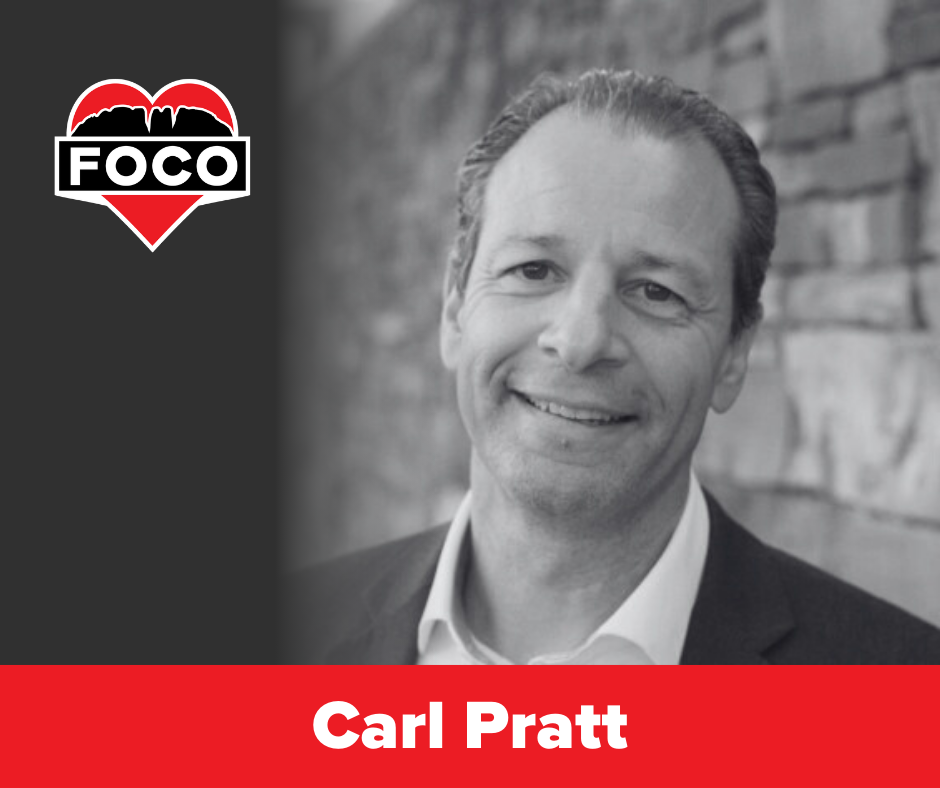

Carl Pratt is the General Manager of the Elizabeth Hotel in Fort Collins, where he leads operations while championing community engagement and hospitality excellence. With a background in health and wellness, Carl previously spent 17 years at Canyon Ranch, a renowned wellness destination resort, where he served in multiple leadership roles. His career has spanned independent resorts, college-town hospitality, and senior living operations across New England and Arizona. At The Elizabeth, Carl integrates his passion for service, arts, and community impact into a hotel experience rooted deeply in Fort Collins culture.
Hospitality is often seen as a transactional industry built around rooms, rates, and reviews, but it can also become a catalyst for human connection and local transformation. What happens when a hotel decides to prioritize people and purpose alongside performance?
On this episode of The Love FoCo Show, Jeff Faust sits down with Carl Pratt, General Manager of The Elizabeth Hotel in Old Town Fort Collins, to explore what he calls a community-rooted approach to hospitality. Carl shares how his upbringing in small New England towns, a formative season living in Saudi Arabia, and years in health and wellness shaped his conviction that business should serve the human condition first.
You’ll hear how The Elizabeth redirects guest “extras” into scholarships for first-generation CSU students, partners with nonprofits like Off the Hook and The Matthews House, and hosts everything from puppy yoga to high school jazz nights and independent film screenings—all to make a beautiful space truly accessible to the community. Along the way, Carl reflects on resilience, leadership, and why caring deeply for employees, neighbors, and guests is not just “nice to have,” but key to long-term success in Fort Collins.
Narrator: This is The Love FoCo Show.
Carl Pratt: If you're coming to Fort Collins and you're spending weekend with us and you're spending a lot of money, you probably don't need a hat. You probably don't need a scarf either. So I thought, what if we diverted that money to a scholarship? And I got support from Sage. I got support from our ownership.
And so we were spending $10,000 a year on this stuff, which those people didn't need. And so we created a scholarship.
Narrator: Welcome to the Love FoCo Show.
Narrator: Our podcast highlights the incredible people who make Fort Collins the place we're proud to call home. Each week, your host Jeff Faust sits down with local leaders, community champions, and changemakers to share their stories, what they love about our city, and how they're helping it thrive. So whether you're out on the trail, at a brewery, or walking through Old Town, thanks for tuning in.
Jeff Faust: What makes you who you are today? How do you grow? How are you shaped? And how are you continually being formed? These are just some of the conversations that I have today with the general manager of the Elizabeth Hotel here in Fort Collins, Carl Pratt.
I think you are going to love this conversation. Carl shares about his history, his upbringing, some interesting adventures that he had in The Middle East, and how he landed as the GM of the Elizabeth here at Fort Collins today. And, gosh, what I love about his leadership is that he's not just trying to run a business or run a hotel. He's trying to impact the community. He's trying to use the resources that he has as the general manager to impact lives all around our city.
He's truly loving Fort Collins one life at a time, and I'm so thankful that he sat down with us for a conversation on the Love FoCo show. I hope you enjoy this conversation as much as I did. Well, Carl, thank you so much for giving me some of your time. I really appreciate it. I'm I'm sure you had meetings before I came here, I I bet you have meetings after I leave.
But really excited to sit down with you. This is an amazing hotel. So grateful for your presence in our city and what the Elizabeth does in in terms of giving back and just creating a beautiful and hospitable space in Old Town. I wanna get into all of that and what you do for a living and Mhmm. In the way that you care for our city.
But I wanna start the conversation the way I start all these podcasts. Just tell me a little bit about your Fort Collins origin story.
Carl Pratt: Yeah. Great.
Jeff Faust: Where'd you come from? How'd you land here? Give us a little history of your life here.
Carl Pratt: Yeah. So, really, majority of my existence on Earth has been in New England. So I grew up in Vermont and spent twenty years in Western Massachusetts, which is really very much like Vermont. It's rural. It's on the other side of the state.
About Beautiful. Yeah, it's Berkshire. It's a beautiful part of the world. And a lot of culture there because there's the Boston Symphony Orchestra that's there in the summertime, and then a ton of other Shakespeare and Company, modern dance. It was there with a variety of things to do in the summertime and on down the line.
Jeff Faust: A lot of arts.
Carl Pratt: A lot of arts. Yeah. So Norman Rockwell Museum is there. So a lot of history, very comfortable, easy living. Towns of 5,000, just a bunch of them connecting to each other and a great place to be for a family, etcetera, etcetera.
Jeff Faust: Yeah. All those little Vermont, mean, these are the places that we see pictures of the fall. All this beautiful landscape. You just take a little highway, little county road to all these small towns. But also, where we might drive a couple hours to Breckenridge or we might drive a few more hours to get to Telluride, you know, beyond Brecker, you're just probably a few hours from a bunch of major cities too because New England is is kind of packed tight up.
Carl Pratt: Right. Yes. Two hours to Boston and two and a half hours to New York City. Yeah. That's pretty cool.
So, you know, it's really accessible. A lot a lot of different things that you can you can enjoy there.
Jeff Faust: Did you grow up kind of like going into the city and and hanging out in those spaces? Or did you stick mostly to Vermont?
Carl Pratt: Yeah. I I grew up in Vermont, and we raised our family in in Lennox, Massachusetts. Okay. So Vermont was I I would say I was not a country kid, you know, but I was pretty naive. You know, Vermont was, I didn't spend a lot of time.
We, you know, we were, our family, I was youngest of six, and it was a wonderful little town. Again, Montpelier, Vermont, 5,000, easy going. And it was, again, a really comfortable way to grow up. There was not a lot of crime. There was not a lot of angst.
It was easy getting up in the morning.
Jeff Faust: And,
Carl Pratt: close knit family, some of the memories are skating on. My dad built a skating rink on the sidewalk.
Jeff Faust: Was gonna say, does this make you like a winter sport kind
Carl Pratt: of guy? Yeah, exactly. So you can't, it's tough to be in those environments, right, that are nearly five months of winter. So we ski and we had a skating rink on our side lawn. Every year, would be out.
The winter didn't stop us from being outside. I think that So A little bit dark.
Jeff Faust: I don't think people always realize Yeah. How nice it is here. Like the sun is out. Absolutely. And it lingers, you know.
Mean, goes down earlier, obviously, in the winter. But when you start going up into the North, I mean Yeah. I lived in Maine for a little while.
Carl Pratt: Right.
Jeff Faust: And I swear by Christmas time, the sun was down by, like, school. School was over and the sun was already down. Not going down,
Carl Pratt: but Yeah. It's, like, it's 04:00. Yeah. Yeah. So, yeah, that's another piece, which actually was part of the idea of coming here.
But I think that that somehow, one, I think being the youngest of six really formed who I am in a lot of ways. And I think being in a really comfortable, safe environment with my family and everything around me just created a really easy way of living. And again There's
Jeff Faust: good and bad things to that, right?
Carl Pratt: Yeah, right.
Jeff Faust: I mean, I think we take most of the great stuff.
Carl Pratt: Right.
Jeff Faust: And also you start to be exposed to a broader scale of humanity or metropolitan areas, and you're like, oh, I'm so grateful for the way I was raised and yet it might not have been a full picture
Carl Pratt: Absolutely.
Jeff Faust: Of what everyone goes through. Me a little bit about like the great things and like the things you had to learn maybe a little bit later in life. Yeah.
Carl Pratt: Well, I think the great things were you'd form a really comfortable friend group. And I've maintained those friends forever. I still have contacts with those folks. And I think waking up in the morning, I never felt threatened by almost anything. There was no fear that really, other than a brother or two,
Jeff Faust: Yeah, you're the youngest.
Carl Pratt: Yeah, it's a little bit of that. But it was isolating the social diversity side of things, right? So I did take a leap and graduated college with a degree in health and wellness. But during that time, I was in athletic training. So for two years, I was doing rehab with athletes and taping ankles and that sort of thing.
So I took a leap and went to Saudi Arabia.
Jeff Faust: Oh, really?
Carl Pratt: To work at a sports medicine hospital.
Jeff Faust: That is a leap. You said leap. I thought you were gonna say, like, I went to Philadelphia or something like that.
Carl Pratt: Yeah. So talk about, I mean, literally, it did feel like I was on Star Trek because I landed in Riyadh, Saudi Arabia, and a complete world I've never would have seen, and nor would I probably go back. But the amazement of cultures and the appreciation for understanding a little bit more of that and how that really works was I mean, it was probably one of the most depressive points of my life, but also one of the most adventurous,
Jeff Faust: for sure. Depressive as in just kind of alone, isolated, everything's different, and you're trying to find your way?
Carl Pratt: Yeah, because didn't know the language. I was there on my own, didn't have a friend or I didn't move to live in a place where I knew anybody. And the culture was so different. I mean, things like I'd be in a grocery so you get some orientation about how to manage in a Muslim country. And because it was Riyadh, it was the most strict of the Muslim traditions because the royal family was there.
So, I was in grocery stores and when prayer call came, everything shut down. Really? Yeah, either you just, you had to wait it out. Yeah. And then you had to start timing your life around prayer call.
Jeff Faust: That is interesting because I've traveled to, you know, different Middle East countries, Morocco, even parts of of Southern Spain, very influenced by by, kind of Islam and Yeah. The prayer call there was, responded to kind of individually. But what you're talking about is actually, it was such a prominent role in the city that, like, responded, not just individuals.
Carl Pratt: Yeah. Yeah. So and, you know, I respect that kind of discipline. And also, it just so out of what I was used to. So it was, and then I, you know, I was able to travel to Europe and I landed in Czechoslovakia, so I was around there for a couple of days.
That the exposure to the rest of the world, and maybe not the rest of the world, but portions of the world, right, were just incredibly beneficial and influential as to how we live in The United States. If you don't ever leave The United States, right, you think this is what it is. And that's, of course. And if you don't ever
Jeff Faust: get exposed, you can complain about really simple things that are I don't know. We should probably be thankful.
Carl Pratt: Yeah. Yeah. Yeah. Exactly. Exactly right.
Yeah.
Jeff Faust: I'm so I'm fascinated. I I just I'm I'm curious. Like, what was in you that that gave you that unction to go? Because, I mean, you know, you're talking about, like, never growing up, feeling threatened. I mean, these are gifts.
Carl Pratt: These are gifts
Jeff Faust: to to the human psyche and the human soul to grow up in a safe and secure place. Yeah. You you talk about these little community skating rink, you know, a tight knit family, probably a tight knit friend group that you had even mentioned at at your end continued contact. Yeah. What about it was, you know what?
Like, I'm just gonna cast caution to the wind and and just go for it. What what happened for you to make that decision?
Carl Pratt: I've thought about that, and I haven't been able to come up with a good answer. Because I'm not a spontaneous person, and I'm also not that adventurous. So I think what it came to is I had this I did have a little bit of an interlude. So I went to Kuwait. My dad was a civil engineer.
Okay. So my parents moved to Kuwait in 'eighty well, the mid-'80s. And so I went to visit them. And I was interested in the health club
Jeff Faust: Were going to college at time?
Carl Pratt: Yeah. I was just graduated college. And I visited them after graduation. And I was going to work at a health club in a couple there was a couple of hotels in Kuwait that I was going to have an opportunity. Because just at that time was the health club industry was just starting.
It wasn't really much of a thing. There was a couple of hotels there, Hyatt, Hilton. And my parents did a little sleuthing. They found that there was this health club there, I could have worked at one of these hotels. And then I could come back.
And it was an adventure, right? But I ended up finding this other opportunity to work at a sports medicine hospital, which I was very interested in. And for one reason or another, I think I didn't really think about it much. I just said, well, this would be cool.
Jeff Faust: You were 23. You were like, could do that.
Carl Pratt: Yeah, right. Let's try this. There I landed. So it was I guess it was probably just didn't think about it because I didn't know. I didn't know enough not to.
Jeff Faust: Right. Yeah. Every parent listening right now yes, that sounds like my son.
Carl Pratt: Exactly. Right now. Exactly. The brain hasn't fully developed even at that point. But it was one of the most growth years of my life because I'd never been alone.
Jeff Faust: Yeah.
Carl Pratt: You know, large family, go to college, you leave college to college, total social saturation, right? Yeah. And then, so it was really an amazing experience.
Jeff Faust: Well, and those things, they're so important. I I feel like more often now we're we're kind of encouraged by culture. Society, oh, this is changing a little bit, but encouraged to avoid pain, to avoid hardship, to just take maybe an easy route or an easy path. Yeah. But that never actually grows you into the fullness of who you were created to be.
Right? Like, it is it does tend to be moments of suffering and sacrifice and hardship that shape you in a different kind of way. And at the same time, you might not have been able to withstand that had you not had your upbringing of
Carl Pratt: Right.
Jeff Faust: You know, security and solidity and Yeah. And deep social connection and ties. Right. So in some ways, the goodness set you up for some of the
Carl Pratt: No question.
Jeff Faust: Pain and and sacrifice that
Carl Pratt: Yeah.
Jeff Faust: Shaped you as a man.
Carl Pratt: Yeah. Yeah. And the interesting thing is, you know, this is, if you don't think about it, but this has been '80s. There was no Internet. Yeah.
I mean, I remember looking at the moon and thinking, I'm it's so it's so comforting because there's my friends and family that are looking at the same moon. Yeah. But I'm thousands of miles away.
Jeff Faust: That is wild to think about because I, you know, just a little bit of my story. I mean, wasn't at Saudi Arabia and Kuwait, but I lived in Southern Spain when I was in college and traveled around Western Europe and North Africa. But I had a cell phone with me.
Carl Pratt: Right.
Jeff Faust: And, you know, I wasn't paying for data and stuff. But anytime I was in a hotel, I would link up to the WiFi and I'd connect. Yep. And and, you know, it I was on the cutting edge of that.
Carl Pratt: Right. Right.
Jeff Faust: Yeah. So I I think, you know, ten years before me, fifteen years before me, it it was it had to have been totally different.
Carl Pratt: Yeah. Letters. I would write letters and it would be weeks before
Jeff Faust: Yeah.
Carl Pratt: I would they would, you know, get to my family or friends.
Jeff Faust: That's a lot of courage. I feel like it takes a lot of courage to do that. And and and not thinking about it.
Carl Pratt: Right. Exactly. And I and I didn't and I didn't think about it. I mean, it was really it was really and really completely out of character of who I was at the time, and kind of who I am. I'm a homebody, right?
So, so, it's
Jeff Faust: shaky, those moments that
Carl Pratt: they're shaky. I mean, it is those moments that I can still just think and instantly I'm back in my apartment listening to the prayer call. Yeah. And I can hear it. I can hear it.
Right? It does stick with you. Yeah. And it does influence your thoughts.
Jeff Faust: That's so fascinating. Thank you for sharing that.
Carl Pratt: Yeah. I
Jeff Faust: mean, that's an interesting part of your story.
Carl Pratt: Yeah. So so and, you know, then a career turned into coming back to The States, working in a health club.
Jeff Faust: Yeah.
Carl Pratt: And then I landed
Jeff Faust: How'd you get into health? Were were you just, like, a sports kid
Carl Pratt: Yeah.
Jeff Faust: Growing up, and you just wanted to kinda be around athletics?
Carl Pratt: Yeah, and I think, you know, in a subtle influence, my dad, his dad died after 47 of a heart attack. So he very quietly just, and in some ways, the only option is we had he let me have the car to go to school. He walked to work.
Jeff Faust: Okay.
Carl Pratt: And he was doing it for prevention. Stay healthy. Stay healthy. And then he started running. And he ended up with angioplasty surgery at 53 years old.
The reason he didn't and that was on one side of his heart. The other side of his heart was completely blocked. But it was collateral circulation. So he didn't need to have an open heart surgery. He didn't have to have surgery.
So he basically saved his life by walking and running. And I think that very subconsciously influenced the idea that I could maybe help people with that approach instead of instead of just sort of letting it happen or being not clear about what to do. Yeah. So, I landed at a place called Canyon Ranch, which is a health wellness destination resort. One in Tucson, Arizona, and I was there for the opening of their second property in Lennox, Massachusetts.
So that satisfied a whole ton of what I was hoping to do with my life because we were surrounded by physicians and behavioral psychologists, nutritionists, exercise physiologists, and all kinds of activities with hiking and biking and fitness classes and meditation and yoga.
Jeff Faust: Did you say a fitness resort?
Carl Pratt: Yeah. So basically, there was 124 rooms, and we had programs and activities, about 50 programs and activities every single day that you could do. You could choose from massages, manicures, pedicures.
Jeff Faust: It's such an interesting way to think about vacation. Right. I mean, there's any number of people like my wife is like, No, we're not. We're going on vacation to a place where I can drink coffee and espressos in the morning. Yeah.
And maybe I'll switch to a glass of wine later in the night and we're gonna but people spend money
Carl Pratt: spending that. Exercising. Yeah and there was no alcohol and no smoking. Wow. So it was you know, it was sort of the Wizard of Oz where anything health you were interested in, we provide support.
So I was a spa director, hotel director, and then managing director. So I was there for seventeen years. It Oh, wow.
Jeff Faust: That's a good chunk of your career.
Carl Pratt: Yeah, yeah, exactly. So it set the stage for what I would do from that point on. I was really not in I was not moving into a hospitality scenario. It was a health and wellness scenario that had a hospitality component. Yeah.
Jeff Faust: This will come out. We'll chat in the interview about your role here as we call you general manager
Carl Pratt: Yeah.
Jeff Faust: Of the Elizabeth.
Carl Pratt: Yep.
Jeff Faust: So General Manager of The Elizabeth now, but started as did you I mean, like, when you went back to this or if go all the way back to this fitness resort, did you start as, like, a trainer?
Carl Pratt: Or nutritionist? Yeah. I started as a associate spa director.
Jeff Faust: Okay.
Carl Pratt: So I had a couple years in the health club industry. And then they hired me to do and it was on the spa side. And with an opening, there's a lot of transition. So I had opportunities to, elevate fairly quickly. Yeah.
So and it was Now you hire
Jeff Faust: people. So you also know, like, you must have been doing something right.
Carl Pratt: Fair enough. Yeah.
Jeff Faust: Because there were other people that did not elevate maybe as quickly as you.
Carl Pratt: Yeah, fair, fair. And I think that was, I think it was, I didn't wait to be asked. So I just did.
Jeff Faust: Yeah. Tell more about that. Are you talking about in managing the spa stuff? You just felt empowered to make decisions?
Carl Pratt: Yeah. And when I saw things, did something about it. I didn't walk past it. Or if there was an interaction that I had with somebody that or if I needed to have an interaction with somebody, I would instead of avoiding that.
Jeff Faust: Well, yeah. I mean, that's that's interesting. I I find myself curious of where that's coming from. I mean, probably some part of your temperament and personality. Something about the culture you were in that made you feel like that was appropriate or Right.
Carl Pratt: Yeah, I think
Jeff Faust: What kind of combination created that in you?
Carl Pratt: I think some of it has to do with, because I was the youngest of sex and I watched, I was an observer, I apparently was an observer. Didn't note at the time, of course. But every time my brothers or my sister did something that was good, then I would note that. And then if it wasn't, then I would note that. And so I guess I was just watching and watching behavior and in a sort of unconscious way.
But there was a time I remember back going, Okay, so I'm not gonna do that because that didn't work out for that brother. And I think that there's a, and I guess I oftentimes don't give credit. I've been meditating since I was 13. So, and that's not something that necessarily you talk about, but I was more self aware every moment, every minute I, when I was meditating. And that self awareness, I think, helped me be more aware of what's happening outside, and around me.
Yeah. So that's the I guess it's just a combination of things Yeah. That, you know, all of us end up with, and then we use them in ways that hopefully it's productive.
Jeff Faust: Yeah. No. It just it stands out to me because I I work with all kinds of different people, and and you have a lot of employees here, I I'm sure. And just looking at and watching, you know, peers, friends, my own kids and trying to encourage that. Mhmm.
Like, hey. Don't just walk past something. Like, make something happen and initiate with the world around. You don't always have to be, responsive or or or I mean, I guess on the on the worst day, that turns into passivity.
Carl Pratt: Passivity. Right. Yeah. Yeah. Absolutely.
So and I think, you know, it's somewhere along the way we all come out genetically. Some right?
Jeff Faust: So I Temperament.
Carl Pratt: Yeah. Temperament. So I think in the end, those things just came with and I got comfortable with it. So it was great period of my life. It was a great combination of aspects associated with I want to do with my life and help people and on downlines.
And that obviously meant not just our guests, but also our staff with all of that. So then I left that, did more traditional hospitality resorts and hotels. And eventually, I've been laid off three times in my career, which creates another point of resilience. And
Jeff Faust: And you stayed in the same kind of career path?
Carl Pratt: Yeah. So I was laid off from so I went to Dartmouth College at a hotel that was owned and operated by the college. And after four years, they had new president. They brought in a management company. And the management company generally gets rid of the general manager.
It's the first decision they make. So which, again, I had not had exposure to because I was in this very, again, sort of isolated canyon ranch. It was privately held. There was no brand. There was no asset manager.
I was talking with the owners, and that was it, right? That took place. It was my son's senior year in high school, so we were able to manage staying until he graduated. But then went back the Berkshires and worked for, again, a private owner. And within four years, they sold the property.
So a management company came in and I got laid off from that So as I was better at it the second time. So Better
Jeff Faust: at being laid off.
Carl Pratt: Yeah, better
Jeff Faust: about being I laid thought I picked up on that for your body language, I couldn't quite tell if you're talking about the job or being laid off.
Carl Pratt: Yeah, no, being laid off. But that took me a year to find another job. So that then I landed at Merrillville, is a competitor to Canyon Ranch in Tucson, Arizona.
Jeff Faust: Okay.
Carl Pratt: And I was there.
Jeff Faust: So so Vermont to Kuwait and Saudi, back back to kind of that that New England beauty now down to to Tucson.
Carl Pratt: Tucson. Right.
Jeff Faust: Which temperate. Or I mean, temperature wise, maybe a little bit more like Kuwait than Vermont.
Carl Pratt: Exactly. And never seen a Swirl Cactus and, you know, all that kind of stuff. So it was supposed to be temporary, but it ended up being so I was gonna go there for a couple years and then go back to the Berkshires after they had redesigned and rebuilt the resort there. Delays and delays and delays. So I ended up leaving Marival and working at senior living for three years in Tucson.
So, we're in Tucson, Arizona for for five years.
Jeff Faust: The Saguaro cactus, by the way. I got really nerdy on this. You guys They're
Carl Pratt: really cool.
Jeff Faust: Because the first time I went, I was fascinated by them. I grew up in the Midwest, nothing like that. Yeah. And I went on the nerdiest deep dive on Swirl Cat. And the thing that fascinated me was how how, know, you're captivated by the size of them and and things like that.
But it took years, upon years, upon years for them to get that. I mean, are hundreds of years old.
Carl Pratt: Are the
Jeff Faust: big ones. And I just, I loved the image of this slow growth is steady growth. It's strong growth that we want the quick fixes. But really, the Saguaro cactus is this beautiful picture of resilience and tough climate that just takes a really long time to
Carl Pratt: make it happen. What was it? It was like seventy or eighty years before the first arm?
Jeff Faust: Before the first arm. Yeah.
Carl Pratt: Yeah.
Jeff Faust: Yeah. I mean, that's and we see these ones that are, you know, way bigger than than we are with multiple arms. Yeah. You don't realize that's oh, that lot like, might be 300 years old.
Carl Pratt: Right.
Jeff Faust: It's just a good life lesson for me because I like to move quick and I like to move fast to just embrace like the slowness and the steadiness of Yeah,
Carl Pratt: and the struggle. Yeah. Right? Because the air temperatures
Jeff Faust: That's not the easiest planet to grow.
Carl Pratt: Yeah. And the other thing that's really interesting about the desert is each I don't know, even almost 100, 200, 300 feet, there's another growth point with certain vegetation. So the Swarrows at a certain level. But to go too high, they can't survive there. And then even agave, they can't grow at a certain elevation.
And it's very defined. Whereas in New England, it's just like a mass of everything all at same place at the same time. So it really interesting.
Jeff Faust: Well, I wasn't planning on
Carl Pratt: Yeah, for a cactus.
Jeff Faust: Mean, it just, like, yeah, my own dirtiness came out there. But I think think there's there's real lessons in nature around us. And, you know, if we can slow down and observe some of that, we can learn a lot. Yeah. Glean from from creation.
Carl Pratt: So as a result actually, I probably should have said, and part of the reason we got to to Tucson was in in my wife and I met at Cannon Ranch. Okay. So we actually were we were shared an office for like a year. Yeah. And ended up getting married.
And when we had our twenty fifth wedding anniversary, the owners were very kind to us. We, you know, they were, I would say, just really good people. And I just called them and said, hey, Sue and I are having our twenty fifth wedding anniversary. You did offer. Would you be okay if we came for a couple of days?
And they said, you can come as long as you want, and you'll stay in our Presidential Suite. And, you know, they they just roll it out. So we spent ten days there and it was this moment of, boy, this is a really comfortable the sun, the lack of humidity. So that's when we decided, Okay, we'll go to Merrillville because we had that time. And thinking about going back to New England, part issue of there was we all ended up with Lyme disease because of the ticks there were so prevalent.
And we decided that was not a good option because my wife has got it really bad.
Jeff Faust: Yeah, it can really impact your body.
Carl Pratt: Yeah, and it's lingered. But I think the so the idea of going back to that was not a good option. And we loved the Southwest. And but we needed something more New England esque. And Sue was looking around, and she found Fort Collins.
And this actually, there was a job here.
Jeff Faust: At the Elizabeth.
Carl Pratt: At the Elizabeth. Okay. And it actually what triggered it too was my brother sent me a map of where life will be inhabitable in The United States fifty years from now based on climate and all that kind thing. Line is right about midline of Colorado and up. So thought, well, saw Sue started poking around and Fort Collins came up.
And and I had, you know, went through the process and ended up getting hired. Oh. So
Jeff Faust: Did you did you start here as the GM?
Carl Pratt: Or Yeah.
Jeff Faust: Was there a career journey there as well?
Carl Pratt: No. I I came here as the GM. Yeah.
Jeff Faust: You had you had a bunch of history.
Carl Pratt: Had enough experience, right, over the years. And and and I think it was partly, I was at a college town as well. So, you know, CSU and all the influence of that.
Jeff Faust: Yeah. Just I mean, you had mentioned Dartmouth and in that space earlier. And yeah.
Carl Pratt: So it worked out. And it was a little bit of a surprise to me because I had no brand experience. And I had I really worked for independent hotels. So asset manager
Jeff Faust: folks who maybe aren't aware of the Elizabeth, it is part of a larger family. Yes. But it's like a, what, a signature?
Carl Pratt: Yeah. So so Bohemian is the is the primary owner, of the Elizabeth. And there's some fractional ownership with other, with Sage Hospitality Group is who I work for.
Jeff Faust: Okay.
Carl Pratt: And then, Realberry, previously McWinney. So and RealBerry is the asset manager. Sage is the management company who I work for, and Marriott is the brand. And it's an autograph collection. So there's a number of constituents in On Down Line.
But in the end, it's a hotel. It's all the same stuff. And the interesting thing with the Elizabeth is because of Sunset Lounge on the rooftop bar, Magic Rat, Emporium, Bauerbird, the guest rooms, but also being in Old Town, it really has a resort feel in the sense that guests come, they can enjoy their day outside or, you know, in the area of Fort Collins, all of the places that we all love. And then they come back to us. I think the difference is with the resort, lots of times the guests never leave.
They stay on campus, if you will, so to speak. But it has all level of attraction, all the different options that you can enjoy.
Jeff Faust: Well, our podcast is largely for folks in Fort Collins or Northern Colorado. There's some listeners outside of our immediate area, but they usually share my same last name and they're just doing me a favor. But most of the listeners are are from are from here. And I I just have to say, I mean, this is, like, we've done a staycation here. My wife and I, we had little kids, sometimes harder to get away for long periods of time.
Get babysitter for a night. Who doesn't love Old Town?
Carl Pratt: Right.
Jeff Faust: And Sunset Lounge is incredible. I mean, I Yeah. And even in this space, just in my professional life, I mean, I've done weddings here. I've done nonprofit events here. Yeah.
The cafe and the restaurant. It's all just a sweet space. Yeah. And then, like you said, you just walk down to Old Town and poke around different restaurants and things like that. It's really sweet.
Carl Pratt: Yeah. A couple half a block away, it's all right there.
Jeff Faust: Yeah.
Carl Pratt: And arrived here and this partly comes from having done some of this work in the past. So always felt that I could do more with so when I left Cannon Ranch, I didn't really have much of the health wellness stuff left to be done as far as I was no longer at that resort and all those kinds of things. So I wanted to keep that part of who I was. So I would volunteer on a variety of things to do to help people with a healthier lifestyle. So I guess I always reached out I was really always reaching out to the community.
When I was at Cannon Ranch, we did a number of programs for the schools in around town, health and wellness programming. And so I continued on with that when I was up in New Hampshire, Vermont at Dartmouth. And when I got here, I looked up. For some reason, I just thought, Okay, what are the nonprofits? And there's like 2,300 that were
Jeff Faust: A lot
Carl Pratt: of A lot of nonprofits, right?
Jeff Faust: I've been amazed. And I'm one of them now. So I
Carl Pratt: Yeah, right. You're added to the list. It's 2,301. And what I knew could be beneficial for this hotel is to be deeply rooted in the community. And it always was beneficial for me personally, but now what can we do to expand that in a sense of what because it's a great gathering place.
Jeff Faust: That's Right. But, Carl, I mean, like, I don't know I don't know a lot of people. I mean, just honestly, I had I don't know a lot of people are, like, I'm moving to a new city. Let me check out the nonprofit. Well You know, I mean,
Carl Pratt: I Yeah.
Jeff Faust: That might be, like, you know, the fiftieth thing on someone's list or they bump in, they meet someone, they get invited to an event or a gal or whatever.
Carl Pratt: Right.
Jeff Faust: I I think it's just, like, really it's it's a testimony of who you who you are and who you have become because you do wanna be part of the community. Right. You know, it's a big hotel just in in the middle of old town. I I think you've probably got a big enough life that you wouldn't need to do that. It wouldn't have been a necessity for you as a as a person, and yet it's still in you, which I think is Yeah.
That's that's a story worth telling. Like, you show up in a in a city and you're like, well, what can we do? Where are the nonprofits? How can I how can I learn?
Carl Pratt: Yeah. Yeah. I, you know, I guess it it it it's I appreciate you saying that. That's just the way I thought about it. And here's the Fort Collins story, is that everybody I talked to was so interested in introducing me to the next person who they thought I should meet.
And so it just, it was so easy. There was no resistance. There was actually incredible, encouragement. And, so between reaching out to CSU with their hospitality program to we started this dog days things about five years ago, four years ago, and we reached out to there's plenty of dog nonprofits. Yes.
Right?
Jeff Faust: When your city has parades
Carl Pratt: for Corgis. Corgis. Yeah.
Jeff Faust: Then you know you are in
Carl Pratt: a dog friendly city. Exactly.
Jeff Faust: That was one of the first things I saw when I moved here. I was like, oh, wow. Wow. I didn't know that there were that many corgi owners.
Carl Pratt: Yeah. Let alone. In
Jeff Faust: a similar proximity.
Carl Pratt: It certainly are. And so that's where dog days came from. I was like, Okay, we have all these this crazy thing about dogs in Colorado. And so we reached out to a bunch of nonprofits. And they were so they benefited from our proceeds, portion of our proceeds, when people came in and enjoyed dog days.
So we have yappy hour going on right now in February, on Friday nights. And then we have puppy yoga tomorrow. And so that started that piece. And the other piece, which I'm really happy to get the support for, is we have a $50,000 scholarship for CSU students and it's geared towards first generation students.
Jeff Faust: Wow. And what it was That is really significant.
Carl Pratt: Yeah, it's we what we were doing when we had graduation and homecoming, we were buying a bunch of tchotchke stuff for guests. Higher rate. We wanted to be sure that they felt there was value, right? So we would buy scarves and blankets and hats and that kind of stuff. But what we're finding is about 50%, maybe more, they were just left.
I mean, if you're if you're coming to Fort Collins and you're spending weekend with us and you're spending a lot of money, you probably don't need a hat. You probably don't need a scarf either. So I thought, what if we diverted that money to a scholarship? And I got support from Sage. I got support from our ownership.
And so we were spending $10,000 a year on this stuff, which those people didn't need. And so we created this scholarship.
Jeff Faust: I think that's incredible. Incredible. I mean, you talk about dollars kind of going to work. That feels like they're getting put to work in a different kind of way, which I think is really great.
Carl Pratt: Yeah. So we put a letter in the guest room letting them know because they're all, you know, predominantly all college here because their kids are at college here. So that is something that I'm really happy we were able to pull together and get the support for. And we're also doing a distinguished speaker series with CSU. So, we bring in a speaker of, some topic that we think would be beneficial for the students.
And we do a reception here, and then we do the talk. And it gets the students here to see the hotel and, you know, have this sort of experience of that component. We also do tours with CSU and on to online with the classes that they have. So there's, CSU is a big part of the town and it's a big part of this place. It's good for us.
It's good for them and online. The other piece that we started last year with this, I was at a panel at Front Range Community College talking about leadership and business on that line. And I met Shantel Henson, who had produced a movie directed and produced a movie, independent film, on women referees in the NFL. Interesting. I was like, that's exactly what I said.
I was like, oh my god. That's fantastic.
Jeff Faust: Because it has been growing. If you're watching football, you're noticing it more or more. But, gosh, how long? I mean, ten years ago that was not
Carl Pratt: When I didn't even mention of it. Right? Yeah. So we got to talking, and and we
Jeff Faust: Who is this? This sounds like someone I should interview.
Carl Pratt: Yeah. You should actually. Shantel Shantel Hansen.
Jeff Faust: You could connect me.
Carl Pratt: Yeah. Will.
Jeff Faust: That'd that'd be really
Carl Pratt: She's fantastic. And she just we had a cup of coffee, and I said I'd love to have some independent film in here. But what I'd like to do is I'd like to be sure that there's an opportunity to engage with the producer, director, whoever that person is that's involved with the film. Because particularly with independent films, you watch an independent film and you're like, I'm not sure I get it. So what's the story behind that?
Or what did I miss? Or whatever. So we do a segment about twenty minute segment of the film. And then there's Q and A and fireside chat. And it's just great because you get the behind the scenes and you get this sort of sense of really what was the intention and where did it where the idea come from, right?
All of those kinds of things.
Jeff Faust: Well, it's interesting to me too, like, as you share this because, you know, in some ways we're product of our experiences. I just heard this quote the other day, like, in the next five years, we're gonna be a summary of the books we read and the people that we meet. You know, which I think there's probably a couple other things in there too. But it's a pretty good picture of, like, are you continuing to grow and who is in your life that's that's gonna continue to to help you move forward. Yeah.
We we also, you know, we have things from our past that really impact us today. And I think way back to when we started talking, you were talking about these towns that you grew up in that were really welcoming to the arts.
Carl Pratt: Yeah.
Jeff Faust: And here you are. Was still kind of part of Yeah. How you lead this hotel and creating space for independent film.
Carl Pratt: Yeah. So that's been wonderful, and it's grown. And we have our second segment this year starting in March. And it's the third Wednesday of every month. And then Off the Hook, which is another organization we just partnered with this year, and they provide instruments and musical lessons for underprivileged youth.
Jeff Faust: Oh, awesome.
Carl Pratt: So they, are now they have an event here every month, on Sundays. And it's just really wonderful to share these spaces with these nonprofits because it's really good for us to have people coming in and enjoying the space, but also seeing that we are connected to the community.
Jeff Faust: Off the hook is what it's called.
Carl Pratt: Yeah. Off the
Jeff Faust: hook. And I yeah. I mean, not everybody always realizes, but sometimes music has a high a higher kind of barrier of entry than people realize.
Carl Pratt: The cost
Jeff Faust: Instruments are expensive. Yeah. If you if you're not gonna buy them, you gotta rent them. But even that is a is a regular bill that you gotta commit to. Yep.
And then, usually, there's some form of training or coaching or or or teaching which which cause because not everybody can just pick it up an instrument. I mean, of course, there are people who can. Yeah. But not everybody can just pick up an instrument and make it happen.
Carl Pratt: Right. And and and, you know, there's a lot of science behind, music and, development, brain development and on down lines. So, and, you know, playing a violin and the piano, the stimulation on the brain and the development years later, you know, etcetera, etcetera. So the and, of course, with the music themed hotel, it, you know, it just fits really nicely with with all that we do well. So I think, and really, I know I know you know this, and there's a lot of people out here in Fort Collins that know it is is you get more out of the benefit when you serve.
Right? Than than the, you know, the actual the actual organization or person, I think, sometimes. For sure.
Jeff Faust: Yeah. I I I think I think that's exactly right. I and I you know, there are there are just things that you can't yeah. To critique myself a little bit, you know, in five years, you're gonna be a product of of the books you read and the people you're around. There are things you just can't read enough about.
Carl Pratt: Right.
Jeff Faust: Like, you actually have to go and do it. Yep. And when you do, it does impact the community little by little, but, really, you are shaped. You are formed. Okay.
And you look back five, ten years from now, and you're like, oh, gosh. Like, I I've actually I've grown so much as a man or a woman, as a as a father, as a husband, as a friend, as a community member.
Carl Pratt: Yeah. Yeah. Yeah. And then more recently, last year and this year, we did a dinner for Matthew's house here at the hotel. Then I then asked, could we partner?
Would it be comfortable and possible to adopt a family for the year instead of just on the holidays?
Jeff Faust: Yes.
Carl Pratt: So we now have two families that we're connected with, and our team is all rallying around. And again that is part of that that's a culture builder right? So we're doing something for those who might have some needs and it's a it's a feel good. Yeah. All the way around.
So that and, again, that's the
Jeff Faust: I hope what people hear is because I think sometimes, you know, you drive around the city or whatever, and you you look at it as a beautiful place.
Carl Pratt: Yeah.
Jeff Faust: If you come in for a cup of coffee or or lunch, you you can think if you're not thinking about a critic who you don't know these stories, you can think, oh, it's just a beautiful hotel. It's largely four people coming in
Carl Pratt: Right.
Jeff Faust: To town or whatever. But really, you guys are having a pretty substantial impact on our community.
Carl Pratt: It's building and I think we're heading, think we're creating that, it's very good partnership to have because more people come in to see the hotel, enjoy the experience and then perhaps they come back. But the team, and what's happened now is I reached out to a few places. Now other of our staff are reaching out and are, so it's now, it is very much a part of what we think about. And the other thing is Bohemian Foundation, they support the bands here. And they do that so that there's no cover charge.
Right? So that was the trigger for me as well, is that making this place accessible. It can be a little intimidating. You might not think that it's necessarily a place you want to go hang out, or you can. Some people I I still get questions on occasion.
Can I go to the Elizabeth? Yeah. And and I said, oh, yes, please. Right? So and I had old fashions.
Here's here's part this
Jeff Faust: is part confession to you. Yeah. Like, I'm just letting you know. We had old fashions for my friend's fortieth in the Sunset Lounge, me and me and some friends. And my wife, she is a rule follower.
She does not like to mess around. I grew up kind of a a gnarly kid. I was just I was always coming out sideline. And so on our way to the I can't believe I'm about to confess this. GM at the hotel.
On our way from the Sunset Lounge to the elevator, I knocked on a random person's door and left my wife in the hallway as I ran to the elevator. She was
Carl Pratt: so embarrassed.
Jeff Faust: She was so embarrassed. And I was I was somewhere else by the time
Carl Pratt: Oh, yeah.
Jeff Faust: She answered the door. But she had to deal with it. So I won't do it again. Won't disturb the peace at your hotel, but I just I
Carl Pratt: don't know. Hopefully, is I like a little you know, a little sense of humor there every now
Jeff Faust: and then. The child in me.
Carl Pratt: Yeah. You know, you gotta let go. So I think, you know, and again, I've been so encouraged by anybody I talk to and they're like, yes. And there's not a there's there's there's not there's not this hesitation at all. And so when we, you know, when we when we do what we do, and this hotel has so much to offer the town.
I wanted to and the other you know, these other little things that we're doing is is we bring in the jazz band for their year end performance with Rocky Mountain High School and Fort Collins High School. And you the the kids are here, and they're like, I am in a really cool place.
Jeff Faust: I mean, even where we're doing the interview here, I mean, this is a cool spot of hotel. Yeah,
Carl Pratt: so the Magic Rat, they come in and they're performing in a real place instead of a high school auditorium. And I think that the lift of that, right, is not only encouraging, but it's also recognizing their effort in being in this band. And the parents come and, you know, it's it's just something that feels really good for everybody great for us it's great for them.
Jeff Faust: So I gotta say I mean every time I've been here your staff bleeds hospitality. I mean, I mean, they they really do. I brought my entire team here. They've they've cared for us well. I've been here with different families, whether we're celebrating or I've even been here with some families who are mourning and and and grieving and everything in between.
And the team your team has always cared for us so well, gone the extra mile. Yeah. It reminds me of this book that's on my wife's shelf called, I think, Unreasonable Hospitality
Carl Pratt: Yeah.
Jeff Faust: Which which you guys live. Right. But here's what's so interesting to me. You're you're not really just you're not just really leading that and creating that culture for your clients. Mhmm.
But it's now bleeding out into the community. Because I I think it would be maybe we could call it unreasonable hospitality to bring in Rocky Mountain High or or whatever. To come into this little jazz hole and be able to play. Right. That's not necessary for you.
You have, a real job to do. Right.
Carl Pratt: Right.
Jeff Faust: But that's starting to bleed out because it's it's in you and it's it's it's in your team.
Carl Pratt: Yeah.
Jeff Faust: And I think that's really I think it's worth celebrating.
Carl Pratt: Yeah. It it's it's, you know, I think because of the background that I have, I I really more of a humanitarian than I am a business person. Yeah. But it's one of those classic scenarios. You can be a humanitarian and do better in your business.
Jeff Faust: Yeah.
Carl Pratt: Right. It's not business first. It's it's human condition first.
Jeff Faust: Yep.
Carl Pratt: And that's true with our team and how our team connects with each other. And everybody knows who's done this. In life is that the better you treat people, the better they treat somebody else. So we try to do as much as we can to ensure our team is feeling cared for, thought about, respected, and all of that then translates to the guest experience. Obviously you're working towards selecting individuals that are in that same, you know, they have that interest in being, serving others.
Jeff Faust: Yeah. Got to find those young Carl Pratt's, you know, that, that don't wait. But they see something that needs to be addressed, they address it, and they do it with hospitality and care, and with the values of the greater company. Yeah.
Carl Pratt: And it's interesting. I think the other pieces along my career is there are times in which it's just, it's it's a there there's there's luck. You know, there's some luck in there. I I met two people when I was at the the spot stow who knew Mel Zuckerman, who's the founder of Canyon Ranch. And had I not met them and had they not known Mel, I might not have ended up at Cannon Ranch and spent seventeen years of my life there.
So I think that but it is also taking advantage of those opportunities right so recognizing that gift and then and then following it. Yeah. So
Jeff Faust: Oh, man. Carl, this has been a great conversation. I I I really appreciate Yeah. You, you sharing some of this time with me. I I don't know.
Like, as we kinda bring this to close, if you have anything else that you you wanna share. But I just wanna reiterate to the listeners that they should come in, and they should eat lunch here. They should grab a glass of wine or a drink up at Sunset Lounge. Yeah. They they can do a staycation here.
And if they have family or friends coming to visit, I suppose you could put them in your basement. But really, what might be better is to bring them to a nice hotel. Yeah. And then they get a win, and and you get a little peace and quiet in your house when they're really visiting as well.
Carl Pratt: Yeah. You know, I I do think that there's, again, I'd still talk to people, they don't know where the Elizabeth is. So, you know, just and it and when people there's not one person that doesn't walk in here and feel good and feel comfortable. And, again, as you said, this the team is is just incredibly welcoming, and there's so much to do here and so many special locations, special places, and special touches when you're in these spaces.
And we have, even if you do nothing else but to come into the lobby and then turn the corner to the elevators, we have this fantastic art piece that is cassette tape that's been crocheted. And the hotel has art pieces that are that's curated specifically for the Elizabeth. It will not be duplicated in, you know, any other location. So there's just some special little spots here that, I would want everyone in the community to feel perfectly welcome and perfectly comfortable coming in
Jeff Faust: Yeah.
Carl Pratt: And enjoying the spaces.
Jeff Faust: Yep. So Oh. Yeah. Carl, thank you so much. I look forward to to doing this again, just kinda getting continuing to get to know you Yeah.
And and your organization, your company here. Thank you so much for what you do for the community. Obviously, I also know you're employing a lot of people, and that's really important to the success and and the continued growth of our community as well. Yeah. I'm just just grateful for the way that that hospitality is bleeding into every space in this hotel, but also out into our city.
Carl Pratt: Yeah. Thanks, Jeff. Thanks for having thanks for talking to me.
Narrator: Thanks for listening to the Love FoCo Show. If today's conversation inspired you, share it with a friend who loves Fort Collins as much as you do. Don't forget to subscribe so you never miss an episode, and leave us a review. It helps more people discover us. To learn more about Love FoCo and find opportunities for loving our city one life at a time, visit lovefoco.com.
For now, keep loving Fort Collins well.

