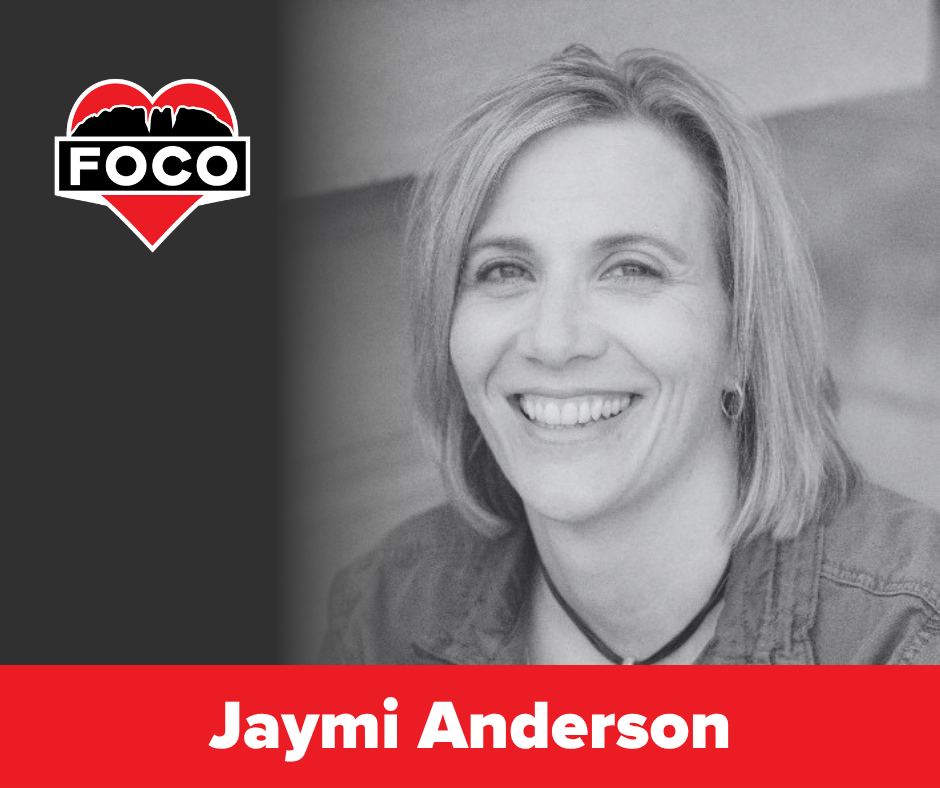

Jaymi Anderson is the Executive Director of The Genesis Project of Northern Colorado, a faith-based nonprofit that supports single mothers and their children through long-term housing and wraparound care. She’s focused on helping women pursue economic self-sufficiency through stable housing, counseling, family advocacy, and life-skills development. Genesis Project has operated in Northern Colorado since 2002, and its Greeley residential program expanded after purchasing and renovating a historic multi-family home that began housing residents in 2018. Anderson’s background includes teaching, coaching, writing, and community-based leadership, all of which now shape her work serving vulnerable families in the region.
Human flourishing depends on more than income alone. For single mothers facing poverty, addiction, domestic violence, or isolation, lasting stability requires housing, relationships, emotional safety, and practical support that can withstand setbacks.
Jaymi Anderson, Executive Director of The Genesis Project of Northern Colorado, explains how her organization creates real new beginnings by walking alongside families for up to four or five years—not just a few months. She shares how stabilization through safe housing, weekly counseling, case management, family advocacy, and career development gives women the foundation they need to pursue economic self-sufficiency.
On this episode of The Love FoCo Show, host Jeff Faust sits down with Jaymi to discuss her unexpected journey from Montana teacher to nonprofit leader, why long-term care works when short-term help doesn't, and how neighbors, donors, and volunteers can help single mothers thrive in Northern Colorado.
Narrator: This is the Love FoCo Show.
Jaymi Anderson: I felt a heart for people and for serving people and helping people. And I worked in schools where I saw kids that, you know, they were closing at Burger King at 12PM. And then they'd come to class at 07:30, eight and they'd fall asleep. And you know what? I would have too if I was them. Right? So but they were helping their family out by working. And so those things pulled on my heartstrings, and I think it did influence, you know, how I ended up in the nonprofit world.
Narrator: Welcome to the Love FoCo Show. Our podcast highlights the incredible people who make Fort Collins the place we're proud to call home. Each week, your host, Jeff Faust, sits down with local leaders, community champions, and change makers to share their stories, what they love about our city, and how they're helping it thrive. So whether you're out on the trail, at a brewery, or walking through Old Town, thanks for tuning in.
Jeff Faust: Hey, everyone. Thanks for tuning in for another episode of the Love FoCo show. Today, I am sitting down with Jamie Anderson, the Executive Director of The Genesis Project. Now full disclosure, up until this point, we've been talking primarily with nonprofits, business leaders, educators, and government officials in the Fort Collins area. But Jamie's work is more beyond just one municipality.
She is serving Northern Colorado through the Genesis Project, specializing in long term care for single mothers, hoping to look forward to a better future and leaving their old life behind, embracing the new. I think you're gonna love the work that she is doing and this conversation. I know I was blessed by it, and I can't wait to share this convo with all of you.
Well, Jamie, thank you so much for taking some time out of your schedule to spend, your time with the Love FoCo Show. I'm grateful for you and the work that you're doing.
I'm super excited to get to know more about you and the organization, the way that you're caring for individuals in Northern Colorado. But the way I like to start all these podcasts is just to kind of ask people like, what is your origin story? How did you land in Northern Colorado? How did you get out here? Were you born and raised out here?
Or like, what makes you you? So tell us a little bit about your origin story.
Jaymi Anderson: Yeah, I appreciate that. Well, I grew up in Montana, so that's my, I guess that's my origin story. Was there until I was about 28 years old.
Jeff Faust: Okay. And So you have to forgive me because, I mean but, like, for me, when I hear that, I automatically think, like, were you, like, in outdoors moment? Like, were you a hiker, a white water rafter, a hunter? Like
Jaymi Anderson: Well, you know, it's I I think the outdoor culture is probably bigger here in Colorado than it is in Montana, with the exception of the real tourist areas. Yep. I grew up in Eastern Montana, which is similar to Eastern Colorado. So more farming community. So, yes, by default, you are an outdoors person because in that you function outdoors.
But recreationally, that wasn't a huge part, aside from skiing and that kind of stuff, which you just take advantage of. But where I grew up, that wasn't as as much of a thing. It was more being outdoors, just doing work. Yeah. Yeah.
So but then my
Jeff Faust: I I mean, do you, like, were you born and raised out there, like, all your upbringing?
Jaymi Anderson: Yeah. Yeah. Really tiny farm town. And that's actually where I grew up. Graduated high school with nine people in my class.
Jeff Faust: I was gonna say, did your graduating class get to double digits?
Jaymi Anderson: No, it did not. It did not. My high school barely got to double digits.
Jeff Faust: Yeah. There's, a sweetness to that, and, I mean, there's pros and cons to all that.
Jaymi Anderson: Right. Yeah. For sure. Yeah. Yeah.
No. It was it was a great experience for me. Also, I didn't seek it out for my children, so you can take from that what you would. But but, yeah, it was it was a great opportunity for me growing up.
Jeff Faust: Did you grow up on the farm or just like the
Jaymi Anderson: We did not have a farm, just in a farming community. Yeah. Yeah, we didn't have a farm ourselves, but we were adjacent to some relatives' property. Okay. And
Jeff Faust: what was, I mean, I don't wanna jump too far ahead into, you're now the executive director of this wonderful nonprofit, but was this kind of leadership and care for maybe some of the vulnerable population around, like was that always part of who you were?
Jaymi Anderson: You know, I think it goes back to when you live in a small town and grew up in a small town, you just help your neighbor. You know, there weren't nonprofits around at that point that were it wasn't formalized, but it was just this understanding that, yeah, we were each other's emergency contact. You know, there wasn't an ambulance that was gonna get to your neighbor before you could, that kind of a thing. And so I think, growing up with that definitely has influence that I can look back and see that. Now I certainly didn't see that trajectory as I was growing up, but I do think it influenced a lot of my compassion and my just drive to love your neighbor.
Jeff Faust: Yeah. Yeah. Yeah, those, it's interesting that you bring that up because I think there is some like truth to that concept. Hey, this is before like nonprofits were every, you know, this is Yeah. We were just neighbors loving neighborhood.
Were just humans loving humans.
Jaymi Anderson: Yes. And I think in a smaller town, you're not gonna have that anyway. Know, it is just gonna be the people that you grow up with, your community that you care about.
Jeff Faust: Yep. Super interesting. So then, like, where'd you did you go to college? Did you jump right into the work world after high school, or what was that like for you?
Jaymi Anderson: Yeah. I went to college Montana State University and graduated with a teaching degree. Okay. I did go right into teaching after that. Taught at a couple different schools.
I was a science teacher, high school, middle school science teacher for And about seven then my husband got a job based out of Denver, and so we looked to move. I was also very pregnant at that time. So we continued to look where we could afford a place to live, and kind of the circle got bigger and bigger. He works at the airport, and so the circle got bigger and bigger until we ultimately ended up in Northern Colorado because moving from Montana at that time, the the housing disparity was huge. And so it just Sticker shock.
Felt so overwhelming. Now this was 2,002. So it's not even the same conversation that you have now.
Jeff Faust: Yep.
Jaymi Anderson: But at the time, it still felt very daunting. Plus, by the time we actually moved, our daughter was six weeks old. Okay. So we were just totally moving to this new state, this new area. And That's not
Jeff Faust: an easy task.
Jaymi Anderson: It was not. And and, really, I kind of had always dreamed of being kind of a metro girl, I think, or wanted to be close to the mountains. One of those two things. And I ended up in a different spot than I than I pictured. But, you know, now that I'm here, it's just home.
And so and then being able to see it from the nonprofit eyes that I do now, gosh, I just have so much pride in our community and how much we love each other.
Jeff Faust: Yeah. Yeah. So let's go back to your teaching days for just a moment. When you were teaching, was there, I mean, everyone kind of navigates these career changes and these life changes in a different way. Was it the move?
Was it the I'm now a mother? What was it that made you leap from teaching to nonprofit work, leaving nonprofit?
Jaymi Anderson: Well, that leap took about twenty years. It wasn't not an intentional leap by any stretch. I kind of took a circuitous route. I did end up stopping teaching when I left Montana to move with a newborn. My husband travels a lot for work.
Didn't make a lot of sense to go back to teaching, especially right away, just as navigating new community, newborn, all of those things. And then it just kind of slowly progressed that I'd be another child. So I was a stay at home mom for a lot of years. During that time, I'm, really involved, got really involved in my church and local mops groups and those kind of things. Was just always, I think that that heart of community involvement was always there, but was never something I really perceived as a career path.
Yeah. I did a couple other little things while my kids, as they they grew up and I grew up and evolved evolved a little bit, I actually got a writer certificate. And What's that? Through the Christian Writers Guild Okay. Was a program that I got just exploring different kinds of writing.
Yeah. Just learning and sharpening those skills. Love that. Ended up as a mommy blogger. So that was back in about the 2004, February was kind of the height height of that.
Jeff Faust: I actually This is still a real thing. This is I mean, like, even
Jaymi Anderson: It's influencers now. Right? Instagram influencers now. But, yeah, back in the day, it was all the mommy bloggers.
Jeff Faust: Well, that's not going anywhere. I mean, like, you still talk to young moms today.
Jaymi Anderson: Oh, yeah.
Jeff Faust: Absolutely. And they're still, like, I I need adult human interaction. Need friends. Love my children. Mhmm.
I I, like, need another human. Yes. Adult human to talk to while I'm changing my twentieth diaper.
Jaymi Anderson: Exactly. Exactly. And I definitely bore that out because, again, moving to a new community with a six week old child where I knew no one.
Jeff Faust: Yeah.
Jaymi Anderson: Absolutely no one. We have some family members over in Loveland. We had some family members in Westminster. That was it. So,
Jeff Faust: yeah, it Everybody's really was moving around here. I mean, the amount of migration to Northern Colorado right now
Jaymi Anderson: is crazy.
Jeff Faust: Or even around Northern Colorado is is just crazy numbers.
Jaymi Anderson: Yeah. And you really you need that community, like you said. And especially if you're a stay at home mom or you work from home now. You know? That that wasn't a huge thing in 2002, but it's a huge thing now.
And, really, you could not talk to another person in real life all day if you aren't really intentional about it.
Jeff Faust: Which I think, like, at least in my conversations I've I've had with with other people, that sounds alluring at first. Right, Especially the introverts where they're like, that is my dream job, that is what I want. The problem is that played out by six months or eighteen months or whatever. Like all of a sudden, you're no longer, like, feeding your introvert self. Now you're, like, forgetting how to engage Yeah.
And how important community is and reliance on one another.
Jaymi Anderson: Well, and it just takes so much more effort then to get involved after you get used to not being. And so and, I mean, that plays itself out on a national stage. How many studies show about mental health crisis that are really fueled by isolation? Yep. Like, that is one of the hugest crises that we're facing as a country.
And, unfortunately, it's just too easy. And it's not even I don't think anyone starts by thinking I'm gonna isolate myself. Like you said, it's like, oh, that sounds nice to kinda disconnect from society. And Yep. I'm an introvert myself so I can relate to that.
Yeah. But you do have to realize, yeah, it's that social spiral, downhill spiral. It is. It's not good.
Jeff Faust: It's not good. It can happen fast. Of course, now, like, people have substitutes in, Gemini. Like, well, Gemini is my friend. I'm sorry, but Gemini, you can talk to Gemini if you want, but Gemini is not your friend.
Jaymi Anderson: Yeah, yeah. You have to be, I think, really mindful of boundaries.
Jeff Faust: There's- But if Gemini is just the beginning, if we start, you know, I mean, I'm just getting a little conspiracy. This is in a dark rabbit hole around real fast, but by the time the robots come out, if you don't have any friends, it's gonna be a problem. Right. Like, we need human interaction.
Jaymi Anderson: Yeah. Yeah. And if I could just even bring that back to the work that we do now, that's one of the things that we find at the Genesis Project of Northern Colorado is we are serving women that, in a lot of cases, are isolated or have some sort of social you know, maybe they've had to cut off their social ties because they're very unhealthy. You know? If you're going through recovery from drugs and alcohol and your friends, your former friends, have not gone through that recovery, you can't be with them anymore in the same way.
And so that's one of, I think, the really important pieces of what we do. And I think, you know, it's influences. I'm talking to you. I'm seeing, you know, it's influenced by my lived experience of just being this mom by yourself. Right?
Yep. And I think that manifests itself in a lot of different ways, but that is one of the things that I think is so healthy for the women that we're able to serve is by providing some community for them.
Jeff Faust: Well, super interesting you talk about that, like in the recovery circle or, yeah, just in Genesis Project in general. One of the ways I think about it a lot, especially in the space that I'm in, is like what's required to actually break the cycles of generational poverty.
Jaymi Anderson: Yes.
Jeff Faust: Sometimes is a talent or a skill that will help you move forward. It sometimes is a promotion or something like that. But honestly, like if we could spend money at, just money to fix, America would have figured it out by now.
Jaymi Anderson: Right, I agree.
Jeff Faust: Where there's so many resources. And so it's not that it's not a financial thing or it's not like dollars and cents. Right. But we talk a lot about like relational poverty or just like the economy of relationships and how there's a really big difference if you are isolated or if you don't have those relational kind of networks that you can lean on and rely on to help you step up and out of generational poverty, it's like exponentially more difficult for you.
Jaymi Anderson: Yeah.
Jeff Faust: Absolutely. And so creating and sustaining these relationships is vital for long term health. I have to imagine you see that all the time.
Jaymi Anderson: Yeah, absolutely, absolutely. And it is, it's just, I can't even quantify the amount of importance. Because because, like you said, if if it was a money problem, only a money problem, we may have been able to solve it a little bit better, but it's so much bigger than that. And even when you're in community with other people that are going through things that can lift you up, you know, there's some real practical tangible things when you're a single mom, and especially if you don't have reliable family or a reliable village, for lack of a better explanation. You know, who's gonna pick up your kid from school if you're run late at work?
Or, you know, you're on your third strike for missing work, and the daycare calls and said, we can't take him. He's got a fever today. You know? What what do you do? You don't have that.
And so we, you know, we try to build that. And I really love when I see those organic relationships start to build within our community for our single moms so that they know that they still do have those social supports once they leave our organization as well, because that's the most important legacy that they can take away. And that contributes to overcoming some of these generational poverty issues. Because, like you said, it is multifaceted. It's not just about money.
Money is there. I mean, it's important. It's not not a thing. It's not not a thing, but it definitely just money alone isn't gonna solve those problems for sure.
Jeff Faust: Yeah. Okay. So help me on the timeline here. So you you kinda land in Northern Colorado. Mhmm.
Husband's working, airport.
Jaymi Anderson: Mhmm.
Jeff Faust: You're kind of, you're doing the stay at home mom thing. You're getting connected with different communities, faith communities, mobs, all kinds of different things. How did you land in Genesis? Are you the founder of Genesis Project, or how did you end up becoming the executive director? Take me on that.
Jaymi Anderson: That's a great question. So Genesis Project was founded in 2002, weirdly, just coincidentally, same year I moved here. But it's so it's been around for quite a while, and it was founded by people that just some women that stopped.
Jeff Faust: 2002, but that means you guys are crushing this. Mean, tons of nonprofits start and fail
Jaymi Anderson: Right.
Jeff Faust: Within five to ten years. And so you guys Yeah.
Jaymi Anderson: Yeah. And I can't take take credit for any of that. I I entered the story four years ago. So and it just started by some women that they knew that it was hard to be a single parent. And that that was really the, I think, the driving force and how to provide those supports.
And it started with some different practical supports. And kind of faltered, I think, to find its identity and also just get some momentum. In 2017, they purchased a multifamily house in Downtown Greeley, that has seven apartments in it. And that's really when our organization kinda started to take off. And I think that was the founder's vision.
It just took a while in execution to get to that point because when you're running a nonprofit as a wallet tier and it's not as your full time job, you know, it's just hard to get some of those things going.
Jeff Faust: Well, not every founder has the same skill set as, like, the next builder or the, you know, whatever whatever kinda the org needs in the next five or ten years.
Jaymi Anderson: Yep. Yep. And I think we just had some some passionate people that just kept the vision alive for a lot of years. I kind of ended the picture briefly in 2018. Once they had opened the house, I connected with their executive director.
At the time, I was doing life coaching and doing some different workshops and things in the community. And so she had invited me over to do some workshops at, the Genesis project. So that was my first exposure to it. I led a couple workshops there and then moved up. Like, that was the end of the story.
My business had evolved, and Genesis was doing its own thing. And then come about 2021 so at that point, my oldest had graduated high school. My youngest was about to graduate high school. And, you know, as a parent, you start going, okay. Well, what's what's next for me?
Right? And and I actually had a a coaching business at that time that was all online. Just what we were just talking about, all of my clients I met with over the phone or via Zoom, and it was great. And, also, I knew it was not my it wasn't what I was called for. That wasn't the end of the story for me.
I just felt like I needed to be in the community. I needed to have boots on the ground where I lived, and that felt very important. I had no idea what that was gonna look like
Jeff Faust: Yeah.
Jaymi Anderson: At all. What what you know, on the outside, looks like a chance conversation, and I think it was a god thing. I got paired at a community service event with someone who was a volunteer at Genesis Project. And I was like, oh, I, you know, I know that organization. And just kind of brought them back up to my attention.
That was 2021. And about a month later, they listed the executive director position. And I often think back to that, if I had not become aware of Genesis Project at that time, would I have even known that they were listing this position? And they were really looking for someone who was wanting to promote the organization in the community, who was ready to kind of take on. They had adopted this new program.
They needed to take it forward. And then, you know, I can look back and see all of these little bits. Like I learned how to promote my own business. And I had all these connections in the community that I really kind of questioned what was the point. And I wasn't sure what to do with them.
And then I had my curriculum building skills right from back in my teaching days, and then my skills, my writing and communicating skills from my mommy blogger days. And so, you know, you stack
Jeff Faust: It's all fascinated
Jaymi Anderson: to It do was because that job description read just like my Yes.
Jeff Faust: Yeah. And I talk with people about this all the time, but who we are today and who we are becoming, it's not independent from our upbringing. It's not independent from our history. You know, I have a personal faith that says even our mistakes from our past can be redeemed and you can rewrite a new future. But of course, we're also to some degree kind of a product of where we've been and all those different pieces in our life.
It's fascinating to hear you even articulate that. Right. Because all these other stops that and some of them felt sideways at times at, you know
Jaymi Anderson: So much of the time. I I I had so many existential crises. Right? Well, I was like, what am I supposed to be when I grow up? And definitely, ED of a nonprofit, not on the radar.
Like, that wasn't on the list of things to do. And, yeah, going back to being a kid that grew up in a small town of Montana, never even occurred to me that that was a job that someone would have.
Jeff Faust: If you could, like, create like, I mean, let's just imagine you're talking to Jamie when she's in at Montana State. Uh-huh. Or or Jeff. I I went to college in Iowa, you know, or or any number of 20. We're like, I wanna lead an organization in the nonprofit sector.
Sector. I I know there's nonprofit leadership majors. I know that but, like, if you could craft out a major for someone like that, I mean, how would you speak into their lives? Like, these are the kinds of fears that they need to be about.
Jaymi Anderson: Boy, that's a great question. I think that one of the things we underestimate in the nonprofit world is business sense, because I think that my time running a small business, and I mean small business. Sure. But having to teach myself marketing and that those kind of things, that was huge in how I communicate our message Yep. As a nonprofit.
So I think that marketing of some sort is definitely a a huge piece of that. You know, I run a pretty small organization. There's four of us on staff, but I could definitely see having some organizational type leadership. Our experience would be huge. And that might even be just being part of an organization and and learning
Jeff Faust: Yeah. There's a lot of ways to be educated.
Jaymi Anderson: Right? Absolutely. Not having had any training on that myself aside from what I've taken on now. You know, I I couldn't tell you what that looks like, but I
Jeff Faust: think those those pieces No. Are No. Okay. Because this is, like, this is one that always it seems like it always catches everyone off guard.
Jaymi Anderson: Right.
Jeff Faust: It's it's like the business side of it, right? Yeah. It is a nonprofit, but there's still money coming in and money going out. And this has to work on the spreadsheet. Uh-huh.
You know, and like we have to report this to the IRS, to our donors, and we have to be able to tell a story in a compelling way that people will invest their resources in it. But if you can't stand in front of a group of people and say, you should give to this. Uh-huh. It's gonna be hard to be an executive director.
Jaymi Anderson: Yeah. And I think I have the e one of the easiest jobs when it comes to that because I don't have to tell people why we need help. I don't have to tell people why single
Jeff Faust: moms the problem.
Jaymi Anderson: Yeah. I don't have to explain why single moms struggle. When I get up and talk about single moms, people are standing in line because they get it. They were raised by a single mom. They know a single mom.
It is just baked into our society understanding that need. And so from my perspective, that makes my job pretty easy. I think that would be harder for for some other organizations. But I think the big thing is, yes, you have to be able to communicate that message, both the need and what you do as an organization. And you also you just gotta be passionate about it.
Like, they're just Yep. It's not for everybody. And some people can I think you can become passionate once you work in an organization and you see the need and stuff? I think that can organically come. But there's gotta be something in you that, like, no.
This is this is important.
Jeff Faust: Yeah.
Jaymi Anderson: And understanding that. And I think for me with the Genesis Project, I'm I'm not a product of a single mom. I, you know, don't really have any of the lived experience of the women that I work with. But what resonated with me was the holistic care that we provide. It was the fact that we do counseling, that we do housing, that we are helping these women overcome that generational poverty.
And that's really where my passion was of I think as a outsider, I would look at the community and go, how do you how do you help someone? You know? Because it's not just about giving money. It is about really caring for an individual. And because I saw that in the Genesis Project, we happen to do that for single moms, and that really lit a fire under me and why I became so passionate about it.
Jeff Faust: Oh, man. I have so many questions about that. I wanna dig into Genesis Project. I I just I have one lingering question for you. Uh-huh.
Before we we get in there, and then I want you to just, like, riff on Genesis Project as long as you want. Circling back to something you you had mentioned just a minute ago, I think the way you said it was by chance or by faith I bumped into this person that's innocent. So tell me a little bit about that because our lives, in some ways we are a summary of our past and who we're becoming into the future, But we all have these little moments that by chance or by faith, you know, however you kind of have your worldview that interprets that. These are defining moments.
Jaymi Anderson: Yeah.
Jeff Faust: So tell me a little bit about that interaction and what you've gleaned from, I mean, and maybe speak to our audience even about those opportunities of faith and chance I can step into. Because I think that's a really interesting part of your story.
Jaymi Anderson: Yeah, I think it is too. I think it's kind of I think it's my origin story almost of the Genesis project Yeah. And and how I became the executive director. Weld County does large event one time a year called the Weld Project Connect. And everyone goes out to our Island Grove Center.
They have, United Way organizes the whole thing. They have a 100 or so nonprofits and service providers under one roof. It is one day where individuals in need come in. You work one on one with a navigator, find out what their needs are, you take them from station to station to get help.
Jeff Faust: Yep.
Jaymi Anderson: It's a one to one ratio. And so how god had worked this whole thing out was I was paired with this with her name is Amanda, this volunteer, and we were paired with a married couple. So this couple wanted, of course, to stay together. But because of the rules, like, Amanda and I also stayed together and and took these individuals to, from station to station all day. And, as a navigator, you kinda end up just hanging out in the chairs while they, while your, person gets their service needs met.
And so ours happened to be meeting with an attorney in, you know, half an hour, hour long. So Amanda and I, of course, you gotta find something to do. You know? So you just kinda visit with each other. And Yeah.
And it turned out she was going to do a volunteer project there. So once again, at that moment, nothing felt significant. I think so much of those things, you in hindsight, can look back and and kind of build this little trail where you see the little pebbles of of direction that God is providing. And so I do look back on that, and I think that was significant. Like, that put Genesis back up on my radar screen, this organization that I'd kinda heard of and done a little work for, but certainly was not pursuing working for them in any way, shape or form.
Well, what
Jeff Faust: I love too about hearing that, at least just what's in my mind is you were engaged in the community.
Jaymi Anderson: Yeah.
Jeff Faust: And I, you know, part of this podcast, I mean, I'm interviewing all kinds of different people, definitely a lot of nonprofit leaders, a lot of people in secular or faith based nonprofit space, but also educators and business leaders, all kinds of different folks. But I would say about half the podcasts are with nonprofit leaders or organizations where people who are listening can go and get plugged in. Yeah. And one of the implied parts of your story is that you were engaged in your community. Yeah.
And so my hope is that people listen to this conversation or they listen to any of the other podcasts that we have published. We're like, well, that's an organization I'm interested in or I can go learn more about that because we've gotta kind of get off the sidelines a bit and get in the game. Yeah. Because our communities don't just magically get better. They get better when folks lock arms together and say, we're gonna be forced for good, we're gonna actually, like, impose some agency on the problems around us and see a difference.
And so I love that you were, already involved in the Yeah.
Jaymi Anderson: For sure. I think, well, and as I told you, I was kinda feeling this itch of, like, you know, I am isolated. I am working from home. And what is out there, you know, happening in my community that I can be a part of? And I think that, I would urge anybody.
And and just, like, don't worry about it being the right exact thing because as you can see in my story, it leads to the next best thing. Right. You know, you you just step out on faith forward and, like, I'm just gonna pack boxes at a food bank. Like, that's maybe your first in row, the easiest place to get involved. And and maybe you do that for a while, and you're like, gotta going.
Yeah. Maybe you just gotta get going. You might meet people, learn different things, and and just follow where that path
Jeff Faust: takes place. I'm reading this sweet book right now, and I'm kind of nerding out on it. But it's all about willpower and, like, a life of discipline, spiritual disciplines as well. Just things that, like, help you live a more complete whole life. And about halfway through the book, it basically is like your willpower stinks actually.
Like you can't actually, but what will help, what will supersede even the person who has got the greatest amount of willpower is inertia. Inertia in your life makes a huge difference. So go pack the boxes, go show up at this thing, get out of the rut, do a thing that can be repeated because as you build that inertia in your life, it will lead you to the next thing or the next thing or the next relationship. It's hard to stop inertia. Yeah.
And so that's really
Jaymi Anderson: Yeah. And I think that's, well, that goes back to my life coaching days. And actually, I was just having a conversation with one of the women in the house about this yesterday is, you know, I think we, when we think about what our future is gonna hold or what our perfect job is or anything like that, we think we have to have the exact address. Like, I'm gonna go to this thing, and I'm gonna be this work this position at this firm or whatever, which might not actually exist by the time you get there. Right?
And so I think one of the and that paralyzes us, though. And like you said, it can be this bullish willpower. But what is better is if you are seeking kind of more of an area code as opposed to a direct address
Jeff Faust: When
Jaymi Anderson: you're when you're looking for, like, this is the direction I feel. And and my my case is where I feel god pleading me, and I'm just gonna step forward, and I have no idea what this
Jeff Faust: is gonna look like. I'm gonna steal that.
Jaymi Anderson: Right? Well, it's trademarked.
Jeff Faust: It's all yours. Instead of a specific destination, let's look at an area code.
Jaymi Anderson: Exactly.
Jeff Faust: This is the direction my life is heading. I wanna partner with God to get there.
Jaymi Anderson: Right. Because, I mean, you know, I'm a I graduated college in 1995. So if I was a computer programmer in 1995, that job would not look the
Jeff Faust: same Yeah.
Jaymi Anderson: Right, in 2025. And if I held on to that, well, how disappointed would I be? Right. And it's that that same thing where I graduated with a science teaching degree. It certainly wasn't you know?
And I could be a science teacher now and be happy with that.
Jeff Faust: Yeah.
Jaymi Anderson: But that just wasn't my path. Yep. And I was just able to just see the next thing that was revealed to me. But I think that that underlying current is, like, I felt a heart for people.
Jeff Faust: Yeah.
Jaymi Anderson: And and for serving people and helping people. And evident I worked in schools where I saw kids that they were closing at Burger King at 12PM. And then they'd come to class at 07:30, 08:00. And they'd fall asleep. And you know what?
I would have too if I was them. But they were helping their family out by working. And so I just had those things pulled on my heartstrings, and I think it did influence how I ended up in the nonprofit world because that. But yeah, you just take that next step towards where you think you're supposed to be heading, and and God will reveal those Yeah.
Jeff Faust: I love it. Well, tell me about Genesis Project. I just wanna open this kind of the next part of our conversation open to you. We've talked around it a little bit. I'm sure the listeners can pick up that, you know, you've got, you know, I think you said you've an apartment complex, you're housing women who are in need, caring for single parents.
But just canvas kind of the big picture of who you guys are, what you're doing. And then I'd love to wrap our time up too by just having you talk about your needs. Okay. Because every nonprofit has needs.
Jaymi Anderson: We sure do.
Jeff Faust: There's like a real budget, there are real ways people can get involved. So, but yeah, let's start with just kind of picture what it is you guys are up to and fill us in on that.
Jaymi Anderson: Sure. So our mission statement is empowering single mothers in their pursuit of the new beginning. And how we do that is by providing first for those basic needs. As you mentioned, we do have an apartment complex. We've got seven apartments that we provide fully furnished down to spoons and washcloths for our women that come in and their children.
They are allowed to stay up to four or five years in order to become economically self sufficient. So that's the big goal. And for the first year or so as our women come in, typically, they're coming from fairly broken circumstances. We get a fair amount that come from sober living. They're just getting their lives back on track.
They may have lost custody of their kids, and they're they need stable housing in order for them to get reunited with their children. Or perhaps they've fled domestic violence and they maybe have been in a shelter, but they need something a little more permanent, and they haven't had any income. You know, they typically in domestic violence, it's not unusual that someone is not actually able to work because financial abuse is a huge part of that. And so they just have to rebuild all of those things. And so we bring them in and get them weekly counseling, weekly case management.
We have a family advocate who works with them to make sure that they are connected with whatever services they need. We get the kids in daycare or school and some of those just basic needs met. Right? So everybody feels stable and secure and just like they can even breathe again. Because when you're talking to someone about, go get a job, when they don't actually know where they're gonna live for the next year, those are really hard things.
Jeff Faust: Can you say your mission statement one more time?
Jaymi Anderson: Empowering single mothers and their pursuit of a new beginning.
Jeff Faust: Yes. You're right. Like, you can't even entertain the idea of a new beginning. Right. If you're hungry, you're anxious, and you don't know what the next eight hours is going to look like.
Yeah. And so you, I mean, you have to stabilize some things in order to begin dreaming about a more preferred future and hope.
Narrator: Yes.
Jeff Faust: So I love that like from the get go you are stabilizing life and just letting kind of the waters and the anxieties just settle a bit. Probably not gonna be eliminated. Right. But we're just gonna begin to settle those things.
Jaymi Anderson: Yeah. Yeah. I mean, it takes a while for your body to even know you're safe.
Jeff Faust: Right.
Jaymi Anderson: You know? And to to be able to decompress. And And so we really, like, that's kind of the core of our program.
Jeff Faust: Can I ask a question about that? Sure. Like, are they living there for free? Kind $200
Jaymi Anderson: a month. Okay.
Jeff Faust: So they got some skin in the game, and they're kind of investing in that. Mhmm.
Jaymi Anderson: Yeah. We wanna make sure that if they are unemployed, that it's not something that's going to be hard for them to do. At the same time, as you said, their skin in the game, it is and it and also just life skills training around money management and some of those kind of things and and paying rents.
Jeff Faust: And did you guys like, how did you acquire this little building?
Jaymi Anderson: That is a great story. So, again, this is I wasn't involved here, but the the board at the time just knew that housing was a piece of it. Like, can't and this was 2002. Again, this was when you could buy a house for a $150,000. Right?
But still just it doesn't matter. Like, at that level, that was still too much money. And so they knew that housing was a piece of it, and they tried a couple different variations, but they really had kinda landed on, we need a place that has apartments, separate apartments, that these families can be apart, have their own space, and get together.
Jeff Faust: Right.
Jaymi Anderson: And so I think they were really just praying on that and had put feelers out in the community. Someone who I think was a friend of a friend won this house in a coin flip.
Jeff Faust: What? Yeah. I need friends like that.
Jaymi Anderson: Right? Won this house in a coin flip. It was in bad shape. It was a trap house. It was not not in great shape.
But at the time and the organization did not have a lot of money. Yeah. So once again, praying and putting out feelers in the world. Somebody somebody who knew somebody who knew somebody had inherited
Jeff Faust: Yeah.
Jaymi Anderson: Some money from their parents and put that down payment down $250,000 from
Jeff Faust: the house. Yeah.
Jaymi Anderson: So and that was, again, in 2017, I think it was when they first started purchasing it. They remodel had to remodel it. Was in pretty bad shape, is my understanding. Remodel it. Fast forward to 2025, we paid off that house.
Jeff Faust: Wow, congratulations. Thank you. That has to feel so good.
Jaymi Anderson: Yeah, yeah, it is fantastic.
Jeff Faust: Yeah, well, and that's gonna impact the way that you can share. Yeah. And you can recruit new donor base because less of their donation is going to be going to like paying a loan. Now more of it is gonna go to services and that's, you know, I mean that's a big deal. That's huge.
Jaymi Anderson: Yeah. Yeah, it's really exciting for us as an organization.
Jeff Faust: Yeah, really sweet. Okay, so you're walking with these families. So does that mean you're primarily kind of engaged with seven or so families at a time? Uh-huh. So what I love about that, and I'd love for you to just talk about this as much as you would like, is there are lot of nonprofits out there, a of them doing really good work, and everybody kind of has a different organizational model.
One's not better than the other or anything like, but they all serve different purposes. And for a lack of better terms, what I hear you talk about is we are intentionally going to be a mile deep, but maybe an inch wide versus a mile wide and an inch deep. So you're walking long haul with single moms, empowering them for a new and a bright future, but that's not gonna happen overnight. And so intentionally, you're bracketing down so that you can really dig deep with some of these women. Talk to us a little bit about that model and maybe the fruit and some of the efficacy that you've seen from going slow with a smaller amount of people.
Jaymi Anderson: Yeah. And that was something that fairly recent in Genesis history. I think prior to this, they had about a two year model, which is still actually a fair amount of time. If you look into transitional housing, that's actually still quite a bit of time. But they were realizing, like, it's just not enough.
Yep. And so Mary's Home, which runs out of Colorado Springs, actually has a wonderful model of this, that they're doing this work well. And they were generous enough to just give us a blueprint and said, this is what we do. And we adopted that. That came about right before I became became executive director.
And so, really, my marching or first marching orders were make this program work for us and how we do that. But it is that it's that recognition that it's not just about just getting a job. It's not just about even getting housing, but all of these factors that really, really weigh in on our single moms and being able to help them navigate some of that system because the first year is really, it is all about stabilization. It's about learning some skills, learning about yourself, being learning how to be a good parent, maybe reconnecting with your kids when you haven't been connected with them for years and just giving our parents a safe space for that. And then after that, we do start looking at what is next in terms of career development.
We have a career development coach on staff that works with moms. Just kind of identify, again, kind of that ZIP code of where do you think you want to go. And also the practical piece of, is this something you can do as a single mom? You can't be an airline pilot as a single mom. You're going to be gone.
That's not going to work. Right?
Jeff Faust: Yep.
Jaymi Anderson: So what are what are things that you can do? And so it's kind of a both end. And and, again, they're they're navigating this as well. And so education is a big piece of what we do. Being able to live at a place for low cost gives our moms the opportunity to pursue further education, whether those are job certificates.
In some cases it's GED and high school programs. In other cases, it is, yeah, workforce certificates or perhaps community college. We right now have three of our moms in community college, and we have two of them that are working to finish high school. And so, you know, those are baseline things that you need sometimes in order to become more economically self sufficient. So we want to provide them with the opportunity to do that.
And also encouragement about starting to dip the toe in the water, right? Starting to connect in the community, reengage again. And that's some of the work we do too is having our our women volunteer out in the community or shadow job shadow or interview with different business owners in the community just about what they do, just to give them, opportunities and exposure for what that next step might be. Our goal, you know, the ideal goal is if one of our moms gets to that point, gets a full time job, that we can also support her for that first year work because that's where the benefits start to fall off. The more successful we were talking about this before we started recording.
The more successful you are, the more money you earn. You also, all of a sudden your health insurance goes away. If you have Medicaid, so you need to start paying for your
Jeff Faust: own That's not a
Jaymi Anderson: small one. No. TNF usually falls off first. That's temporary need for needy families. That goes away right almost immediately when you start working.
Medicaid will fall off. Your SNAP benefits, so food assistance will fall off, and then ultimately child care assistance will also fall off. We don't have child care assistance anymore in Weld County because there's no new child care assistance dollars out there. So that's another thing that we're trying to navigate. This like a
Jeff Faust: this is a really tricky thing that I'm not sure everybody always realizes. If you've just, you know, you're in your career, you've been in there for any length of time, you cannot be aware that actually when you're on these different assistant programs, as you get promoted, you might get, you know, if it's an hourly job, you might get another couple bucks an hour, which could help you over the year, but you might lose SNAP or you might lose Yes. So it's like a net loss in
Jaymi Anderson: a way. Exactly. Just case in point. So if you have two children right now and you're receiving 10 of temporary for needy families, your benefit is around $750 per month. If you make $4.00 $1
Jeff Faust: Yeah.
Jaymi Anderson: Per month, that goes away. So for $400 a month, your net loss is $350 a month. Yeah. So you've gotta make sure that you're have a plan to overcome that. And that is that's a scary leap.
And that's what keeps people sometimes in this this part time work or even not working because it is such a huge leap without a a safety net that, really, we have this working poor. They call it the acronym nationwide now is ALICE, asset limited, income constrained, and employed.
Jeff Faust: Okay.
Jaymi Anderson: So ALICE. And that is you know, that's our moms. That's our single moms. And so if we can provide low cost housing so that moms can save money and they can actually come out of that with a plan for how to move forward in market rate housing, then that's the ideal. That doesn't always happen, and and our women can enter and leave at any point during their journey.
Jeff Faust: This is why I love the multi year journey. Yeah. Because you might be able to, in six months or a year, you might be able to get a promotion or two. Right. But every promotion you might lose a benefit.
So actually these folks, you're gonna need to walk with them through two or three or four promotions to the point maybe where they actually get the career that healthcare is included with it. Yeah. Or some kind of job where there is a benefit package. Well, rarely happens in a six month period. Exactly.
It could, but it's rare. Yeah. And so to be able again to go deep with these women over a longer period of time, now you're able to walk with them through not just the first promotion, but the third, fourth, or fifth, which is actually gonna help them in the long run the most. Yeah. Which I think is just so, that's such important work.
Mhmm. Yeah. And, you know, our communities are surrounded by folks in that space, that Alice space. And it's cost of living rising. I mean, these things are increasing.
That space isn't gonna go anywhere anytime soon. And so we've gotta continue to offer really good solutions and thankful for the Genesis Project to kind of be in that space.
Jaymi Anderson: Thank you. Yeah, yeah. It's a blessing to be able to be there.
Jeff Faust: Well, like to finish every conversation I have with just a question about ways that you're loving our city, ways that you're loving our community. You've already talked about that. With nonprofits, I always like to just kind of give the last five or ten minutes to tell us about your needs. Yeah. Because every nonprofit has needs.
And I would imagine that you have like ways people can give, events people can participate in. I didn't know a lot of your story before I came, but I do know that you have a golf tournament.
Jaymi Anderson: Yes,
Jeff Faust: yes. So we should like talk about ways that people can get on board with you, learn more. We'll include all the links that you talk about in our show notes. But yeah, talk to us a little bit about your budget and how you guys are attacking that.
Jaymi Anderson: Yeah, so last year we were contacted by 124 single moms who were in need, and I have six apartments. And my waiting list is about one year long because we do go deep. Right? Yep. But the the unintended consequence is that we don't have a lot of availability.
So big picture, what we're looking at is more housing. We know that need is not going away.
Jeff Faust: I was gonna ask, if someone like donated a building, like what would be the steps you would have to take?
Jaymi Anderson: Yeah, so we right now are early days exploring. We have an opportunity to possibly build here in Greeley. So that's really where we're putting our energy and focus. If someone did donate a building to me tomorrow, I would certainly check that out and see what that that prospect looked like. But, yeah, that that's huge.
You know? So I we entertain any and all things because we we expect god to surprise us in this. But the other piece of it is that, yeah, so then how do you get to that point? And then that is through fundraising. We do have monthly giving partners.
We do have business sponsorships, we do events. Our golf tournament is on June 27 this year at, Highland Hills Golf Course here in Greeley. That's a great opportunity. It's a fun day. You know?
It's just a you get a golf. You gotta be outside. And
Jeff Faust: Not a small event to put on, though.
Jaymi Anderson: Yeah. No. It's lot
Jeff Faust: of work.
Jaymi Anderson: And you support single moms. So it's a it's a great event. One thing that I love people, if you are interested in, like, this really resonates with you and you wanna see our mission in action on April 25, at Journey Christian Church in Greeley at 09:30 in the morning, we have our recognition ceremony, and you get to see the moms. Everybody gets called up on stage. Everybody gets celebrated where they are in their journey, and just a celebration of this last year for them.
I think it is the single biggest event we do, and we do that for free. We want our participants to invite their friends, family, coworkers, probation officers, everyone that has touched their lives, and we want them to come and celebrate with them. And I love to have the community come and just cheer these women on. And that is the best picture that you can Yeah. The best glimpse into our mission.
I can't run everybody through our house. The people live there. Yeah. Right?
Jeff Faust: But Yeah.
Jaymi Anderson: I can I can show you that? So I love to have people involved in that. But then fundraising, of
Jeff Faust: course What's your guys' annual budget, like, over the course of a year?
Jaymi Anderson: About $275,000.
Jeff Faust: And and it's okay if you don't know this number, but I'm just curious, like, if you were to look at building Mhmm. How many how many apartments do you wanna add, and what would that cost?
Jaymi Anderson: The cost on that is a little tricky just because of build out and land. Yeah. So we are looking at possibly partnering with another nonprofit and maybe getting some land at cost.
Jeff Faust: Yep.
Jaymi Anderson: And build that. I don't know. You know, it's in the the millions. Depends on how much you take on. Yep.
For sure. The number that spins out on my heart is 20 apartments. Yeah. I think I'll triple in size.
Jeff Faust: I think say triple in size.
Jaymi Anderson: Would be, I think, our that is kinda my North Star right now. Yep. But, again, you know, we just don't know. That surprises us at journeys along the way. Yeah.
But that's kind of my
Jeff Faust: I think that's great. Yeah. We could triple the amount of, because you're not just impacting one person actually. We're talking about family.
Jaymi Anderson: We're talking about the kids, their
Jeff Faust: lives. A generational impact. Yeah. You know?
Jaymi Anderson: Yeah. And we would love to have a facility where we can continue to interact with our alumni and just making sure that they're feeling support. And, also, those women that are on our wait list. Like, maybe there's an opportunity where we can provide help to the so they don't get to the crisis point Yep. Where they need the type of help that we do provide.
You know, maybe they just need a little bit of of extra hands and resources in order to get through their crisis that they're at before it turns into this downward spiral.
Jeff Faust: Yeah, well I'm grateful for your work. Know our community is too. These individuals and their children and their families greatly impacted. We've got a couple minutes left. I'd love for you to just offer any kind of closing words or call to action, however you would wanna say it.
But as you chew on that, I just wanna say, this has been a great conversation and I'm so encouraged that there are people like you and teams like your team doing this kind of work. It takes a bit of grit. It takes a bit of grit and there's ups and downs and, you know, there's just, it's a journey all the way through to the end. And so, yeah, just be encouraged. We're so grateful for the work that you're doing and, yeah, wrap us up here, with last
Jaymi Anderson: couple Yes. Just a couple things. Encourage anybody that's interested, go to our website, genesisprojectnoteco.org. Follow us on Facebook. Those are two great ways to just know what's happening.
Sign up for our newsletter. It's only once a month. I promise it's not too much. I won't ask you for money on the first day, but maybe the
Jeff Faust: second. Yes. Yes.
Jaymi Anderson: And, you know, what I tell everybody when they they ask, yes. Help us, but, also, just help your neighbor. Like, just your your next door neighbor that needs someone to watch their kids for a few hours when they go to the doctor, somebody that needs a ride somewhere, someone that needs, help going to an appointment. That is how we are our best selves in community. And that is what if if we were all able to do that on a regular basis, some of our nonprofits wouldn't have to work so hard.
And so just really encourage people to do that too.
Jeff Faust: Yeah, I love that. We all wanna go from living in a house to really making that our home. But then going, I think the part of that phrase that's often forgotten is we wanna go from living in a home to living in a community. Yeah. And that's really what you're talking about is we wanna have a community of support, of reliance and dependence on one another so that we can all step forward into the future and one with that's shining brightly with a lot of hope.
So Jamie, thank you so much for this time. I'm grateful for making some time out of your schedule to spend with the Love FoCo Show and I'm really excited for more and more people to get to know the work that you're doing in our community.
Jaymi Anderson: And thank you for the opportunity. Appreciate it.
Narrator: Thanks for listening to the Love FoCo Show. If today's conversation inspired you, share it with a friend who loves Fort Collins as much as you do. Don't forget to subscribe so you never miss an episode, and leave us a review. It helps more people discover us. To learn more about Love FoCo and find opportunities for loving our city one life at a time, visit lovefoco.com.
For now, keep loving Fort Collins well.

