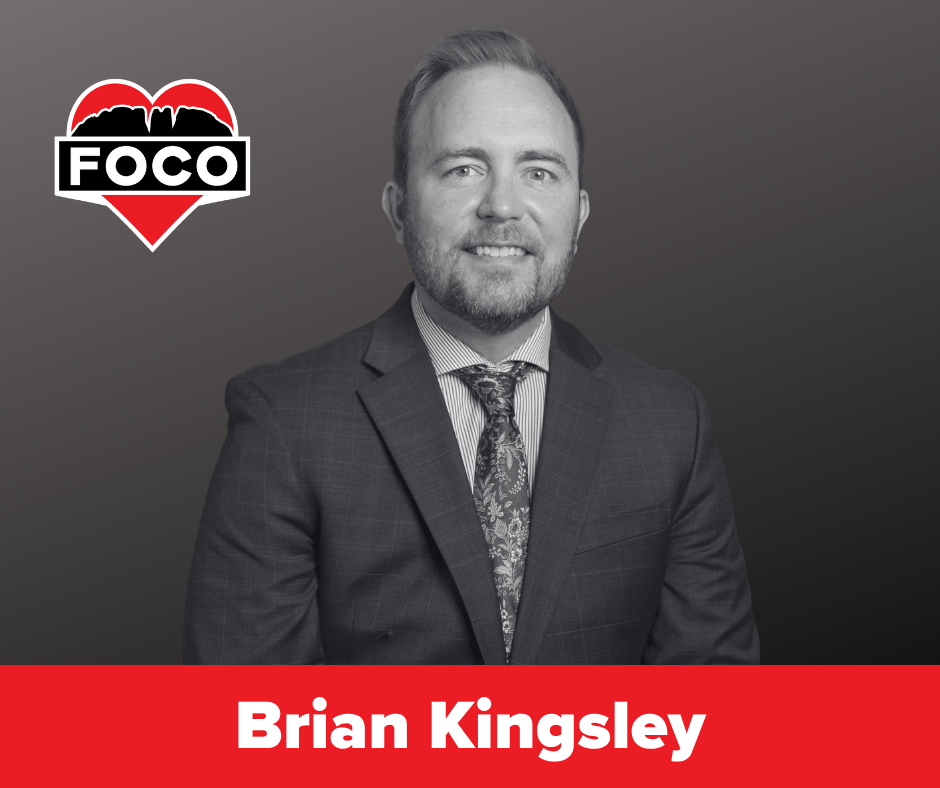

Brian Kingsley has served as Superintendent of Poudre School District since July 2021, bringing nearly three decades of experience in public education to one of Colorado's top-performing districts. Under his leadership, PSD reached the highest graduation rate in its history and made sustained gains in early literacy, student belonging, and college and career readiness. Before joining PSD, Kingsley served as Chief Academic Officer for Charlotte-Mecklenburg Schools and held leadership roles across large, diverse school systems in Florida and North Carolina. He holds a bachelor's degree from Penn State and a master's in Educational Leadership from Florida Atlantic University.
In this conversation with Poudre School District Superintendent Brian Kingsley, you'll get an inside look at what it takes to lead one of Northern Colorado's most celebrated school districts, and the very real challenges it faces right now. We cover:
Whether you're a parent, educator, community member, or simply someone who loves Fort Collins, this episode will deepen your appreciation for the people working hard every day to make this city a place where kids and families can thrive.
[Narrator]: This is the Love FoCo Show.
[Brian Kingsley]: It's hard on all of us, right? It's hard on our parents. It's hard on our students. It's hard on our teachers. Every one of our employees is going through this space of uncertainty, and we're all trying to figure it out together, both individually and collectively. And I think that's the part of what makes Fort Collins and the Fort Collins broader community great, is that we do have each other's backs. We can hold space and sit down with each other. We're curious about wanting to understand what's happening.
[Narrator]: Welcome to the Love FoCo Show. Our podcast highlights the incredible people who make Fort Collins the place we're proud to call home. Each week, your host, Jeff Faust, sits down with local leaders, community champions, and changemakers to share their stories, what they love about our city, and how they're helping it thrive. So whether you're out on the trail, at a brewery, or walking through Old Town, thanks for tuning in.
[Jeff Faust]: Today's conversation is with Superintendent of Poudre School District, Brian Kingsley. This guy has a heart to educate the children in our city, to help families, to help his employees and educators, and I'm so excited to share this conversation with you. I think in our conversation, you're going to hear so many different things about his upbringing, the poor guy is a Penn State fan, so he can keep that in mind, but you're also going to hear about the way that he is trying to tackle some complex problems and also celebrate the gift that it is to have such an amazing district. I'm so excited to share this conversation with you today, and I hope you enjoy it as much as I did.
[Jeff Faust]: Well, Brian, thank you so much for being with us today. I'm grateful for your time. I know you're super busy. You lead one of the largest employers, if not the largest employer in our area, as the superintendent of Poudre School District. But grateful that you're giving us some time to our audience to share about what's happening in your life and in our district. I want to get into all the things that are happening in Poudre School District, the way we're educating kids and blessing families and all of that. But first, I want to start our conversation, and we start every conversation. Tell us your Fort Collins origin story. Like, if there was a comic book written about this, I'm like, what? Take us back. Like, how did you get here and lead us on that journey?
[Brian Kingsley]: Thanks, Jeff. I'm really honored to be here. It was 2021, it was the middle of the pandemic.
[Jeff Faust]: Yeah, a great time to move. Take on the new job.
[Brian Kingsley]: I'm a risk taker. I have moved many, many times to advance my career and give my family different types of experiences across the country. My career actually started in Fort Lauderdale, Florida in 1998 as a middle school teacher at Olson Middle School in Dania Beach.
[Jeff Faust]: Nice.
[Brian Kingsley]: And I did that for a while.
[Jeff Faust]: What were you teaching in middle school?
[Brian Kingsley]: I started as an English language arts teacher because I was an elementary ed major at Penn State. And I love teaching all of the subjects. I get bored really easily. But I didn't think I taught English language arts well. So I wanted to go to a middle school and teach English language arts multiple times a day, get better at it with the vision of going back to an elementary school after I've mastered that craft. But I fell in love with middle school, but just not English language arts. So I moved into the math department the next year and just had a really, really great time, great mentorship.... and great fellowship too, it's just the community, the teachers, it was really a community driven school.
[Jeff Faust]: I think back to when I was 12 or 13, I have two middle schoolers now myself, one in elementary, two in middle school, and I'm thinking, man, that's a... That's an interesting time to teach, like in someone's life.
[Brian Kingsley]: Yeah. To me, you gotta be a special kind of person.
[Jeff Faust]: It's a gnarly time.
[Brian Kingsley]: It is, but I think you see so much human growth. Yeah. Right? They're growing, their brains are growing faster than their bodies, excuse me, their bodies are growing faster than their brains. And so I just, seeing that in a visual way of how much they were developing and maturing over those three years. Yes, it was gnarly a lot of times. but if you can just give them hope, breathe and inspire into their potential, the opportunity for them to be successful.
[Jeff Faust]: Well, thank God for teachers like you, because I'm like watching my... I'm boy, girl, girl. So I've got an eighth grade, sixth grade, fourth grade, all in Poudre School District. And my son, I swear, my wife and I have looked at each other and we're like, how does he have the grades that he has? Because I get this pubescent fog when we ask him to do something. But then he comes home with great grades. We're like, okay, well, something's happening. He forgot to follow these responsibilities, but he can lock in at school or something. He's using all of his- That's awesome. All of his decision making at school, I suppose. That's fantastic.
[Brian Kingsley]: Yes, I did that for several years and wanted to have a bigger impact on my community and in my school. So I went back to school and got a master's in educational leadership, which enabled me to be taking on leadership roles within the school and district, became an assistant principal, was a principal, which was all in Florida.
[Jeff Faust]: All in Florida.
[Brian Kingsley]: I was 17 years in Fort Lauderdale in the Fort Lauderdale metro area. But being a principal was probably the best job I had up to that point until now. I had a community impact. I was able to bring a community together and all of the resources, the faith-based community. the human resources, the health-based and health services and resources within the walls of my school to be a one-stop shop, very similar to what you're building here. Yeah, it sounds kind of like, yeah, we love focal resources. Yeah, you empower people. It changes the conversation. Rather than what Johnny did or didn't do, it's more what can we do for you as a family to create stability, to empower you to be able to be partners with us. When I became a principal in 2010, We were the lowest performing school in the district at that time, and four years later became one of the highest performing schools in the state. That's awesome. And it's family empowerment, which I'm really, really grateful. And that changed my career trajectory. I then got into executive leadership roles and decided at some point I wanted to be a superintendent. I became the chief academic officer in Fort Lauderdale prior to moving to North Carolina for six years, where I served in the same position in both Raleigh, North Carolina, and Charlotte. And that uniquely positioned me as an educator who had multiple years of executive leadership experiences, improving student outcomes in three of the largest school districts in America. And I believe it was for those reasons I was actually recruited to apply to this job that I have now, and I'm really grateful to have.... I made an incredible connection with a gentleman named Max, who was the lead recruiter. We have both of a... We both love baseball.
[Jeff Faust]: Yeah.
[Brian Kingsley]: And we connected over that. He's a big Chicago Cubs fan.
[Jeff Faust]: Well, this is a good man. This is a good man. Yeah, good man. I grew up in the Midwest. I'm a Cubs fan. So he's true and true. Pete Crowe Armstrong is like my son's favorite player.
[Brian Kingsley]: Yeah, he's ridiculous. He's incredible. I'm glad that you, I think you just signed him to do a long-term deal. We got him locked in, so. So he recruited me. I went through an incredible interview process that was incredibly intense during the middle of the pandemic. So I was working and serving in Charlotte, but also hoping and dreaming about Fort Collins and the broader PSD community. But the more I went through the process here, the more I fell in love with this community. I mean, I actually had to write four essays just to be, you know, entertained as a potential candidate. And then came here, was interviewing with all sorts of different civic groups.
[Jeff Faust]: That was before Chad GPT as well. So this was like a real essay that you wrote.
[Brian Kingsley]: Yeah. And it was, I was really proud of it. And then going through and meeting the people in the community, meeting our educators, meeting our paraprofessionals, meeting our board at the time, who had really, really high expectations for its next leader. I was eager to jump in as long as they were eager to give me the opportunity and I'm really grateful. Five years later, here we are.
[Jeff Faust]: It is an incredible place to live, isn't it? I mean, I, I have to imagine though, coming from Florida or even East coast in the Carolinas to like front range Colorado had to have been, well, a geographical shift, but also just even demographically, it's going to be a bit different than Fort Lauderdale.
[Brian Kingsley]: Yeah, for sure.
[Jeff Faust]: You know, so those areas. And so were you like an outdoorsman? Like, I mean, do you find yourself hiking? Or are you kind of more of an indoorsman?
[Brian Kingsley]: Yeah. I like hiking. I like fishing. I think navigating the shift from deep sea fishing to fly fishing has been a challenge and an opportunity, I'm lucky. Like I've learned that since moving here. Yeah, that's a mindset shift for me too. But it is an incredible community. I’m lucky…
[Jeff Faust]: Well, they want you to throw all the fish back too. Like,
[Brian Kingsley]: Yeah, that's a mindset shift for me too. But it is an incredible community. I joke remembering my first interview with the board and walking from one building to the next, I have never been at this elevation before. So I was literally out of breath sitting down in my interview. I just needed to take a couple sips of water and get myself together. So it has been a transition, but it's been a beautiful one.
[Jeff Faust]: It's a great way to interview though. I had somebody fly out for a job that I had open and I wanted to get, not like a textbook answer, I wanted to get some real answers. So I took this guy on a hike of Horsetooth and I just hauled it. I got up there quick and about every 20 minutes we would stop and I'd ask him a question and he was just huffing and puffing and like, he can't hide right now. The filters go, so now's when I can ask a good question.
[Brian Kingsley]: Forcing him to be vulnerable, that's great.
[Jeff Faust]: Yeah, it was a lot of fun. Yeah, incredible place to live. I really wanna dig into kind of what's happening at Poudre School District, what you see is like some of the gifts that you can give to our community as well as how you're gonna tackle some of the challenges. But I do find myself asking, I wanna predate even your time in Florida, what got you into teaching in the first place? there? Did you have an early inspiration?
[Brian Kingsley]: My... I don't even know where to start on this. It's... I've told this story several times. I have my grandfather on my mom's side of the family. My mom is the oldest of nine children. My grandfather was like an icon and still is an icon to me. He passed away in 2019, just prior to the pandemic. But I remember being the second oldest of 26 grandchildren, the first time he brought me to a high school football game. And everybody, I mean, everybody knew him by name, was trying to like aggressively find an opportunity for a handshake and a quick joke. And I thought he was the principal of the school and he was the head custodian. Yeah. And I mean, he just had so much respect. He had power and influence because he treated people right.
[Jeff Faust]: I love that.
[Brian Kingsley]: And it just led into how to navigate and work with people, how to serve people. And, you know, teachers and coaches in my life had a very, very big impact. I don't think I would be here without the people that helped me achieve in schools, including my family. teachers and coaches were mission critical to me getting to my potential, starting to be curious about my interests, my passions, and wanting to get connected to those things. And it made me want to serve and give back in the same way that people served me. And so here I am 28, 29 years later, and super grateful.
[Jeff Faust]: Very sweet, I love that. So that's a really great story. Thanks for sharing that. And I just kind of look over your shoulder and even in your office. I do, I have one other clarifying question. 'Cause I see a lot of Penn State gear here. Are you a Penn State guy?
[Brian Kingsley]: Yeah, I'm a Penn State guy through and through. I'm a big sports fan, but I am a diehard Penn State fan. Everything stops on football Saturday. I'm super excited. Every season's a new season. We've had some... Two seasons ago, we had a chance at the national championship and last year we kind of--
[Jeff Faust]: Iowa Hawkeyes ruined some of those seasons. I grew up in Iowa, so that's kind of my--
[Brian Kingsley]: I've been to Iowa out of Penn State game. I've traveled--
[Jeff Faust]: It's real.
[Brian Kingsley]: It is real, but it's a beautiful place. People are super kind.
[Jeff Faust]: Well, it's our pro sport in Iowa. Like we have nothing else.
[Brian Kingsley]: Yeah, well, Pennsylvania's got professional sports, but State College--
[Jeff Faust]: Yeah, up in that area.
[Brian Kingsley]: It's dead center in the rectangle that is Pennsylvania and it's a rural community.
[Jeff Faust]: What do you feel about that new hire? I mean, Matt Campbell's like,
[Brian Kingsley]: He's Iowa guy.
[Jeff Faust]: That guy, well he can coach too.
[Brian Kingsley]: Yeah, I mean, from Iowa State, if he's anything like our wrestling coach, I think he's gonna do great things.
[Jeff Faust]: Oh man, you're just digging now. 'Cause for all listeners, wrestling is huge in Iowa and Penn State. I mean, for years, we won everything in wrestling. Iowa did, but now it's Penn State. Kale Sanderson is a boss.
[Brian Kingsley]: He is a boss.
[Jeff Faust]: That's incredible.
[Brian Kingsley]: We're lucky to have him.
[Jeff Faust]: That's fun, I'm a sports guy too. So it's fun to just riff on that for me. But let's dig into the Poudre School District. You know, when we have incredible schools here, I meet people still around the community who have moved here because of the school district. Maybe they were in a neighboring city, kids with special needs and they wanted to come and receive the care that Poudre School District offers, a lot of care for diversity and equity in our school system. So just give me like an overview or a landscape of the enormity of this role that you have. and they maybe will dig into some of the specific challenges that you're trying to face as well.
[Brian Kingsley]: So I am super blessed, let me say, first and foremost, to be the superintendent of this destination district, which is PSD.
[Jeff Faust]: It's a good way to say it.
[Brian Kingsley]: And I'll give you a data point to prove it. Nine out of ten school-age children living in our boundaries attends one of our 54 PSD schools. That data point, you can't find that in 95% of the school districts in America.
[Jeff Faust]: That surprises me actually. As a community member, I didn't know it was gonna be that high.
[Brian Kingsley]: Yeah, nine out of ten. The fact that people are choosing us and they're choosing us every day is built on trust. It's built on knowing the fact that we're going to move their students academically, we're going to move them socially, emotionally, and we're going to connect them to their passions and interests. That's what makes this school system great. I have been super proud over the last five years that we have, in the last two consecutive years, achieved the highest graduation rates in the district's history. Our literacy rates at third grade are the third highest in the state. And I'm hell-bent on trying to find a way in partnership with our amazing teachers and staff to get us to be number one in the state. But we're really moving the needle in a positive way for kids. And I think that's why people are choosing to move here, choosing to want to be a part of the school system. But we have challenges, too. As I share all of those things that make us strong, I will tell you the challenges that we're facing right now remind me of the first and only time I have ever been ice skating, where I was a hot mess.
[Jeff Faust]: I'm excited to see what you take with this.
[Brian Kingsley]: I couldn't get my knees, my legs underneath me, and I had one of those things that helps you hold yourself up. I did not enjoy it. The landscape felt like it was constantly changing. My legs were constantly moving. And I feel like that's what's happening in our community right now financially as a result of things that are happening locally at the state level and at the national level. Locally, we're experiencing a shift simply because there are fewer children living in our district.
[Jeff Faust]: I get those emails… Yeah, cause my kids are in the district.
[Brian Kingsley]: It's really interesting to kind of unpack why that's happening. It's not because families are choosing to go somewhere else.
[Jeff Faust]: Well, that's what's really interesting to me about what you just said that nine out of ten Yeah, because I think coming into this interview I was gonna ask like hey what like are more people choosing like a like a private or charter, or what it sounds like a ton of people are still the folks who are in our district and we're still largely choosing PSD.
[Brian Kingsley]: I mean, if we were running a business and 90% of the people were buying what we were selling, I would say that we're pretty darn successful. Yeah. So I think we, our district, is a champion district. But there are three things that are kind of at play that are contributing to this current reality. One, birth rates are down locally at the state level and nationally. We know that school choice continues to be a value of our system. And so while we have 90% and we're grateful, I am curious how to bring that other 10% back into our buildings. And then the last part is there's a lack of affordable housing. So when we, I meet families all the time who are moving here, a lot of times they're older and more mature where they are in their career. They have older children. And so the reality of how that plays out in our school system, right now we have a thousand fewer kindergarten students than we do 12th grade seniors. So that's a concern. Yeah, and it's a concern not just for PSD, it's a concern for CSU, Front Range Community College, Ames Community College. There is a cliff that's coming where it's just fewer number of students are available to actually serve. And so we're having to go through this journey of wrestling, like, what does that mean for our school system? Like, how do we make sure we don't lower our standards? We don't lower our expectations, and we certainly don't lower the level of service that we've been providing and have proven that works with kids. But that comes on the heels of needing to make really bold and hard decisions. So that's the local impact. At the state right now, they're facing the legislature anywhere from a billion to a $1.4 billion deficit.
[Jeff Faust]: Yeah, a billion with a B.
[Brian Kingsley]: B, big B, capital B. And how that trickles down to impacting K-12 education is like we're balancing our budget going into next school year, and we have just gone through a journey of reducing our budget by $10 million.
[Jeff Faust]: Those are real decisions.
[Brian Kingsley]: For every million dollars, that is nine teachers in our school system. And a lot of times those are brand new teachers, second year teachers that are, you know, equally as important as our veteran teachers who have been investing in them. So that has not just an impact on PSD, but it has an impact on the economic vitality of our community. Those are people, those are jobs. Right? And so trying to figure out--
[Jeff Faust]: Well, there's a trickle effect to these decisions, right? 'Cause one of the things you had mentioned is affordability. Well, it's also affordability for the people you employ.
[Brian Kingsley]: That's right.
[Jeff Faust]: Which has gotta be, I mean– I entertain my mind with like thoughts of like, some of the challenges that you guys face. I'm like, you want the best teachers possible to provide the best schools possible. And it is an expensive place to live. I mean, it's gotta be a hard, that's not just a A plus B equals C. This is a complex problem. That's gotta be challenging to figure out.
[Brian Kingsley]: We've made great strides in compensation improvements for all of our employees over the last four years. I'm super proud of that. Like we've improved teacher compensation by over 25% in the last four years in our classified staff who are our bus drivers, our custodians, our paraprofessionals, they have had an improvement of about 30%, but we have room to grow. To get everybody at market rate to stay competitive, but it's still not enough to have every employee live in the community in which they serve. And we have to–
[Jeff Faust]: That's important. I mean, it's important for the police department too. I mean, it's one of the things about Fort Collins that I think most people love is cops get to drive their car home and they're like, oh, I live by a police officer.
[Brian Kingsley]: Makes people feel good.
[Jeff Faust]: And it does, yeah. I think there's a reality to it. And we want our teachers in our community too. Because it does, it impacts the whole city.
[Brian Kingsley]: Yeah. And I have to thank our community and our voters because they've been historically incredibly supportive of PSD. We about 16 to 17 months ago now, just passed a debt-free mill levy that had provided about $49 million a year in perpetuity to this district to transform compensation, to transform all of our facility needs across our 54 schools.
[Jeff Faust]: People don't always realize, facilities are-- all these price, construction prices, and renovation, all this stuff is crazy.
[Brian Kingsley]: That's another thing that I love about FOCO, when you tell people what you need, nine out of 10 times, as long as you can explain what it is well, people show up and they give you more, right? They want to respond and they did overwhelmingly. Prior to that ballot measure being passed, we had a billion dollars, another big B, in deferred maintenance in this district across its buildings. And only $800,000 a year to address it. So we were literally putting band-aids and duct tape on...
[Jeff Faust]: If you're perpetually just kicking the can down the road, I mean, that's eventually gonna be a really--
[Brian Kingsley]: Yeah, and we know we're gonna have to do that, right? And that ballot measure is indexed to inflation. So what an air conditioning unit costs 20 years from now, we're going to be able to pay for it. So we're just super really blessed to be in a community that's so supportive.
[Jeff Faust]: I find myself curious, I just wanna go back to the compensation thing. Like what other creative things are happening, maybe statewide? Like is there loan forgiveness for teachers who are educated here and then get employed here. Is there anything like that? I'm not, I ask that pure curiosity.
[Brian Kingsley]: Yeah, we have great credit unions in town. We have a premier partnership with both Elevations Credit Union and Canvas Credit Union in different ways. And they provide a lot of unique tools and services to all of our employees, not just our teachers. Whether it's loan, not necessarily loan forgiveness, but loans to help them get their first car, get them into their first home. There's different parts of the housing community that's also trying to figure out creative solutions through different mortgage opportunities to get our employees to be able to live adjacent to the buildings that they're working in, which is really cool.
[Jeff Faust]: Have you ever heard of Sycamore Equity, by the way?
[Brian Kingsley]: I have not.
[Jeff Faust]: Sycamore Equity is something that I'd love to introduce you to, because they help civic servants get loans to live in their community.
[Brian Kingsley]: That’s amazing.
[Jeff Faust]: Officers, fire department, clergy members, nonprofit leaders, educators. And so yeah, I'll share that. information we need for sure. And anyone who's listening, just Google it, look it up. Because they'll, they'll, yeah, they want to help. And they're looking at Northern Colorado as like an option. And so, okay. Let me, let me go way back. I want to get back into state funding and then some national stuff as well. Let me ask you about school of choice. This is a whole new thing to me. So, I grew up in Iowa, moved to Kansas City. My wife and I started raising our kids in kids sitting and we moved here. And you know, call me a simpleton, but we just, you know, we're going to the school where we live, like that's just, you know, we just figured they're all good here. So let's just, let's get them in. Started at Tavelli. And now my kids are now, actually I have a one at, at, or two at Timnath Middle High.
[Brian Kingsley]: Oh, awesome.
[Jeff Faust]: You know, and one still in elementary school. But as my kids jumped from elementary to middle school, we saw some of their friends like choose different schools and things like that. And so the way School of Choice has impacted me personally, just as a father, is we're navigating friendships. But I'm sure other families look at School of Choice for different reasons. I love this program. My kid's really into band or this athletic seems to be, and so tell me a little bit how that plays out in our district. Some of the pros and cons are just like, how you view that as the superintendent.
[Brian Kingsley]: Yeah, it's a great question. This was very different for me too, living and working on the East Coast, growing up in a school system where you just walk to your neighborhood school and you had no other choice. So coming to a school system like PSD in a state that has school of choice laws deeply embedded into its culture, it's not just a PSD thing, it's a state of Colorado thing that really enables any family to choose as long as there's capacity, any school that they want as long as they can get them there. Now, while I think that's a blessing, I also think there's a flip side to that equation. Not everybody has the story and the resources to get their child to a school outside of their neighborhood.
[Jeff Faust]: There's probably a socioeconomic limitation to that.
[Brian Kingsley]: Absolutely. That I feel incredibly challenged by. I would love to figure out creative busing solutions to have people be able to attain more options. That's a vision that this governance team and myself have to try to achieve. But in this budget environment that we're in, we're not able to execute on that yet. But it's been really interesting to see how many of our families are actually choosing a school that's outside of their neighborhood schools.
[Jeff Faust]: Do you think it's a lot or not a lot?
[Brian Kingsley]: It's one out of three.
[Jeff Faust]: Okay, that's pretty significant.
[Brian Kingsley]: It's one out of three. Yeah, and I think it's because we have so many amazing options. I really believe our school district boundaries is the size if not bigger than the state of Rhode Island. It's huge, right? Wow. Yeah. So if we put that on a dart board and close their eyes and shot a dart, I guarantee wherever that dart lands on those boundaries, you're going to find an amazing school right next to that dart. You're guaranteed to find it. Which is really unique to this region and what makes it a destination district. Because we have so many options, I do think that's the reason and people having, you know, we have relatively an affluent community. Well, there's a community of need here too. People have resources to take advantage of that. So, as I said, one out of three families are choosing it. I do think it's...
[Jeff Faust]: Like sometimes different schools in the same family. That has been news to me of like, oh you got one kid at that school, one kid at that school. My poor kids, they're just all going to Timnath Middle High. Like that's just where we're at.
[Brian Kingsley]: That's what you're gonna do.
[Jeff Faust]: And maybe it's even just a selfish decision. I don't know, it's easy for us. But it has been interesting for me to even watch like us spreading around of family members.
[Brian Kingsley]: And it's all sorts of different reasons why. Like I think you named them eloquently. Some of it's sports, some of it's academic programming. Sometimes it's friends groups. Sometimes it's more about the extra curriculars that the school may offer. It could be about music and band and orchestra or choir. It's been really interesting to unpack, also very confusing at times to understand why families are making choices. But I am grateful that nine out of 10 are choosing us. And I think that's important to know in spite of those options, the fact that the majority, if not the close major majority, critical majority is choosing us. something that's worthy of celebrating.
[Jeff Faust]: Yeah, for sure. All right, let's… Sorry, that was a couple of different sidetracks, but that was really interesting to me. We were talking about state funding, there's some deficits there, how that trickling down to affect you. I would imagine there's probably also some national conversations happening. I mean, there's always national conversations happening.
[Brian Kingsley]: Yeah, there's a lot of federal instability right now. I mean, the current administration has been very unapologetic about signaling the vision to eliminate the Department of Education. And so we have about $32 to $33 million that we rely upon heavily each and every year from the federal government to fund child nutrition services. It funds our Head Start programming. It funds all of our entitlement grants, which are our Title I schools, a lot of our multilingual learner services. So when you think about our communities, our areas of pockets of communities that are who need us most, who are most marginalized, that's where that $33 million goes to and supports above and beyond a supplemental in nature. So the signals of it's going to potentially be pulled back and then it comes like there's just a lot of instability is the right word, but there's also like a psychological lack of safety that comes with that because the people who are working in those roles.
[Jeff Faust]: Am I gonna have a job next year? Do I need to dust off my resume?
[Brian Kingsley]: Exactly. So just going through that frenetic experience and not having like a feeling of control of your circumstances is incredibly unsettling and it has an impact on the people who are really, we're so reliant upon what they do. We couldn't have the outcomes without them and without those dollars. So I just, I'm hopeful that that settles down in the next couple of years, but that remains to be seen. But as I mentioned to you, that ice skating analogy, and it's the reason why it was the only time and the last time I will ever do it. Like having my feet feeling like they're constantly moving, getting new information. Do we need to duck? Do we need to weave? Do we need to bob? you know, what are the things that we need to do to kind of brace ourselves for what's coming? It just seems like we're working and living in an environment with a lot of uncertainty right now.
[Jeff Faust]: How do you handle that personally? I mean like, because when you're in a position that you're in, we were talking before I pushed record that I lead a much smaller organization than you do. But I still know that as a leader, you know, the people who praise you and the people who criticize you probably both exaggerate. But there is somewhere in between there. But there's a reality that when you're leading something, an organization of any size, and you're going through this amount of change, there's just anxiety in the system. Do I dust off the resume? My feet can't find solid ground. How are you navigate? It feels like if you don't have a background in organizational change, like how to manage some of that, it's a hard time to lead. So where do you find yourself personally? and like, how do you kind of just methodically chart the course forward?
[Brian Kingsley]: I really appreciate the question because I will tell you, I'm human before I'm a superintendent. And it's hard. It's not just hard for me. This is not a poor Brian speech. It's hard on all of us. It's hard on our parents. It's hard on our students. It's hard on our teachers. Every one of our employees is going through this space of uncertainty, and we're all trying to figure it out together, both individually and collectively. And I think that's the part of what makes Fort Collins and the Fort Collins broader community great, is that we do have each other's backs. We can hold space and sit down with each other. We're curious about wanting to understand what's happening. So to me, centering myself on my faith, and prayer, and making sure that I can continue to remember my purpose and why God has given me the gifts that He has to be able to lead and have an impact, so staying centered there. When I'm having a really difficult day, the probably first thing that I would want to do, and if I can do, execute, is go into a kindergarten classroom and remind myself what this journey and what this struggle is really all about. I'm getting emotional here a little bit. Our kids don't have a second chance to be kids. So I take it super personally. But I'm also really proud to have this job.
[Jeff Faust]: Gosh, I'm getting emotional too. The empathy is coming out.
[Brian Kingsley]: Yeah, it's because it's... Having an impact on such an amazing community and elevating it to where hopefully it's potential and connecting people to each other, to their passions. It's my life's work. I don't want another job than the job I have now. Like this has been my dream since I was a teacher 29 years ago. So like taking care of myself is really important, you know, physically, psychologically, emotionally, helping surrounding myself with an amazing team. I work with an amazing board who is super supportive of not just my leadership, but the vision and the priorities that we have in this district. But staying centered on our children, I think is the most important thing and serving them well.
[Jeff Faust]: Yeah. Thanks for sharing that and just being vulnerable with us. -
[Brian Kingsley]: Thanks for listening.
[Jeff Faust]: It's funny, I was just talking with a group of friends of mine too. we were talking about mutual relationships too and how when you become a leader, relationships do get a little interesting sometimes. Where it's like, am I your friend? Am I your employer? Am I, like, are we doing hobbies together? Am I your boss? I mean, like, there's a fusion of relationships in a leadership role that sometimes people miss. And so I guess the reason why, the context of where that's coming from is, it leads into this next question. Are there like peer superintendent support system, Like, do you connect with other superintendents where you're like, this sucks. Like, how do we navigate that? Like, what are you guys doing with this? Where like, you're not that person's employer. They're not, you're not trying to recruit them. They're not trying to recruit you. It's just a mutual relationship where you can… So is that like statewide?
[Brian Kingsley]: I have incredible, you know, the connection with the superintendents in Thompson School District and Estes Park School District in Larimer County is really tight. So I'm grateful to have a network of superintendent colleagues that I can rely upon who are understanding our local context of Larimer County. There is a front range superintendents association that I'm proud to be a part of and a leader within that helps kind of provide a collaboration of all of our collective experiences across the state. And I'm also a part of national networks too, because of my experiences traveling and working in a lot of different states across the country has been helping me kind of work through some of the loneliness of the job.
[Jeff Faust]: Yeah, it can, I can imagine it'd be lonely at times, especially when you're looking at complex problems you're trying to solve in the best way possible.
[Brian Kingsley]: And improve outcomes while you're doing it. Right, so it's...
[Jeff Faust]: Well it does, and it affects the whole city. I mean, I think you're really right to bring that up. Like, if you bless a kindergartner, you're actually gonna impact the whole family. Mom and dad's anxiety level goes down if kids are doing well. You know, and so I get that for sure. I'll switch gears just for a moment. I would imagine there's a ton of people that work for Poudre School District.
[Brian Kingsley]: Yeah, 5600.
[Jeff Faust]: 5600, so is that number one, is that CSU maybe more? -
[Brian Kingsley]: UC Health.
[Jeff Faust]: UC Health?
[Brian Kingsley]: And then CSU and then us.
[Jeff Faust]: Okay, so one of the major employers, a lot of people moving in. And you have anywhere from a bus driver, which is like probably a part-time role all the way up to a superintendent, you know? But let's just talk about teachers for just a moment. 'Cause teachers, there's some of the heroes of our city, I think, and I'm around teachers a lot. I always try to encourage and so thankful for the folks who are teaching my kids and the folks who are teaching other kids. If you were to speak to college students or high school students, someone who's maybe aspiring into this role, what are some of the things that you would invite them to consider as they maybe start that journey or if they're early teachers, like how they can continue that journey to keep some of the best and brightest but also recruit teachers into the community? How do you think about that?
[Brian Kingsley]: I think we have, you know, it's a really great question. We have, a program in our high schools to allow students who are at the high school age level, who are curious about getting into teaching, to be able to have some of those experiences, even before they go to a two-year or a four-year program. It also, we rely upon those connections with Front Range, Aims, CSU, and the broader community, but if I was sitting across from them, I would ask them to go visit a school and talk to people who are doing the work. Go see the magic that happens, because it's not just about, what you do on a day to day basis, it's to me, it's the feeling that we get in our heart. It's that when we know that we've helped somebody be better than they were the day before, whether it's academically or connecting them, work through a challenge that they're having. I know that you know that as a pastor too, right? Like that experience, that personal obligation to navigate and shepherd people through a process of both learning and failure and embracing the hardships of life, but also helping them lift themselves up.
[Jeff Faust]: Those empowerment jobs, they're incredible. They're taxing in a different kind of way.
[Brian Kingsley]: They absolutely are.
[Jeff Faust]: But they are, they're powerful.
[Brian Kingsley]: I think the taxing part of it is worth it. It was worth it for me. It's worth it for 5,600 other employees in the district who choose to get, and it's a life calling. This is not a gig. This is not a job. It's not even a career to me. It is life. To me, it's faith-based.
[Jeff Faust]: Do you feel like people are aspiring to be teachers in the same way that they used to? I had heard this from someone, and I'm not quote, I'm not trying to pretend this is like a real statistic, but I had heard that some of the jobs that are suffering the most, maybe in terms of perspective, future employment, is clergy, police services, and teachers, just because there's just a target on them, maybe in a different way post COVID than there was before. Do you, anecdotally, do you think that's true?
[Brian Kingsley]: It is true. I still think because we're a destination district, we have a lot of options and a lot of choices. Like when we have a vacancy here, for a teaching position. In some instances, there's over 100 applicants, which is an amazing blessing. What I've heard from our principals is that seven years ago, 10 years ago, there would be 300 applicants. So I think to me, I kind of lost my train of thought there. It's still a great job. There are fewer people that are seeking this opportunity for a lot of different reasons. I think because sometimes in a post-COVID world, as you mentioned, teachers are finding themselves in the political crosshairs of life and work. I mean, it's interesting.
[Jeff Faust]: Feels volatile. I mean, even looking out your window, I know where the superintendent's office is, Poudre High School's nearby. And so I've visited Poudre High School, and I did an interview with the executive director of Habitat, so I know there's some connection there, and teaching students how to build. It's really great to hear that there's some educational opportunities for aspiring teachers. But I have to imagine there's some 16-year-old out there who's like, "I'd love to teach. "I like to build." And as they navigate maybe a career path, one, you can jump into right away. And the other, there's a real degree that has to come with teaching. And so, 'cause you're not just having to regurgitate information, you're there to help others learn. That's a different kind of skill set. And so you gotta go like learn how to teach in a way.
[Brian Kingsley]: The difference between a traditional public school and a charter school is the certification processes for teachers are very different. So in a charter school, you don't necessarily need to have a teaching degree to get hired. So they're hiring people out of industry, and then they teach them the pedagogy and how to be a teacher within the building. We have some of that flexibility in our traditional schools, but it's very limited compared to them.... I think I would always choose people to dabble. You can always choose something else if it's not you. But if you've had a teacher in your life, and I think all of us have had, that have just really reached you in a way that has elevated who you are and what you wanted to be. If you ever want to give that back to some other people and sort of children, I think it's worth…
[Jeff Faust]: It is interesting, right? I mean, like I could tell you right now, I mean, because we have some bad examples too. Like I had a teacher that I just did not like very much. But I could tell you three names right now that impacted my life in third grade, in fifth grade, and in 10th grade. And I could take you back to the problem child that I was, and the way that they kind of guided me along. These folks, they have a way of investing in a life that lingers on for decades.
[Brian Kingsley]: Unforgettable.
[Jeff Faust]: For decades. That is a gift.
[Brian Kingsley]: I agree.
[Jeff Faust]: That is a gift to be able to, yeah…
[Brian Kingsley]: It's magical when it's done right.
[Jeff Faust]: Well, hey Brian, we've got just a couple of minutes left. I'm so grateful for this conversation. I'd love to have another one with you. This has been incredible, just learning so much. But I wanna give you just a couple of minutes to kind of wrap our conversation up with maybe something that you're looking forward to. Something that you have even a hope for with our city, with our district, and a dream that you might have for the upcoming future of Poudre School District. And we'll kind of close our conversation with you just being able to share about whatever that is.
[Brian Kingsley]: I appreciate that. I'll start off by saying right before this podcast, I was with the city, the county, UC Health and CSU giving a regional presentation around the cost of change. What we're experiencing in PSD right now, if you're listening, is not unique to PSD. It's regionally. We're all experiencing and navigating change. For those of you that I acknowledge that were supportive of our recent ballot measure, I want to say thank you. So I think that's really important. But part of our messaging 18 months ago around that ballot measure was there's a lot of consternation and confusion around potential school closure and school consolidation. And we thought at the time that we had about three to five years post that ballot measure. And as a result of the other budget circumstances, it seems like we're having to have these conversations again much sooner. So I want to acknowledge that this is not a bait and switch. This is a real reality that we're having to face, but I'm here for it, and I know that the community is here for it as well. We can do hard things together. I don't believe, as the superintendent of PSD, that this is a moment for incremental change. I think this is a moment that we redefine how we do business, that we are bold, that we work in partnership with each other, that we hold space for each other because we understand there's deep emotional attachments to our community and to our schools. But our school system over since its inception has expanded and contracted. And you mentioned Poudre High School. When Poudre High School opened, Wellington High School closed. And two years ago, Wellington High School reopened.
[Jeff Faust]: I think the same building plan as Timnath Middle High, where my kids go.
[Brian Kingsley]: So just understanding our history of these experiences, we just have not been in this space for a while. But I really am proud of our community. I'm proud of our staff of coming together, being curious. We have several staff engagement sessions and community engagement sessions that are on the horizon in the next six months. I would ask people to get plugged in. If we can do things to better serve our community in any way, shape, or form, please give me that feedback. But just know, from the bottom of my heart, I feel so blessed to be the superintendent of Poudre School District and I'm just really proud to live here.
[Jeff Faust]: Oh, that's so great. And you know, if there's one city that can tackle it, I think it's Fort Collins. We have a history of innovative change, tackling the future, bettering the community. Without a doubt, I see that happening again in Fort Collins. Brian, thanks for your leadership. I know it is a big task. I know it's weightier on certain days than many people realize. And so just from one person to another, thank you for the work that you're doing. Grateful for you. And thanks for this time as well.
[Brian Kingsley]: Thank you so much. I'm grateful for you too.
[Narrator]: Thanks for listening to The Love FoCo Show. If today's conversation inspired you, share it with a friend who loves Fort Collins as much as you do. Don't forget to subscribe so you never miss an episode, and leave us a review. It helps more people discover us. To learn more about Love FoCo and find opportunities for loving our city one life at a time, visit lovefoco.com. For now, keep loving Fort Collins well.

