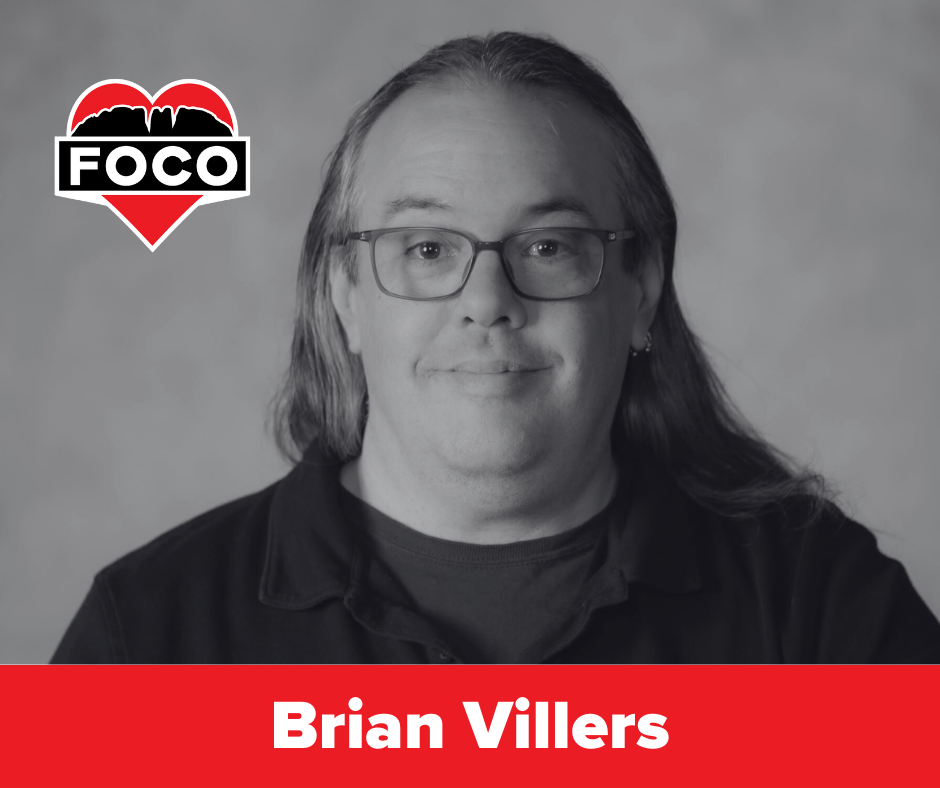
Brian Villers is the leader of Celebrate Recovery in Fort Collins, a faith-based program helping people find freedom from “hurts, habits, and hangups.” After battling high-functioning alcoholism and experiencing profound personal loss, Brian committed to a life of sobriety and service. He now facilitates recovery support groups, mentors individuals, and partners with organizations like Love FoCo to facilitate recovery. Brian’s journey from pain to purpose is a testament to the power of vulnerability, faith, and community.
Addiction remains one of the most pervasive and misunderstood issues facing individuals, families, and communities today. Despite increasing awareness, stigma and silence often prevent people from seeking the help they need. What does true recovery look like, and how can community support play a transformative role?
According to Brian Villers, who leads Celebrate Recovery for Fort Collins, recovery is about more than sobriety—it’s about “wholeness of mind.” Brian shares how faith, mentorship, and structured accountability helped him overcome years of hidden alcoholism and grief. Through Celebrate Recovery, he now offers others a judgment-free space to heal, reflect, and grow.On this episode of The Love FoCo Show, Jeff Faust welcomes Brian Villers for a conversation about addiction, faith, and the healing power of honest community. Brian shares the raw story of his past, his leadership in the recovery space, and his hopes for expanding support through Love FoCo’s upcoming Resource Center.
Narrator: This is the Love FoCo Show.
Brian Villers: It started creeping in. And during the coaching calls, which was one hour every week, I noticed that I started kinda having some conviction about how much alcohol's big part of my life, taking my money, My wife's having to deal with this. I'm not driving after five, and I'm being mentored. And just slowly in my heart, I knew I needed to confess to you that I drink 10 drinks a day.
Narrator: Welcome to the Love FoCo Show. Our podcast highlights the incredible people who make Fort Collins the place we're proud to call home. Each week, your host, Jeff Faust, sits down with local leaders, community champions, and change makers to share their stories, what they love about our city and how they're helping it thrive. So whether you're out on the trail, at a brewery, or walking through Old Town, thanks for tuning in.
Jeff Faust: Well, today you are in for a treat because we're sitting down with Brian Villers, the leader of Celebrate Recovery, community and group and ministry caring for those who struggle with addiction or are impacted by it. My name is Jeff. I'm your host for the Love FoCo Show. So grateful for the time that Brian Villers spent with me to have a conversation about how he is impacting our community. I think many of us would agree that mental health and addiction and all the different substance abuse and really all kinds of ways that you can be addicted to different things in our society is a problem that we just oftentimes don't know what to do or how to address.
Here's where Brian Villers and Celebrate Recovery comes in. Their community, their faith based community, helping people, get free and stay free, not just be sober, but actually embrace a life of recovery is truly incredible work. I'm so grateful for their partnership with Love FoCo in the way that we are going to be able to work together to care for our city. And so excited to share this conversation with you. Brian's life has had its own ups and downs, but he is on the life and the path of recovery now and is uniquely gifted to lead this community.
So hope you enjoy this conversation as much as I did. Well, Brian, thank you so much for being here with us, and so excited to have you on the Love FoCo Show. You know, our friendship and our partnership between Love FoCo and Celebrate Recovery is growing, and it's growing fast. And we both have big dreams about how our organizations will be able to work together, how we'll be able to love our city one life at a time. I wanna talk about all the work that you're doing with Celebrate Recovery, all the lives that you're impacting.
But I wanna start our conversation the way we start every conversation on the Love FoCo Show, just by asking you what is your Fort Collins origin story? We all have stories about how we ended up where we're at. What's yours? How did you land in Fort Collins and and what what brought you here in the first place?
Brian Villers: Well, first of all, thanks, Jeff. Thanks for having us me on. And, yeah, I would say it's it's it was a windy road to get to Fort Collins, but I've been here a long time. My dad was in the Air Force when I was a kid when I was really young. So I lived in Guam, and I was born in Washington State, and I lived in Chicago and Cheyenne and and West Virginia and Pennsylvania and Ohio and Florida.
So I lived in, like
Jeff Faust: I thought you were gonna stop at, like, Guam and Washington, and then you just listed off, like, 10 more. Right? Bang. Bang. Bang.
Bang. Bang. So a military kid. Yeah. And the nature of that, you're moving all over the place.
But there's a huge difference between Guam and Cheyenne. Yes. My goodness.
Brian Villers: Well, they have the commonality is that they all have air force bases. So Yeah. My dad was in the air force, and then by the time I was 10 years old, he became a regional super regional supervisor for the Wendy's Corporation. Okay. And so I would move every year after that.
So I moved every two years when he's in the military. Then I moved every year, it seemed like, when he got that job. And by the time
Jeff Faust: of those places, like, you
Brian Villers: have memories of? It's it's tough. Like, I don't remember what state I lived in when I was in fourth grade. Like, I don't know. Yeah.
I I don't know who my teacher was. I don't remember I'd have to really kinda calculate it out because I moved so much, and it was so chaotic that by the time I was 13, I'd already lived in 12 states. Wow. And, when I lived in Florida, that was when I was about 13 years old. My dad said, I'm tired of the rat race.
The only time I've ever been happy was a camping trip we took to Es to Spark, Colorado. No kidding. And so we loaded a van. It was a nineteen seventies van with one of those little bubble mirrors on the back, you know, that stuck out on the side of the van, if you remember those. And there was a mattress in the back, and my stepmom, my stepdad, me and him drove to drove to Estes Park, and we froze.
He did not calculate that it was gonna be
Jeff Faust: that home. Floored in Estes Park. Yeah.
Brian Villers: And there was no way nowhere to live. And we lived in a cabin here or a cabin there. There was times that I was even homeless. We lived We camped out, and I would wash my hair with, like, water boiling water off the camp stove. So there were some tough times.
My dad was a partier, and him and my stepmom were just kind of into living life, and they wanted to kinda still live their party life and have kids at the same time. And so it was a weird thing, but I ended up in Estes Park in 1986, and, I graduated from high school there in 1990.
Jeff Faust: So how you just said a lot there. Yeah. And my my guess is there's, I mean, a lot of details in the midst of all of that. Yeah. So let me just ask you a couple of questions because I'm curious if you could fill this and just share as much as you want, but I'm curious how you go from your dad is a is an Air Force guy, every two years you're moving, then a then a regional, you know, leader or director in in the Wendy's corporation, which is giant, you know, whatever that job entails, I'm not exactly sure, moving a lot.
But how do you go from that level of leadership to I don't know where to live? And I think your words were I was homeless at times. So there's gotta be something that happened from Florida to Estes in the midst of all of that that landed you in that space? Like, fill in some gaps there as as you can.
Brian Villers: Well, I've learned through a lot of therapy on my own and different classes and things that I've gone through to put names on certain things. And I think my dad was suffering from PTSD pretty pretty bad. And he was in Vietnam when he was in the Air Force. Okay. And he was during the Vietnam War.
And so he walked up and down the beaches with trained dogs, and he had stories he would not tell. He had things he would not talk about. My friends would later in life, he would party with me and my friends. And, my friends would ask him if he'd ever killed anyone or what had happened, and he wouldn't talk about it. So looking back at life, I think he was having a PTSD kind of meltdown as we went to Estes But at that age, I didn't know any of that.
And so I was just living it. You know? And it was at that age actually that my dad when he made that decision to leave the rat race and move to Estes Park, I was probably 12 or 13 years old, and he started giving me marijuana and alcohol and things at a very young age
Jeff Faust: Yeah.
Brian Villers: At that time.
Jeff Faust: So Yeah. Well, and this is when, you know, when you and I first met and we started talking about our life, different family situations and and different backgrounds, but similar both your life and mine in terms of the early exposure to drugs and alcohol. Yeah. And, I mean, I this isn't about me telling my story. I'd love to hear your part of the story, but that early of exposure for me mixed with the dysfunction that was kind of around my life at the time.
Yeah. And I had this, like, weird internal drive that would get me going like crazy, day after day after day that then drugs and alcohol helped kind of me numb out from that internal drivenness that that really was kind of an expression of the dysfunction I was living in. How did that early exposure impact you? And, like, how did you respond to that? You know, it
Brian Villers: kind of drew me there's a culture in Estes Park that a lot of people don't know about. It's a high drug culture because you have the tourists that come through, and then you have the people that live there year round. And the people that live there year round, there's no industry up there. They just make enough money in the summer to make it through the winter. And so you have a lot of ex hippies and a lot of kids that their their parents are really, I would call, doing free range parenting.
So, like, you know, a lot of kids did that. So it kinda put me in a group at school. I, for the first time in my life, had a group, and it was kind of these toner, punk rock, metal kids, you know, that all hung out and would sneak alcohol at lunch and do try to smoke cigarettes and just do all this stuff. And it was kind of our culture. So my dad exposing me to all that kind of exposed me to a whole group of kids I would hang out with at school.
Jeff Faust: Yeah. So so if you I'm like just trying to like recycle like, like, we go back in time and either you're in Iowa where I grew up in or I'm in Estes Park, we would have shared the commonality of our affinity for substances and and things like that. But maybe we would have found ourselves in different circles. I think the word you said was like like music and druggies and stoners. I was in the druggie stoner camp, but I was in the athletic realm where we we would play sports all day.
And then at night, we would, you know, we would just go to Ragers or whatever. I mean, whatever it was. And it was just that, we ended our nights probably in similar way, but the context we were in were it was different.
Brian Villers: I I remember even little scuffles between stoners versus jocks, you know,
Jeff Faust: in in high school. So yeah.
Brian Villers: And I think we were all doing the same
Jeff Faust: thing. Jock. I mean, this probably doesn't surprise me, but, I would have been on the jock side. So
Brian Villers: That's right.
Jeff Faust: Now fast forward, you know, thirty years from those days for you, we're we're friends. We're working together to make a difference in our city and, yeah, it's funny how that all works out. You know, the things that are important to you in your forties and fifties and and beyond, they're not the same kinds of things that are important to you when you're 10, 15, 20.
Brian Villers: Yeah. That's absolutely true. Yeah. And so so, you know, what happened was I ended up, taking a friend's offer and ending up at a church when I was, like, very young. And I had an experience that kinda grew my faith there.
And so as my dad was melting down and actually, I moved out at 17 years old while my dad was sleeping off a meth binge. And he called me three days later and said, I saw your stuff was gone. And I said, yeah. I left, man. Like, I had kind of a new group and a new family of friends, and I was going a new direction.
And at 17 years old, I moved to Loveland, Colorado, and I started welding rebar for Colorado Precast Concrete, because I had a welding certificate out of high school.
Jeff Faust: Okay. So if I'm if I'm hearing you right, you went through, like, some kind of emancipation type of process. Was it a formal emancipation process, or do you just like, no. I'm packing my bags, and I'm I'm just like, can't live like this anymore.
Brian Villers: Well, yeah. He was just really partying hard, with some hard drugs, and I was getting into going to church and doing these different things. So our lives split apart that way. And then also, yeah, he was asleep. I had planned to move out, and I was actually kind of scared of him by that point because he was quite abusive verbally and physically at times.
So I it was a long time before I even wanted to be in alone alone in a room with him. I would always bring two or three friends, visit him in Estes Park
Jeff Faust: Yep.
Brian Villers: And he'd be like, don't you just wanna hang out with me alone? But it was it was a fear. I I didn't really wanna be alone with him.
Jeff Faust: Well, it's and it's really hard to explain. You know. I mean, even you didn't maybe have all the words then that you do now, but you mix things like PTSD and the tail end of a of a really hard war experience in Vietnam, and you throw in some hard drugs on top of that. Mean, that's that's a pretty nasty concoction.
Brian Villers: Yeah. It
Jeff Faust: can create a lot of turmoil.
Brian Villers: Couple of divorces in there for him too. You know, one of them, Anestus. So, yeah, looking back, I've learned to have some mercy for him and understand that his life was hard and, you know, some of the stuff he did that I've had to forgive him for. I I have to look back and see why does someone act that way. And realizing why he acted that way and what his childhood was like and what his Vietnam experience was like, it's helped me.
It's helped me to heal from that.
Jeff Faust: Yeah. So Well, I wanna talk a lot more about your own healing journey because you just dropped some, I think, some really important things, not only for what we're trying to do in Collins, but for anyone who's listening. Things like, asking the second question, the deeper questions. Why was someone like this? What kind of grace can I have?
What how would us forgiveness look like? How those things impact me? So we gotta we wanna circle back to that because I I really wanted you to talk a little bit about your healing journey. But you had mentioned something about a church, you know, moment, a a faith experience. I don't wanna assume anything.
I don't I don't wanna leave any kinda stone unturned there, but I would imagine your faith has impacted things like forgiveness and things like healing. So let me just go back and ask a question because I I'm curious what you mean by I had like an experience at church. Is that like a classic like, you know, a club, you memorize a bible verse? Is that, like, a is that, like, a a VBS type of summer camp type of or what do you mean when you say experience
Brian Villers: at a church? Yeah. So I didn't even know what any of those words meant. I'd never been to a church, but a a friend that I was in in Estes Park with would drive kids down to this church in Loveland every Wednesday to go to a youth group from Estes Park.
Jeff Faust: And so we had a van Hall for youth group.
Brian Villers: Yeah. We'd pack everybody in there even in the winter, you know, and we'd we'd go down there. And about my second or third time there, I just had an overwhelming filming feeling that I wanted this for my life. Mhmm. I had I felt things probably that I'd never felt before, and I made a decision to chain that I wanted I came out of there a different person after that meeting.
And I I there's my he was the best man at my wedding, the guy who used to drive us down there. And I even saw him a couple months ago, and he said, I still tell people the story of you saying, JD, pull the van over. Pull the van over. And we were driving home. And I pulled all this stuff out of my pockets, and there was a pipe and bags of weed and, like, all this stuff.
And I pulled it all out of my pocket, and I threw it in the big Thompson River on the way back up the hill. And, and I had made a decision that I was gonna have I was gonna go a different way with my life, and I I don't know where that came from. So I think it was divine, and I think it was a revelation.
Jeff Faust: Yeah. Yeah. Well, that's probably a a pretty unique scene to see. I mean, wish you know, there are moments in our lives. I think we all have them.
Moments in our lives, and we have these memories of them, but memories are funny things. You remember certain things, you don't remember other things. But I I I like to think we all have these memories that we could, like, go back to and just, like, watch it like a movie scene. This is one of from your life that I would love to see. Because you got a van full of kids that are just driving from Estes to Loveland.
You have some church experience. You're driving back up. This dude who's gonna end up being your best man in your wedding. You're screaming at him to pull over. And, I mean, would he have known that your pockets were full of drugs and pipes and all kinds of stuff?
Or was this like news damn?
Brian Villers: He was surprised. Yeah. That's awesome.
Jeff Faust: He just, like, almost in his act of repentance, chucking them into the big Thompson River. And and I I like the way you said it. Like, I just want something different for my life. Yeah. But, I mean, church and the messages cast vision and and give you a hope for a a different kind of future.
But you were also in a really tough situation. So I imagine, like, what was it like, you know, living in a campsite or living in a cabin, being with your dad and the way and then going down to down the mountain to Loveland once a week and then back I mean, that had to have been almost like culture shock.
Brian Villers: It was weird. And, you know, all my friends, they had, like, mom and dad and houses and things that I'd never really really witnessed. And so a lot of people, think, kinda felt bad for me. They'd give me things. I remember one year, would get, like, a case of top ramen for Christmas from people, you know, and things like that.
And so just living it really poor and then seeing how families and love and all these things that I hadn't really experienced, I think that's part of what I wanted as well. And and so it was all very appealing. And I'd say that that church group, which was like a little a youth group, wasn't little, but it was a large youth group, kinda became a family to me.
Jeff Faust: Yep. So starts to fill in some of those gaps that your heart needed. That's Knew it knew that it needed.
Brian Villers: That's right.
Jeff Faust: Yeah. No. It's really sweet. So let's just fast forward along in the story just a little bit. So you obviously have some kind of knack for welding.
You had some kind of high school certificate it sounded like. So that age of 17, you could get hired on a crew. Take me kind of from like the 17 year old welding Brian to when did you move to Fort Collins? Like, tell me a little bit about that journey.
Brian Villers: So that's good. I I I met my wife in that youth group. I got married to my wife, Ginny, in 1992. K. So we've been married thirty three years.
Congratulations. Yeah. And through a lot of turbulent times. And as we did that, we decided to move to Windsor, and I I got really sick of welding. It was a rebar place on Highway 402 in Loveland, and the guys there were pretty mean to me.
I was a new Christian, and they were all partiers, and I was 17. And so they that was pretty rough, pretty physically abusive, and I just didn't enjoy it. I started waiting tables at this Pizza Hut, and, we ended up my wife and I got married, moved to Windsor, I became the manager of the Windsor Pizza Hut, and my wife managed this little video store. So we had free pizza, free videos all the time.
Jeff Faust: Every other night. 19 years old. Yeah.
Brian Villers: 19 years old living in Windsor. And then I met these guys that were one of them was my best one of my best friends, and they were starting a heavy metal band. And I joined the heavy metal band, and we all moved to Fort Collins. In fact, we lived on Mulberry And I 25, used stuff at mini storage. There's still a pig pig thing there.
There were two apartments in the storage units, and we lived there. So that's the first place I lived in Fort Collins. We lived at Ustuff At Mini Storage in these two apartments. We could practice till two in the morning.
Jeff Faust: Yeah.
Brian Villers: Go up on the roof and yell and scream.
Jeff Faust: That's amazing.
Brian Villers: Yeah. That so that's how I
Jeff Faust: Is Jenny part of this crew too? I mean, like, she was, like, in the rock heavy rock scene?
Brian Villers: Or Yeah. If you know her, you know she's not heavy metal, like, looking person, and she hated it there. It was asphalt jungle. There was no grass. It was hot.
The the she did not enjoy that part of our life. She could not wait to move out of there. Yeah. So we loved it. We were like, this is the greatest place ever.
Jeff Faust: Yeah.
Brian Villers: But for a beginning marriage, it was not the greatest place ever
Jeff Faust: for us to live. And the the metal scene, like, were drugs and alcohol part of that scene as well? Or or was it, like, when you were when you had that kinda come to Jesus moment with the big Thompson River, did the drugs flow down the river never to return, or or do you find yourself kind of back in that scene again?
Brian Villers: So, yeah, we we joined this heavy metal scene, and we quickly became we started selling out venues. And we started doing pretty well. We had won a couple contests. We won a nationwide we came in second in a Hard Rock Cafe nationwide contest, and we started doing really well and started packing places and then came the alcohol and the drugs back. And I kinda told myself, you know, I could I could minister to these people.
So I can do drugs and alcohol with them and tell them about God. And so I got this brilliant idea to leave church and do that instead. Yeah. And, you know, it's funny when you think you're a trailblazer in certain ways, those trails are not traveled very much because they don't work. Yeah.
So so you go down that trail for a while, and then pretty much I was just addicted to drugs and alcohol. Yep. Pretty heavy. But we I was highly functional. I still kept my job.
Jeff Faust: You're, like, in your twenties at this point, or how old are you?
Brian Villers: That's right. Yeah. So I would have just been hit in 2021. We put out our first EP in 1992 or and '93 or it was 1996. I'm sorry.
1996, we put out our first EP, and that's when it was fully rolling. And we started getting some endorsements and some things going on and started doing really well.
Jeff Faust: Yeah. It's like a real man.
Brian Villers: Yeah. We started doing really well. We worked with several Grammy award winning producers. We ended five songs up in an independent film that ended up going international, and then we had investors and ended up with working with, like, Pantera's producer Yeah. And stuff like that.
So the the band went fairly well. After that, we started touring some and stuff like that.
Jeff Faust: K. And all the while I mean, was that, like, paying your bills or you you working at Pizza Hut during that? I mean, what what's what's paying the bills for you? How are you Yeah.
Brian Villers: Eking out a living here? So I did a lot. I I ended up going back to welding, and I landed in this place that did this really high-tech welding. We welded we joined dissimilar metals for, like, NASA and Lockheed Martin, and we built vacuum chambers using copper and nickel and stainless and making little tiny welds that are getting pumped down to the vacuum space. And so I got I I happened into this job, and I I was able to do it.
And so I ended up welding there for, like, twenty five years while I would go on tour and do things like that. And so I had a career. We had a few kids. I was high functioning, but I was still using drugs and alcohol regularly every day.
Jeff Faust: It was such a just an interesting story, Bryant. Because, I mean, if you're like, I don't know. People probably listen to the podcast from straight to straight from the beginning to the end. But if you're just catching in on the podcast, like, halfway through here, there's a ton of backstory to this. And such like an eclectic little life that you've lived from Guam to Cheyenne and Washington, all these different states, Florida to Estes, you know, early exposure to alcohol, repenting with the big Thompson River, striking up a heavy metal band and and seeing some, like, quick and, maybe we could say explosive growth on that in a short amount of time to welding, but not just, like, rebar, but high end metals for high end clients.
Yeah. In what sounds like a pretty specialized type of welding.
Brian Villers: Yeah. That's absolutely true.
Jeff Faust: I mean, that's just I mean,
Brian Villers: that is all in, what, thirty years? Yeah. It was pretty weird. And during that time, we experienced a tragedy that was a national story. Our bass player, was getting kind of weird and weirder and weirder.
We ended up kicking him out of the band, but he was married to my sister -law. And we all lived in one house, so we just pay one rent and go on tour. And he married my sister-in-law, so she lived in the house with my wife and and it was my wife's sister. And then when we kicked him out of the band, he took a bonus to go to Iraq and be on the front lines. And when he came back, he ended up killing my sister-in-law and killing himself.
Wow. And they left behind my 15 old niece who is now my daughter, and we had to fight all the way to the Supreme Court to change the laws of Colorado to even get her. And so during the band, we had a couple nationwide stories like that that were going on as well that in a sense were raising the awareness of our band, but they were tragedies, and they were really hard
Jeff Faust: to live through. And so How did you live live through? I mean, because that's I mean, that's sixty seconds of what you just shared, but that's a lot. You're living together, which had to have been a challenge in and of itself.
Brian Villers: Yeah.
Jeff Faust: Sisters living together with with you know, you guys are you guys married and and living in the same place. Sounds like he has some kind of military background, goes to Iraq, comes back, And, I mean, war is just hard Yeah. On on a soul Yeah. And responded, by, so taking his life. And
Brian Villers: Yeah. And, I mean, we had And others. Los Angeles Times, New York Times. He was a Fort Carson soldier, and there were several of them that had these mental issues during that time. So it was like this nationwide story already.
And then the fact that we we lost my niece in our local courts because he left behind a will.
Jeff Faust: Okay.
Brian Villers: And so the Colorado state law said the will of the parent rules. And he left her to his 60 year old mother who lived in a seniors only RV park in Arizona, and she won in the Fort Collins Court. But we petitioned the state of the Supreme Court, and Ripley, my daughter, never left our house during this whole time. And so there was a lot of things that happened that were big coincidences. I would call them god moments that kept her in our house during that whole time and gave us legal standing to fight this.
And the supreme court put a stay of execution on it immediately, and they ended up changing the law so that you also have to consider the best interest of the child along with the the wishes of the parents.
Jeff Faust: Seems like a very normal kind of thing that should happen in situations like this.
Brian Villers: Yeah. Yeah. I think it was a good change. I've had a lot of people contact me over the years. Really?
The law is named after my daughter, and and it's changed a lot of people's
Jeff Faust: lives. Really? Do you know the name of the law off the top of that?
Brian Villers: It's called the RMS law.
Jeff Faust: Okay. R for Ripley? Yeah.
Brian Villers: It's her initials before I adopted her, and she took my last name.
Jeff Faust: And so how old was she when you guys adopt? I may have missed that. Did you say fifteen, sixteen months?
Brian Villers: So by the time that all happened, she was probably three years. Yeah. Two and a half to three years old.
Jeff Faust: Yeah. Because those things can take a long time.
Brian Villers: Yeah. Especially when you
Jeff Faust: go that high up and
Brian Villers: Yeah. Yeah. A lot of money.
Jeff Faust: Yeah. How did you and your wife and your I mean, because that's to say that that's a tragedy is probably an understatement. I mean, how did you guys navigate that amount of pain and turmoil? Well, I I don't think
Brian Villers: I did it very well. I'd I'd probably drank more. And so I was a pro drinker. I could drink I drink 10 drinks a day twenty five years probably, and I just maintained the job. I mean, and I, you know, I was writing things to
Jeff Faust: the system. High functioning alcoholic, I mean, really mean because a drink 10 drinks a day for twenty five years and be a specialized welder and keep doing what you're doing. Yeah. There's some way that not everybody is. I mean, if you've never been around addiction, you you might not know that addiction has a lot of different names and a lot of different faces.
Brian Villers: That's right.
Jeff Faust: You know, I I was more of a high functioning alcoholic myself. My brother was the opposite. Yep. He was low functioning. Everyone knew that he was addicted.
No one would have thought that I was struggling with addiction.
Brian Villers: Yeah.
Jeff Faust: Same family, different temperaments, different personalities responded to addiction differently. And it sounded more like you're maybe on that high functioning side as well.
Brian Villers: Yeah. And I and I found out there's a lot of us that are like this. I mean, I knew guys that I worked with that were engineers and designed rocket level stuff, and I would go in their office at seven in the morning. And the first thing they would do is open their filing cabinet, pull up a bit of alcohol out, pour it in their coffee
Jeff Faust: Yep.
Brian Villers: And start their day. And, you know, the high functioning alcoholics are are people who are like, my life is fine. I can do this and this, and I can survive. And it's almost the most one of the more dangerous addictions you can have. Well, it's
Jeff Faust: like I mean, you had mentioned earlier those those you think you're a trailblazer, and then you realize, oh, wait. Actually, it doesn't work very well.
Brian Villers: That's right.
Jeff Faust: Right? Like, sooner or later, you you meet the end of the road, your own rope, whatever it is, turns out some of these rules, so to speak, in the in the humans that actually do apply
Brian Villers: to me. Yeah. You know, as you were saying that, I kind of it's sad to say, but a lot of my heavy metal brothers that that worked in liquor stores and ran bars and did all these things died from alcohol. As And you were saying that, was imagining walking down the trail, and you start seeing the dead bodies. Yeah.
And you're like, woah. That guy had a good job. That guy seemed like a really nice guy, and yet he died from alcohol. I mean, you know, you think about heroin. You think about all these other drugs that people overdose on, but the slowness of how you die from alcohol, and then you start seeing people die, they're doing the same thing you're doing.
And you go, wow. And so I went to the doctor, had blood tests done. I was prediabetic. I had high blood pressure to the point where my dentist wouldn't work on me because he'd come in and do my blood pressure. He's like, your blood pressure is too high.
I can't do dental work on you. And I started noticing things like that where it wasn't working. I was hiding it. I was living this life. I was even, you know, doing doing things with youth groups and doing ministry stuff and and singing songs with church stuff.
And I would just leave church and go straight to the liquor store and go home and and get and I didn't I didn't drink 10 drinks a day as a goal. I started tracking it. It's like, wow. I started at noon, and and I I went to bed at midnight, I drank 10 drinks. Wow.
I didn't start till seven at night, and I went to midnight, and I drank 10 drinks. No matter when I started, I started being like I started counting. Yeah. So the last couple years that I drank, I was counting, and I realized it's almost dead on 10 drinks a day no matter when I would start.
Jeff Faust: Yep. Stuff like that. Which has a way. Right? I mean, as we're talking about addiction, it impacts whether people believe it or not.
It impacts every area of your life. Oh, yeah. Now if you're an addict and you're listening to this, you might not think it impacts every area of your life, but you you're just telling yourself that story. People around you who are watching the addiction, they know. It is impacting your physical health.
You've already talked about that. If you're drinking 10 drinks a day, well, that's about, you know, a case of beer a day or every other day. I mean, that's a fair amount of money. It's gonna impact your financial situations. It's gonna impact your relationships too.
I mean, it can't not impact those relationships. And it really be it does begin to erode at more than just this private vice that you have even if you think you can hide it.
Brian Villers: Yeah. That's right. I mean, ended up I I did get a DUI once after an avalanche game. I was at Old Chicago's and Old Town, RIP. And and Little shout out there from
Jeff Faust: a little bit nervous.
Brian Villers: It was a fun place. If if you know if you know, you know. And I I backed out of my parking spot in front of Old Chicago's, and I had had I thought I had, like, four mugs of beer, and I think they gave me a shot of Yeager on the way out the door. And I thought that I could drive. It'd be fine.
I backed out, and I didn't turn my had my daytime lights on, but not my nighttime lights on. And I drove half a block and right in front of where Lucky's is now got pulled over. The cop said, I think you're about a point one by by watching you and seeing what you're doing. And I said, there's no way. I was there for three and a half hours.
I had four you know, I just think I can have a beer an hour. And he informed me, no. It's your blood alcohol level, not how many beers you drink that matters to the police. And, I ended up getting the DUI. So my point about that is one of the ways that it affected my life is after that, I I I got out of it.
I got a DWAI. I got a lesser charge, all this stuff. I didn't drive after five ever. So I wouldn't drive when I had drank. So my wife was hadn't having to take the kids everywhere.
She was having if I had drinks at lunch, I didn't that's it. I I mean, I'd throw my keys in a toilet if I had to. I would not do that again. And so it started affecting my life in all these ways where I'm putting these burdens on my loved ones that are having to cover for me. And they all know I'm drinking this much.
Jeff Faust: Yep.
Brian Villers: But they loved me and they helped me, almost enabled me to, you know, to continue on with that.
Jeff Faust: Well, and that's one of the shadow sides of addiction. Right? That's not always talked about.
Brian Villers: Yeah.
Jeff Faust: You know, there's there's addiction just has a way of impacting a family system. Right? It has a way of impacting those relationships. And sometimes there's enablement happening. We don't even think it is happening.
You don't you don't even it's not like people always intend to enable an addiction, but that slow journey, that slow path, sometimes you just look up five or ten years from now and you realize if you're on the other side of the addiction wait. I might actually be empowering this addictive behavior, which I would imagine in in your recovery services today, you're you're helping people navigate a lot of that side of the equation as well.
Brian Villers: Yeah. That's right. And, I mean, I don't know if anybody's ever taken Clifton's strengths, but my number one Clifton's strength is woo, w o o, which is win over others. Yeah. And so I was very good at wording things, getting people to do things for me, naggling my way around, staying out of getting yelled at for for the ways I was not showing up and the ways I should have been there.
I mean, I will say in the high functioning, I still put my kids to bed every night. I still read them stories. They never knew, you know, that I was I was in that deep of addiction. But
Jeff Faust: Well, and after a while too, I mean, you're just getting used to seeing dad or or brother or friend or whoever at at a certain level of intoxication that that's what you think their normal disposition is.
Brian Villers: That's right.
Jeff Faust: I mean, the family I grew up in and and the people that I've been around and and even myself, there are times where it the lines got pretty blurred between sobriety and intoxication because you just saw the intoxicated brother so much that you forgot kind of what it was in. So there's just always like a a general sense that he was just pretty lubed up, you know, and you just don't know how much that is or how little that is depending on on on where he's at, but that becomes almost the new normal.
Brian Villers: Yeah. And and people start compensating for you, and it just happens so slowly. Like you said, it doesn't change overnight. Now if you're doing heroin or you're doing some extreme fentanyl or some extreme drugs where you're passing out or overdosing, then you get there quick. You get to the place where people are no longer helping you and people are no longer enabling you, and you just need to get help.
But when you slowly do it with alcohol and weed and a pill here or there, and once in while, do some mushrooms or some LSD or, you know, when you go to a concert, you're doing some extra drugs. And and, you know, pretty soon, you're just okaying all of it. You're excusing it all. I need this. I I deserve this.
I work hard. You know, you have all these excuses, you're living in denial. But when you get your blood taken and they find six things wrong with you that are gonna put you at an early death, that's not something you can look past.
Jeff Faust: Right. Yeah. It starts to put things in perspective in a different kind of way. Well, thanks for sharing that. I mean, it's a lot of hard things that you've been through, not only in your childhood, but also helping navigate, you know, Ripley's life and just her own childhood and adopting her.
And then there's just a lot of heart heartbreak that you've been exposed to, and Yeah. Appreciate you sharing part of that journey with us. But I also know that I I sit across from you today, and you are sober. And you haven't, you haven't had a drink in how long now?
Brian Villers: I'm looking at my coin here. So in April, it'll be five years. Five years.
Jeff Faust: So you've got your sobriety chip right here on the table. And I know that this has been a journey too. So just tell us a little bit about, you know, how you went from drinking 10 beers a day or, you know, sometimes more than that or in shorter period of time or whatever it is to getting to the point where now on your key chain, you've got a five year sober coin and you're leading an entire recovery ministry in our city with Love FoCo at Vineyard Church with people from all over and all kinds of different walks of life. I mean, that's an incredible journey in and of itself. So take us kind of, you know, to that point of, yeah, embracing your own sobriety journey and and being where you're at today.
Brian Villers: Well yeah. So along with with my daughter, my wife and I have four three sons as well, Gavin, Eli, and Ian. And we were really struggling as a family after the tragedy, after the more use happened, after we were just spiraling, slowly spiraling down. And I knew that when I had come to church, had found community. I had found help.
I found people that care about me at times, but I also had found spiritual abuse, and I had found kind of weird political stuff and stuff I didn't agree with. And so for me, I had left church for twenty years. And even though I loved God and and believed in Jesus and studied first century stuff and got into the nerdy theology stuff, I couldn't step foot in a church. Yep. And as I drove
Jeff Faust: Just too much baggage. Yeah. It was weird stuff.
Brian Villers: And I didn't wanna enter that again. I felt like I got tricked. I wasn't gonna get tricked again. And so you don't know you're getting tricked until you've already been tricked sometimes. And so and so I was scared of that.
And I drove past venue to the Rockies all the time. And I always tell the story that I feel like there was a magnet dragging my car in. And as my family was spiraling and everybody was struggling, I wanted to find a faith community, of people that I could that I could be with and work out life with. And I felt drawn here to the vineyard of the Rockies Church and, came in, and my wife and I sat in the back row the first time, and everybody sang these beautiful songs, and we just cried. And we just missed this part of our lives so deeply.
And so we started coming, and then I started getting involved in helping out with the youth group. And then during times when there wouldn't be a youth leader, there was kind of some stuff going on where a youth leader would leave or something. I would be the interim youth leader in between things, but I still drank
Jeff Faust: the This is while you're drinking. Yeah. You're still a full blown, high functioning alcoholic during this time.
Brian Villers: Yeah. I'm just an alcoholic at church. You know, I just changed where I was, but nothing about me had changed. And I started becoming mentored by this amazing guy named Jeff Faust.
Jeff Faust: Woah. Who's this guy?
Brian Villers: I tell you. He's an amazing dude. And that was, you know, eight, nine years ago.
Jeff Faust: I I saw for a long time, man. Yeah. I mean,
Brian Villers: it's incredible. I started meeting with Jeff with you every month, and we started working on things. And sometimes we'd meet at breweries, and I I would drink my first beer in the time that Jeff had just taken a couple sips. And I'm already up getting my second beer, and I'm like, oh, boy. I'm sitting here with a pastor, and I'm kinda drinking beer pretty quick.
It's gonna be gonna not be a huge secret here down the road to what's going on. But at the same time, you know, we met for a long time.
Jeff Faust: Well, and just for the record, we also met at coffee shops, and we met yeah. It wasn't always I'm only meeting with you at a brewery. I mean, we met all over the city. But, yeah, I I mean, I remember I remember you taking me to some of those places, some of your favorite spots. Yeah.
Brian Villers: I really love the microbreweries. Yeah.
Jeff Faust: Early in our relationship, I actually wasn't aware that you were this high functioning alcoholic. Just thought we were having a drink together and hanging out and getting to know each other.
Brian Villers: That's right. But so changed over time. But so I went through a few programs, leadership programs. So with leadership books that are like, as a leader, you're called to a higher level of responsibility. I started going to a a kind of an emotional healing thing called faith walking that's now called emotionally focused.
I became a coach in that. I coached many We're
Jeff Faust: actually hosting a Vineyard USA conference for emotionally focused in February. Wow. So I know it just dated that podcast if you're listening to that after February, but we are gonna partner up with Vineyard National, host it here because that work in emotionally focused, it is, I think, one of the best ways for you to grow spiritually, emotionally, relationally in kind of holistic way. And so we're excited. Just a little side note, we're excited to be hosting that in the future.
It's gonna be a big part of the way that we continue to disciple people.
Brian Villers: Yeah. I mean, I went through the nine month thing myself, then I got became a certified coach in the emotionally focused, and then I coached three guys from from Columbus. And this was a a moment for me because I started coaching them, and I had all these questions. You know, you kind of you coach them by sitting and asking curious questions and and just kind of not solving their problems, but leading them to solve their own problems. And you're diving into stuff from childhood and stuff that's really kind of your your family of origin, and you're kinda diving into all these things.
And I found it kinda hard to hear their stories, and I found myself starting to drink while I was coaching, which was a big rule of mine. I would never drink if I was gonna do have anything spiritual happen or I was gonna be leading anything. I'd always wait till after, and it started creeping in. And, during the coaching calls, which was one hour every week, I noticed that I started kinda having some conviction about how much alcohol's big part of my life, taking my money. My wife's having to deal with this.
I'm not driving after five, and I'm being mentored. And just slowly in my heart, I knew I needed to confess to you that I drink 10 drinks a day even though I was doing ministry. And so I remember that meeting. I came up and I saw you, and I just had to tell you. Just so you know, I know we've been meeting for years.
I drink 10 drinks every day. And I expected you to say, well, you're gonna have to go figure that out. And when you do, come back and talk to me. That's honestly what I expected, but I knew I needed to confess it. And instead, you happen to turn around and grab a box, and the box said Celebrate Recovery on the front of it, and you said, well, if you can go to some meetings, believe in you.
I believe you could be a leader. If you go to some meetings and start figuring this out, I'll let you start a small group and see if we might be able to launch this here at this church. And that's the last thing I expected. So I I went to my first meeting that next week
Jeff Faust: Yeah.
Brian Villers: Of for Celebrate Recovery.
Jeff Faust: Yeah. I I remember that meeting too. And, actually, I remember buying that whole Celebrate Recovery kit long before. And, you know, from the moment we first met to the moment of this meeting where you kinda confess that and and we started the journey towards your I mean, you started the journey towards your sobriety and we started the journey together of implementing recovery services as part of our our organization. Somewhere in between there, I can't really pinpoint when, but somewhere in between there, I knew that you were struggling with alcohol.
And, I don't know how to say it other than I just felt like God told me to wait until you would disclose it yourself. Because I I think having grown up in a family where addiction is everywhere, having struggled with addiction myself, I I lost my brother to a fight with mental health and addiction when I was in my, you know, early thirties. He was in his early thirties. I I had just been around the block enough to know that sometimes you need to confront an addict, but that doesn't always go very well.
Brian Villers: Yeah.
Jeff Faust: And we were working on plenty of other things. And we now we were talking about all kinds of different different things theologically and just where you were at as a dad and as a husband and as a follower of of Jesus. Knowing that in due time, that addiction alcohol was going to come up. And so, one, I mean, think it's really important for everyone to know that you you came and and confessed it. I mean, that's a really, really important part of your journey.
That the Lord was working in your heart, and finally, you just came to this part, this place in your life where you're just like, have to say this. I have to say it out loud. I have say it out loud to someone who is in leadership over me that could actually take something away theoretically
Brian Villers: That's right.
Jeff Faust: From me. There there's a there's a cost to that confession and deal with it. Yeah. And so I'm I'm so grateful. I have said this to you personally so many times, so I'm saying it publicly on the podcast now.
I'm so grateful for the way that you kept saying yes to the whole journey of not only getting the Saran Wrap Celebrate Recovery startup kit. I had never even opened because I knew I wasn't gonna be the guy to start it. But to going to the meetings, to meeting other people struggling with addiction, to committing to your steps program, to getting sober and staying sober, and now helping a bunch of other people on that journey as well. I am thankful for you. I know so many other people in our city are are thankful for you and and for saying yes all along that way as well, Brian, because it it's it's gonna make an incredible impact.
I do wanna just say like I I I'm curious because, you know, a lot of people have had similar church experiences to you where, I mean, there's some great stuff and this is the life that I wanna live and these messages are inspiring or the worship is engaging or whatever it is. And also, this just got really weird and I'm leaving church and I'm not coming back. Right. And so many of us have had that experience. But what I always say is we never wanna keep, we never wanna allow a bad experience to keep us from a biblical one.
And so there are great churches out there. There are great communities where you can explore faith and grow as an individual, as a family towards a relationship with God. And I I would love for you to just talk a little bit about what God's been doing in the midst of your sobriety and how maybe community has played a part of that?
Brian Villers: Well, yeah. I mean, that's a huge thing, I'm gonna have to kind of focus on one or two. For me, community is everything. And, leaving church the way I did you know, I've had I even led a lot of, like, atheist versus theist debates, and I did, apologetics groups where you go back and you study a case for god or a case for atheism and all these different kinds of things. So I've studied these things pretty pretty deeply, but they really don't matter if you don't have community.
And I will say this too. The really good churches that are out there doing all the really good work aren't in the news very much. What's in the news is scandal and spiritual manipulation and people taking money and that gets to the top story. The people that
Jeff Faust: are Just the the pastor and the small group leaders and the and the regular church folks that are just doing good work. That's not that's not making a headline.
Brian Villers: Yeah. Somebody shows up at the Fort Collins Rescue Mission and serves everybody lunch. They're not gonna get on the news. Like, you're gonna get on the news if you do something bad or something that's gonna be, you know, a clickbait. And so, you know, finding out that there's just a lot of people that are living this life out, and they're not in the news.
And they're not getting a lot of recognition, but there's a lot of people doing a lot of good things. The people helping the homeless, almost all of those are faith based nonprofits. The people that the government or the the local police lean on to help with the homeless and with with unhoused and with other different things like that are mostly faith based. And they're not really getting a lot of recognition because they're feeding people and cleaning up after them and providing these services. They're too busy doing those things to really get on the news.
And so I I guess I would start by saying that. And then, secondly, I suppose I would say that that being part of our personal faith group and being part of our Celebrate Recovery has been life changing. And if I miss a meeting, you know, I feel like there's something missing for my life. Like, I forgot to eat or something. And so coming back one of our biggest things is keep coming back.
It works if you work it. And it's so true. No matter how hard you're struggling, if you show up every week, you're gonna experience even micro amounts of growth, if you just show up. And so showing up is really a large portion of what needs to be done.
Jeff Faust: Well, small decisions today make huge impacts and dividends in the future, but I do imagine showing up for the first time or the second time is is hard. Yeah. Because in in a way, you're admitting something when you show up. You're admitting that you don't have your crap together, that you need some help, and actually you can't do it on your own. Because it you know, the Americans, we love to think we can just kick a habit on our own should we decide to or if we want to, someday I'll just stop it.
Well, it turns out, it's called an addiction on purpose. I mean, this is actually incredibly difficult physically, chemically, neurologically difficult to kick these things on your own. And so that community, and those small decisions make a huge impact in the future. So let's let's talk about Celebrate Recovery then. Like, what you know, we talk about, you know, how you get to four columns, what you love about our city, and and and I always wanna ask people how they're making a difference, how they're loving our city.
With you, I just wanna I want you to tell us about Celebrate Recovery. What is it if people need help with it? Like, if they came to CR, what would they expect? And then, you know, let's save some for the end to talk about ways people can partner with what you're doing and and even some of our hopes and dreams for the future and the expansion of Celebrate Recovery as Love FoCo gets open, and and we're able to expand that partnership. So tell us a little bit about CR first and and what it is that you're you're doing to love our city one life at a time.
Brian Villers: That's so, yeah, that's great. I will start with the biggest lesson, and I I know this will sound like abstract at first. But the biggest lesson we learn in Celebrate Recovery is, like you said, admitting that you are powerless over your addiction and that your life has become unmanageable. That's step one. And until you do that, I've seen people go through all the rest of the steps and never get that first one, really.
They still think they can do it, but they have never been able to do it on their own. And when we approach the word sobriety, we talk about sobriety as being sanity. A lot of people think of sobriety as being I don't drink anymore or I don't use anymore or in Celebrate Recovery, we have people addicted to porn. We have people who are codependent. We have people who have anxiety and OCD.
We have people dealing with all these things, and they're using the 12 steps to handle those things. And when we talk about sobriety and sanity, we're not talking about stopping your habit. Sobriety and sanity for us, sanity is defined as wholeness of mind, making decisions based on truth. That's what we call sanity. If you don't have wholeness in your mind and you're not making decisions based on the truth, then you might not be heading down a sober road, especially if you have some addiction issues or addictions in your past.
And so those were big revelations for me. Am I making decisions based on the truth? And going to my first meeting, I had a bunch of lies in my head. I was not making decisions based on the truth, and I had all these excuses and reasons why I didn't need to go. Almost panicky towards the end.
But going to my first meeting, I sat in the back, and and they got done teaching, and we sang a few songs. And then I was like, okay. I was in the back row. I grabbed my wife's hand. I'm ready to run out the door.
And they said, okay. Now it's time for share time. And I said, oh, man.
Jeff Faust: No. They're gonna make me share. That does not sound good.
Brian Villers: That does not sound good at all. Now I went to the share time. I just wanted to run out of there as fast as I could. But, actually, I have found share time to be the richest and almost the secret to, there's something about confessing to some people who understand that is just so powerful and saying it out loud, getting it out of your mind and out of your heart and into the into other people's ears and then leaving it and walking away. I see people all the time walk into our share time just like I was.
Oh, man. I just wanna leave. In fact, the time, I'm like, we're gonna take a five minute break and go to share time. And it's like, I hope you don't leave if it's your first time. Because if you can make it to share time, all of a sudden, realize there's all these people with stories that are maybe even worse than yours, people that are struggling with things that are the same thing as you, people who tell you your story.
We run into that a lot. I my parents got divorced when I was 10. Oh, my parents got divorced when I 10. You know, you see this over and over again, and then I started using, and then I started this, and you start seeing other people's stories during that share time, and then you get to share what how your week went and what happened there. And there's it's almost, I would say, the most spiritual thing we do.
Jeff Faust: Well, I I think it is. I mean, I I if I can just go on a quick theological rift, beauty and and partly, know this because I've been in shared groups. I I've been to your Celebrate Recovery, but but I also know enough about the the beauty of these groups is you really are you're sharing in a judgment free zone where the rules there's like rules of engagement.
Brian Villers: That's right.
Jeff Faust: And one of them is you're not there to fix other people.
Brian Villers: That's
Jeff Faust: right. You are there to bear witness, to bear witness to their pain, to bear witness to their story, and by by bearing witness and and kind of holding that moment of of testifying of what they've been going through, you actually add dignity to their life. Yeah. And so theologically, we talk a lot about how you like, everyone you meet is created in the image of God. Yeah.
It's not a single person that you're not gonna walk past isn't created in the image of God. Now we all struggle with different distortions, and some of us have addictions, and and some of us are addicted to things that are more socially acceptable, or we have areas of brokenness that that make it harder to see maybe the way that we're created in God's image. But every single person we meet is created in his image. And so when you hear their stories and you kinda hold space for them, you are, you are digging you're adding dignity to their life and and creating an opportunity for them to to share in a really vulnerable judgment free zone, which which is ministry.
Brian Villers: That's
Jeff Faust: right. Right there. Ministry is happening.
Brian Villers: Yeah. I've seen just amazing things happen. I've seen people walk out with just smiles on their faces that I hadn't seen the whole meeting up till then when they go through share time. And, yeah, we do have those rules. We have we have five basic rules, and they're basically just anonymity is important.
What shared in the group stays in the group, and we're here to support each other, not fix each other. But one of the greatest things we say is we'd like to stick to three to five minutes if you can, and we don't want anyone interrupting anyone else. There's no crosstalk. There's no the the person is free to have their three to five minutes to themselves, and there's not gonna be a conversation going on. And in fact, it feels a little cold sometimes because at the end of their share time, they'll share something that's very vulnerable, and you just wanna go give them a hug, and you go, thank you.
And you move to the next person. Yeah.
Jeff Faust: And that's it. Well, this can have in our anxiety. Right? In our anxiety, we can wanna fix someone.
Brian Villers: Yeah. That's right.
Jeff Faust: But just in the same way that that, you know, rule number one, you you or step number one, I should say, is you have to admit you're powerless over this addiction. Right? And and in the same way, if I'm powerless over this addiction, I'm also powerless over your addiction.
Brian Villers: That's right.
Jeff Faust: Like, I can't fix your addiction either. I can bear witness. I can be with you. We can be on this journey together, but I actually can't eliminate this addiction from your life.
Brian Villers: That's absolutely right. Yeah. So share time was really full and rich. And then I started what's we have a we have open meetings where it's kind of more loose, kind of a a general message, general things, and some share time. And then we have what's called steps groups.
And the steps groups are usually a nine to twelve month group, and you go through four books and becomes closed after the first book. You really dive into the 12 steps, you actually write your spiritual inventory. You actually make your amends. You're held accountable by these people, and you go through these steps. And by staying a year of sobriety and a steps group, you become qualified to become a sponsor.
And so I went through a steps group before I ever led the meetings here. Yep. I led a small group here, but I was I was going through my steps group at a Lutheran church on on on the South End of town. And it was great. I met a bunch of great guys there that I'm still friends
Jeff Faust: with. By the way?
Brian Villers: Yeah. Redo back. Yeah.
Jeff Faust: Shout out to Lutheran Redeemer. They're doing some great work in our city as well. That's right. You mentioned Vineyard Church of the Rockies by name. We should let's mention them by name.
Brian Villers: Yeah. I mean, that first meeting I went to was Dayspring Church in in Windsor off the I 25 in Windsor exit. That's where I went to my first Celebrate Recovery meeting, and I'm still friends with all of them. Yeah. We trade testimonies.
I go speak at their church. They come over to ours. So, yeah, there's a community going on there that's cross denominational and all that kind of stuff, which recovery is definitely a cross denominational issue. Yep. And so so, yeah, I went to that steps group.
I started digging in and started sharing things and started going through all of this stuff. And at the same time, I started the small group here. And then we started our open meetings about six years ago I think on Monday nights at 06:30 here.
Jeff Faust: Yeah. That's what was gonna say. So those those groups if if you're listening or you know someone who needs to come or you need to come yourself, those groups are currently being held at Vineyard Church of the Rockies at 06:00 or 06:30?
Brian Villers: 06:30PM
Jeff Faust: Monday nights at Vineyard Church of the Rockies.
Brian Villers: That's right.
Jeff Faust: But of course, we, you and I and and many others, we have dreams about growing this ministry, this service to our city, and expanding that with Love FoCo. And so there's a really, really one of the reasons why I was so excited about this conversation on our podcast is because I wanted to hear I wanted to let people know that when they support Love FoCo, they're supporting guys like you, they're supporting services like you offer, Celebrate Recovery, creating it really a community to invite people on a journey towards sanity.
Brian Villers: That's
Jeff Faust: right. Not just sobriety. That's right. And and seeing an impact in our lives and and our communities, in an incredible way. And so, I know I'm really excited about what the opening of the Love Focal Resource Center could mean for even the expansion of Celebrate Recovery, the growth of your impact in our city, and we have big dreams.
We have big dreams about what could come. And so, yeah, just share with us a little bit about some of the things that are on your mind, on your heart, not only to just continue Celebrate Recovery, but also see some of those other things grow.
Brian Villers: Yeah. So our Celebrate Recovery has grown. We probably have 25 to 30 every Monday night. People come. We have probably four or five new people every week, it seems like.
We have people coming from the halfway houses in the jail. I always say, you know, Art, the Vineyard Of The Rockies is right in the center of the jail, the homeless shelter, and the hospital, and we're right in the middle. And we have Summit Stone and other mental health places all around us that send people our way. I dropped a guy off at the, correctional facility last night that he was in the halfway house there that started coming to our meetings. He had to be back by a certain time when we were running late.
We had Thanksgiving dinner last night and stuff like that at our meeting. And so we have a lot of that going on. We also have several step studies groups. We have three of them going on right now at the same time. We have leaders leading those, and we just all kind of help each other.
And so I'd say January or February, we're looking at having 15 new sponsors and new leaders into our group as they've gone through the step study program, along with just growth we've seen in our little band that we have that plays the songs before and different things like that. So all of that has just been amazing. And so we're probably about 45 people a week. Yep. And then a lot of other people, we also get to lead Celebrate Recovery at the Fort Collins Rescue Mission on Wednesday nights.
Right now, they had a fire. We have not been doing that for the last couple months.
Jeff Faust: We interviewed Seth. Yeah. And and he we actually shared his episode just a little while ago. And so, yeah, he was able to talk about that. I know you're doing great work with them, but then also, I I envision an expansion of work as they open their new facility and Yeah.
Yeah. Just gonna continue to be able to walk in these recovery services even in different spaces around the city.
Brian Villers: That's right. It's it's it expands in all these different ways because we had about three or four guys start going to the Sterling correctional facility, the bit largest prison in Colorado from our group.
Jeff Faust: Yep.
Brian Villers: And the the, the church, Vineyard of the Rockies, has supplied money over and over again for snacks and drinks and food and everything we need and supplied the building that we meet in and done all these things to keep our group going. And those guys go to the Sterling Correctional Facility every two weeks, and I got to go there, sing some songs with the with the guys that are in prison, tell my testimony in two different sides of the prison. They're seeing things happen there. So there's all these opportunities to lead Celebrate Recovery at rehabilitation places and at the Fort Collins Rescue Mission. And at the prison down there, there's a whole curriculum that's just designed for that.
And so with the Love FoCo Resource Center, our hopes are to grow even further into all of these things. Have a place where people can find out information. Where can I find a sponsor? Where can I find accountability partner? Where can I find a meeting that's going on tonight?
Is it here, or is it another church? Or how can we support the whole thing? Because really the goal is healing, not our own personal numbers. And then even down the road, the hopes are as as maybe there's some space opening up in the in the, Love Focal Resource Center, there's gonna be people going to the other services, to Christ Clinic, to all these other things that have addiction in their own lives. One of the things that was amazing to me was I wasn't just helping this man come out of addiction.
I was helping him regain his relationship with his children. I was helping him regain his marriage. I was helping him be a father. You know, I wasn't helping him. I was providing this information, and he was taking the information and growing in it.
And if you step into it, all of a sudden, down the road, this this young man, this child might not know it, but they had a father in their life because they started coming to our group. And that all fits in really well with what Love FoCo's goal is from what I understand. And so we even have a dream in the future of offering the Celebrate Recovery has an entire youth curriculum called The Landing. And I don't know of any youth recovery in the entire city of Fort Collins. We have a dream of offering that as a meeting at some point down the road through the resources at at Love Focal Resource Center and different things like that.
And we're just allowing those things to happen. In the past, I pushed things to happen too fast in my life and things like that. We're breathing. We're we're growing at a really nice, healthy way, and we are dreaming of things that can come in the future.
Jeff Faust: I don't know why there's any reason why that couldn't happen. Yeah. And and, of course, you and I, we we see this the same way. Our hearts are aligned on this. The mental health crisis in our the nation, but specifically in Northern Colorado is crazy.
Yeah. The drug use in the alcohol use is is there. And, I I mean, I was addicted pretty much high functioning addict from the age of 12 to 19, and I never even thought that there was a place where I could have received help. And, of course, I had mentioned earlier, but lost my brother to a hard fight with mental health and addiction. And I wish I wish so much in his teenage years, but also, in his twenties and thirties after I got clean, he he continued to struggle.
I wish that in his community, there would have been a place like Celebrate Recovery to go to, to get a meal, to slow down, to be in community, to be surrounded with people who are trying to move towards health and healing. And he never he never had that. And so I'm I'm so grateful and so thankful that we have something like that in our community and that there are a lot of people like you who are creating space and creating an opportunity for people to do that. I wanna ask you one final question. K.
I'll ask the question, then I'm gonna tell people about how they can support Celebrate Recovery and and Love Focus so that we can build all the things that we're trying to build. That'll give you a minute to think. K. The question I wanna ask you is, you know, what would you say to someone who's impacted by addiction, who's impacted by, you know, whether it's hidden or outright, and why they should come to your group on on Monday nights at 06:30 just to to give you an opportunity to send an invite out to whoever's listening to this, whether they're personally struggling with addiction or they know someone who is. Before you answer that though, I I do wanna just say if you're listening to this, please know that when you support Love FoCo, that part of your resources go to propping up things like Celebrate Recovery, working in tandem with all the other nonprofits that will be under one roof at the Love Resource Center.
We're about to open. We're under construction right now. Until we're open, all of these services are being offered around different parts of the city and different buildings, and the Love Focal Resource Center will unify all of them together so that there can be a lot of that cross pollination and cross work that Ryan had mentioned. And so thank you for your generosity. You can always learn more at lovefocal.com or reaching out to us, info@lovefoco.com as well.
We'd love to have more conversations with you about how you can get involved, loving our city one life at a time. But Brian, let me throw it back to you then just kind of close us out here with, with an invite to anyone who may have been in the same place you were, six years ago.
Brian Villers: I can
Jeff Faust: use a community like Celebrate Recovery in their life.
Brian Villers: I would say, first of all, just logistically, we are changing our name from c r at v o t r to c r FoCo. We ran into a lot of problems with the wording of that first one. So in January, when you're looking for us, you can look at crfoco.com or on your social media, at c r FoCo. So I just wanna say that you can find us at CR FoCo. You'll see it on our signs.
You're gonna see it all over town. We're gonna put some stuff together for that. I would say this, though. If, you're struggling and you don't know what to do, we say keep coming back for a reason. We say on chip night, whenever we give a chip out for the three months, nine months, six months, whatever it is, everyone in the crowd chants, keep coming back.
It works if you work it, and you're worth it. So what I would say is on that last part, if you haven't come to anything yet and you're struggling, you're worth it and you're not alone. We're here, and we're struggling right alongside of you, and we've struggled with the same things you're struggling with. So a, you're not alone, and b, you're worth it. Your family's worth it.
Your children are worth it. The people around you are worth it. For you just to take a step and step into a community, and as you keep showing up, you're gonna be surprised at how little of the work is on you. And you're gonna be surprised at the fact that you just keep showing up and you keep growing into this thing. And when you look back six months down the road, you're gonna gonna believe the amount of growth you've experienced.
Jeff Faust: Brian, thank you so much for the work that you do. Thank you that every Monday night, I know that there's a group meeting that is not just trying to slog it through, but a group that is truly celebrating the recovery process.
Brian Villers: Yeah.
Jeff Faust: Health, healing, and wholeness offered, you know, one day at a time, one moment at a time. I'm so grateful for you. I'm so grateful for the work that you're doing. And I just yeah. I I wanna I wanna say that this has, not just the opportunity.
This already is making generational impact in our community. And so thank you for the work that you're doing. Thanks for listening, and we'll circle back around maybe when the landing is open.
Brian Villers: There you go.
Jeff Faust: You're not only doing CR for adults, you're doing CR for youth and teens as well.
Brian Villers: Love it.
Jeff Faust: We'll have another conversation when that happens.
Brian Villers: Thank you, Jeff. Thanks,
Narrator: Thanks for listening to the Love FoCo Show. If today's conversation inspired you, share it with a friend who loves Fort Collins as much as you do. Don't forget to subscribe so you never miss an episode, and leave us a review. It helps more people discover us. To learn more about Love FoCo and find opportunities for loving our city one life at a time, visit lovefoco.com.
For now, keep loving Fort Collins well.

