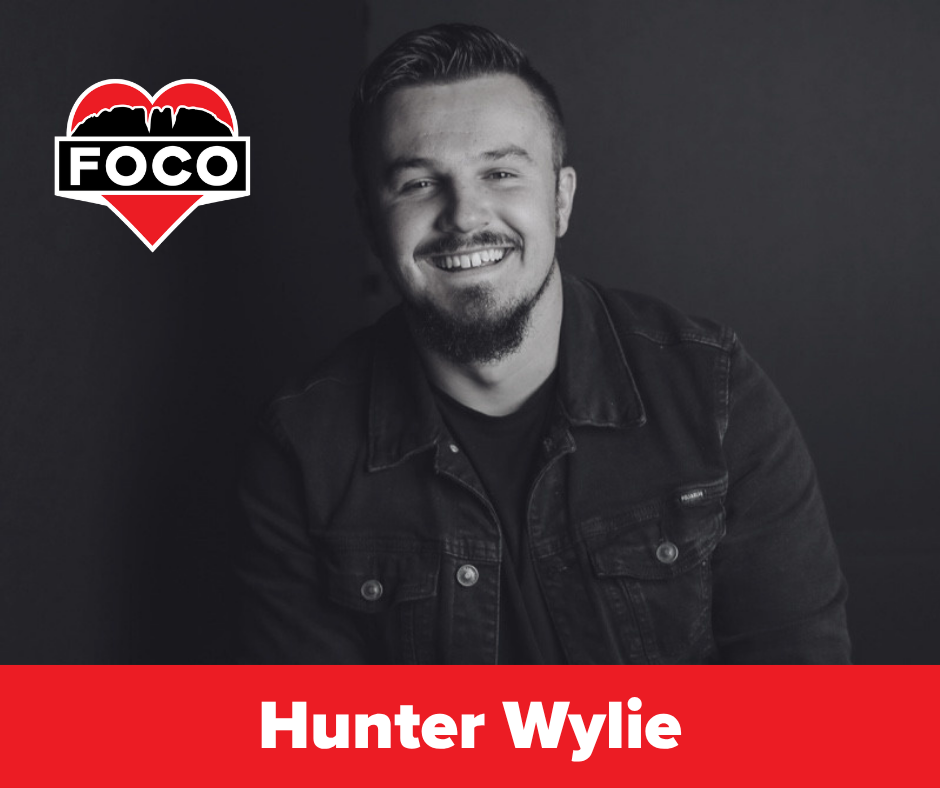

Hunter Wylie is a Fort Collins entrepreneur and the founder and CEO of The Foundry Advisory, a peer community for Christian business owners. After building and scaling a digital marketing agency, Hunter saw the need for leaders to have honest, faith-centered support around strategy, finances, and the pressures of entrepreneurship. Through The Foundry, he helps business leaders pursue both excellent companies and community impact.
Narrator • 00:07
This is the Love FoCo Show.
Hunter Wylie • 00:10
Because I think where people get it wrong is, man, they compartmentalize. They're like, oh, I have my church people, and I have my Sunday people. But then my business is completely- I want to keep them separate. I just know so many entrepreneurs that think that way. And it's just not kingdom.
Narrator • 00:27
Welcome to the Love FoCo Show. Our podcast highlights the incredible people who make Fort Collins the place we're proud to call home. Each week, your host, Jeff Faust, sits down with local leaders, community champions, and change makers to share their stories, what they love about our city, and how they're helping it thrive. So whether you're out on the trail, at a brewery, or walking through Old Town, thanks for tuning in.
Jeff Faust • 00:53
Hey everyone, Jeff Faust here, your host for the Love FoCo Show. Today, I sit down with founder and CEO of The Foundry. His name is Hunter, he is an entrepreneur, he is faith-driven, and he is creating circles of entrepreneurs and leaders all across Northern Colorado to sharpen one another, to support each other in the expansion of business and the kingdom of God. I think you're gonna love this conversation. We hear about Hunter's story towards entrepreneurship and as well as what he's doing today to help other entrepreneurs find their purpose and continue to serve the community. I know I've loved getting to know Hunter. I'm so grateful that he's sitting down with us for a conversation at the Love FoCo Show. And with that, I hope you enjoy this as much as I do. Let's jump in to the conversation.
Well, Hunter, thank you so much for coming and spending some time with me on the Love FoCo Show. Dude, grateful to meet you. Our relationship is fairly new, so I'm excited for this conversation because I feel like I'm going to learn a lot as much as our listeners are going to learn as well. And I want to start our conversation the same way. I start every conversation of Love Folk O' Show. I just want to hear your Fort Collins origin story. Like were you born and raised here? Did you move here? What was the journey towards kind of where you're at now here in Fort Collins?
Hunter Wylie • 02:15
Well, thanks man. Thanks for having me on and just thankful to call you friend even though it's new man. I think we'll call you friends. Man, I love Fort Collins. I grew up in Loveland. And man, yeah, I was loved, loved Lund. But man, there's just something different about Fort Collins. And so I, after I graduated high school, I went and played college basketball, thought I wanted to be a pastor, did the pastor thing for a while. And then God called me into business. And so I started working at a marketing company in Fort Collins, which is, yeah, what moved me out here, bought a house in Fort Collins. and man, I just started to plant deep roots, started reading a lot of theological books about what it means to build deep roots. And so anyways, man, that's what brought me out here, grew up in leveling Fort Collins 'cause of work and then just stayed and I'm like, I love it.
Jeff Faust • 03:07
I have so many questions already, Hunter. So like one of my first questions, I mean, I've been in Fort Collins for almost 10 years now, not quite, but would you say that there is like a draw from like folks in Northern Colorado to the city or is there animosity from other cities toward Fort Collins or like was it specifically just what was happening in your heart that you just had to draw to Fort Collins?
Hunter Wylie • 03:29
It's, dude, I don't know how to describe it. I tell people all the time, it felt like there was just a lightness in Fort Collins for me personally. Like in my walk with Jesus, it just was like, especially lovely, it felt like there was a darkness there probably just 'cause of my upbringing, childhood, some trauma, et cetera, et cetera. but man, when I step foot into Fort Collins, like every time I would drive into the borders of Fort Collins, I'm like, bro, I feel like God is on this place. Yeah, yeah, yeah. So that's for me personally, but I think, obviously there's so many things that draw people out here and make people stay.
Jeff Faust • 04:01
Yeah. I mean, I've met a lot of people, even I was interviewing the superintendent, Puder School District a couple months ago, and I mentioned to him, like I meet people in the city who move here for the schools, particularly if they have a kid with a disability or special, Like just the amount of IEP access and the care that they can offer to kids with disabilities is incredible. So people are moving here for that. They just love the district for that. I have to imagine there's some other insights in the business world or even just personal, like you said, just kind of this intuitive,
Hunter Wylie • 04:33
almost prophetic feel of, dude, this is just where I feel
Jeff Faust • 04:36
like, this is where I feel at peace.
Hunter Wylie • 04:38
Totally man. - This is where I belong. I mean, the best business owners I know are in Fort Collins. And so because God was calling me to the marketplace and to be a pastor in the marketplace, I'm like, man, I wanna be around these men who are building incredible companies and doing incredible work and it was all happening in Fort Collins. Yeah.
Jeff Faust • 04:55
So just let me back up for a second though, because you said you grew up in Lovlin and wanted to go and you went and played basketball in college.
Hunter Wylie • 05:01
Played college basketball.
Jeff Faust • 05:02
So where'd you go in Colorado? Yeah, Nebraska played there for a while. Like a D2 school, D1 school.
Hunter Wylie • 05:09
Yeah, it was a little D2 school.
Jeff Faust • 05:11
Dude, the Midwest has killer D2 and D3 competition, man.
Hunter Wylie • 05:15
It was so fun, man. It was a dream come true for me, but I broke both of my ankles, had a really surface level relationship with Jesus when I was playing college ball, and man, breaking both my ankles and got tearing away the idol for me was like the thing that doped me head first into, man, I wanna become a pastor someday. Like that was the thing. I was like, man, I wanna be in ministry. So anyways, it was such a blessing. at the time, it obviously really sucks.
Jeff Faust • 05:42
Oh, it's heartbreaking. Yeah. And this is where, like, 'cause we've gotten to know each other just briefly over the last couple of months, like a growing friendship, but there's just so many parts of our stories that overlap. Yeah. I grew up in the Midwest, always wanted to play college football, was not a D1 athlete, so I was like a smaller school, went to college with no faith, played football, played defensive back, broke my right leg in three places, and it was like this earth-shattering thing for me. 'Cause my identity was wrapped up in my ability to perform on the field. That's where all my social circles were. I mean, just like everything was centered around my ability to play ball. And when that was stripped away, I was like, oh, what, what do I do? Who am I? Were the first 19 years of my pursuit and my drive, and like, is it all come down to this? And it was kind of like a really humbling and sobering moment.
Hunter Wylie • 06:35
It's real.
Jeff Faust • 06:36
Which I think a lot of men go through. I needed to break bones. Yeah. Sounds like both of us needed to break some bones
Hunter Wylie • 06:43
in order to feel that. Yeah man, 100%. Yeah, I had never really read my Bible. I got baptized here in Fort Collins before I left 'cause I'm like, man, I felt God pulling me to follow Jesus. So, but against super surface level, like baby Christian, when both my ankles were broken, man, I remember being in my dorm room, opening up my Bible for the first time and like I could not get enough. Dude, it was like, it was the most life-giving thing I'd ever, Yeah, I'd never experienced in my life of reading God's word. And it was like, came alive to me. It was really sweet. And I needed bones to be broken like you. Yeah. - To hear that. Yeah, yeah.
Jeff Faust • 07:17
My parents always used to tell me growing up, like there are two ways to learn lessons in life. Like you can learn from other people's lessons, or you can learn for yourself. Yeah, it's good. And learning from other people's lessons, like that's an easier way. Yeah. But my temperament was never that way. My personality was like, "I'm sorry, I'm just gonna have to hit the wall." 'Cause like I see that over there, and I'd like to avoid that. But it turns out, just a little too stubborn, a little too hard headed, I'd too driven, whatever, I would've missed those warning signs. But a brick wall will help, who helped me for sure.
Hunter Wylie • 07:47
You and I are wired the same way in that, we hear this advice of like, "Man, money's not gonna bring you happiness," or like a lot of these things, and we're like, "Well, I'm gonna go try." And I'm gonna, let me find out for myself, 'cause I'm gonna go do it. And so we're both drivers in that way, is what I know about you, so which makes it a lot more painful for us to learn God's lessons, man.
Jeff Faust • 08:06
It does. - Time and time again. it does, maybe in my older age, I'll start learning from other people's lessons. But I have a sense that I'm just going to have to keep hitting some walls. Maybe they'll become hurdles, you know, and so I can keep moving forward. And, you know, I haven't developed my inner Kool-Aid man where I can just bust through a wall and just move through whatever pace I want. So tell me, I mean, you said, I think at one point you said, like, you wondered if you were going to be a pastor. So you said you had like kind of baby faith when you were young. Where did that come from? Did you grow up in a Christian home? Were you exposed to friends that introduced you to the faith or like where that kind of internal drive come from?
Hunter Wylie • 08:44
Yeah, man. My mom would take me to church sometimes. And yeah, I grew up in a divorced home, so I was going back and forth with between mom and dad. But man, I got to this place where I just felt like, man, I'm just going to start going by myself to church. So I started going to all types of churches through high school because I felt this draw, man.
Jeff Faust • 09:02
Were you able to drive? Like were you were driving age at this point? Or yes.
Hunter Wylie • 09:06
You had a little more independence. A little more independence. Yeah, I'm like, man, I don't know what it is, but I know there's more. And I just, yeah, I was hungry, man, hungry to know the God that created me, whoever He was. I didn't know what it looked like, and I was willing to try anything to experience it. And so, yeah, but it was a, I mean, I wish I had a Saul DePaul conversion, but it was a really slow sanctification process for me, dude, like I was an idiot, man, doing a lot of stupid stuff for a long time, even after knowing Jesus. and it just took me a long, long, long time for me to like, fully dive in. So.
Jeff Faust • 09:40
Yeah. Yeah, I talk a lot about the life of surrender and how vital that is, how important that is. But man, it's hard. It's hard, man. The life, the surrender life is a tough life. I actually just recommended this book to a bunch of people in my world, it's called "Absolute Surrender" by Andrew Murray. He's an old South African, a theologian for like 20th century. But I always say, if the book outlasts someone's life, that's probably worth reading. And he's got a bunch of them. He's got one on humility. This one on absolute surrender was great. It's just a short little 90-page, 100-page book. Reads super easy, but makes you think with every page turned. It's like, "How am I living a more surrendered life?" Or, "What am I holding back from God?" And what would it look like to actually live in a deeper sense of freedom? But it's like, antithetical, right? I mean, it's counter-cultural to believe that if you surrender more to God, you'll live more freely. But it's absolutely the way of the kingdom.
Hunter Wylie • 10:46
So yeah. Yeah, well said. Well said, man. I see that written all over. Although that's not my default, the like, surrendered posture is not my default, man. It's taken work to get to the point where it feels more natural.
Jeff Faust • 10:57
Yeah. OK, so tell me a little bit about college into business into, I think what you said, kind of pastoring business people. 'Cause that sounds fascinating to me. I'd love to dig into that a little bit more. So where did the desire for business and kind of building companies and developing people, serving the public, where those things come from?
Hunter Wylie • 11:20
Yeah, man, I was always slinging stuff on the side. Like in high school, college, I was starting every type of side house, so you can imagine. I've always had this entrepreneurial drive in me, but also had this newfound love for Jesus. So they always felt like they were intention, this desire to love people and love God and also business. And they felt like kind of an oxymoron at the time. So I'm like, yeah, I'm gonna do the more holy thing and go like do seminary, go to go work at some churches. And I did that for a while. But time and time again, I felt like God was still calling me back to the marketplace. And so I at the time had really bad theology thinking, you know what, I just need to, Because I keep getting drawn into business. I just need to go make a lot of money So I can give money to the holy people like that was my thinking. Yep, which again is well
Jeff Faust • 12:07
It's your thing, but it could have been very well reinforced by other people that you around I mean like sometimes you're not the only one with the tension of the theology That other people like reinforce some of those internal thoughts. Yeah, bro
Hunter Wylie • 12:18
Yeah, 100% and that's I mean that garbage theology is also really prevalent. I mean, that's why most Christian business owners think In a not good theological way because of that man because you see it in sermons you see all the time. So anyways, I've made the jump over to business. Yeah, I mean, I worked at a painting company doing sales for a long time, worked at a marketing company. And then yeah, it was like finally, I'm gonna take the leap and started a marketing company about 10 years ago. And yeah, man, it was the most fun that I've ever had at work. And I was getting to do more ministry than I got to do when I was working at the church. And it was and at that moment I realized, oh my gosh, like I get to, I get, I have an opportunity to love these people that will never step foot in a church. And so my theological bends started to tweak year by year of like, wow, there are no JV Christians in the kingdom. Everyone is on varsity if you're a believer of Jesus. And that means that your work as a pastor is just as holy as my work as a burning and marketing company. And so, man, it gave me a lot of purpose.
Jeff Faust • 13:23
It turns out those passages from James like, God has no favorites. Yeah. It was a real. That's really real.
Hunter Wylie • 13:29
Yeah, bro.
Jeff Faust • 13:29
That's really biblical actually.
Hunter Wylie • 13:30
Yeah, dude, that's real. And it was, my significance and purpose grew more than just I get to give money, but like I get to cheerfully give and my work matters for eternity. And I get to reach these people that'll never step foot in a church. And my work matters, like all this stuff matters for eternity. Yeah. So anyways, it was, that was the light bulb moment for me.
Jeff Faust • 13:49
I love that. And you know, like we always want to read scripture so that it informs our worldview, but the reality is we also approach scripture with our worldview. I mean, these are our biases and whatever. And sometimes they work to our benefit or to our detriment. But I have to imagine that after being in the business place and after being in the work for a season of time, you started reading scriptures a bit differently too. And being like, oh, like Paul's making tents. Oh, Lydia, who had this giant empire helped fund all kinds of different things and had an entire household of people that she was connected to and ministering to. And you start, you know, Joseph is incredible. and he and Maya, all of these business principles are everywhere in scripture actually.
Hunter Wylie • 14:32
For sure man, and even the scriptures that weren't tied to business started to impact how I ran my company. So I started to just do like small radical things. To me, it felt radical 'cause it felt uncomfortable, but I'm reading scripture about how prayer works and how impactful prayer is, and I'm like, well, why would I not put my money where my mouth is, man? So I hired somebody to sit at one of our offices and pray for five to 10 hours a week. He was on salary, and that's all he did. He's just pray, like he literally got paid to sit in an office and pray for employees and to pray for our clients. Um, and I've never heard of anybody doing that, but I'm like, dude, I believe in this stuff so much. Why would I not pay somebody to do it? You know, and I'm, I'm not outsourcing my faith. I am like, I'm going to continue to pray for my people and I'm sure, but also like this guy is here and he's looking at pictures of my employees who are sitting across the hall at our office and like inner fighting for them.
Jeff Faust • 15:22
The spiritual bro put some on the washman on the wall and get him after it. That's it. Dude. Yep.
Hunter Wylie • 15:26
Yeah. Oh, that's sweet. and change our business, man.
Jeff Faust • 15:28
Yeah, so tell me a little bit about what that business was, like how you got started, I mean, marketing, which was 10, 15 years ago, you said?
Hunter Wylie • 15:38
Yeah, I've been running for 10.
Jeff Faust • 15:39
10? - Yeah. So I would imagine marketing 10 years ago vastly different than marketing 30 years ago. Just with social media, with video, with all the stuff that's at your fingertips. What were you putting your hand to and how did it go?
Hunter Wylie • 15:56
Dude, I'm pretty dumb in most things and including marketing. So I didn't do any of the marketing. I just hired really good people who knew the thing. Yep. And so, man, that's where I spend most of my time. It's just poaching really good talent from other marketing companies and bringing them over. Because I can sell like nobody's business. So yeah, I would bring out really good clients. They would service them really well. And we'd fill in the gaps. And so that's how it started. Because I mean, just find really good people who are smarter than me.
Jeff Faust • 16:23
Yeah.
Hunter Wylie • 16:24
And how'd you come up with the idea for a marketing firm? I worked in a marketing agency. It was a large one here in town. And man, just saw that they weren't doing things super well. I got, this is the entrepreneur in me, man. I got, when I was working at this company, I was killing it for him. And I took an hour and 15 minute lunch once 'cause my grandma was in town. And I got written up 'cause it was 15 minutes past my hour. And I'm like, I just sold a gigantic client last week. Like, why are you worried about me being 15 minutes back? And it was that moment when I'm done. I'm sorry about that. Yeah, yeah. And I'm so thankful that God wired me that way of like, like screw you, I'm gonna go do it better. Yeah. Like that type of mentality. Yeah, yeah. And so anyways, started a company quickly after that and did it for nine years and just sold that company six months ago.
Jeff Faust • 17:11
Oh, nice. Congrats on that. Thanks, bro. That has to feel, I mean, this is like the entrepreneur pathway, right? Like let's take something, let's launch it, let's build it up. and either delegate running that out and stay founder or get acquired and sell during the acquisition. And now you've got the freedom to start another thing or do whatever that is. So just knowing you, but not everyone listening knows kind of the next step. So take us from the sale of that to what you're doing today.
Hunter Wylie • 17:40
Yeah, about three years ago, man, when I was running this agency, I started to feel this loneliness at the top, meaning I had a ridiculous amount of payroll due every month. My church didn't understand the level of leadership that I was in. You know, guys in my Bible study, guys at church, like they just were, we just have different responsibilities and levels. And then same thing with my wife and some of my buddies that don't run businesses, like they just didn't understand the pressure of running a company. And so I was like, man, I need to get around some guys who are running companies. And so, yeah, it started as a need selfishly for myself of gathering Christian entrepreneurs and kind of these mastermind settings to help me with my own pressure and loneliness that I was feeling, but then it turned into a business. And so we started a group of about 12 entrepreneurs three and a half years ago, and then we just kept splitting and multiplying groups. And so anyways, yeah, now we have eight groups of about 80 entrepreneurs. So people pay 500 a month to be a part of this thing where we're gathering leaders and entrepreneurs who love Jesus and are thinking theologically the way that we have been discussing. But thinking, man, I know my business is not just a cash machine for the church. It's way more than that. And so we're talking about that. And then also talking about how to make excellent businesses. So anyways, sell that to us.
Jeff Faust • 19:09
Like mutual coaching happens in that space?
Hunter Wylie • 19:12
Yeah, man. I mean, everyone signs an NDA. So we're all bringing our crap. We're bringing, here's my PNL, here's my balance sheet. Here's who I need to fire, here's who I need to hire. Help me think about it biblically, but also with high business acumen. So we're all bringing our stuff together. And then we're filled with the Holy Spirit giving wisdom to one another. And rebuking, I mean there's lots of tears, bro. We're rebuking everybody. So it feels really vulnerable, but man it's so life-giving. And so anyways, I get to do that full time now.
Jeff Faust • 19:42
Well and that seems so important 'cause I think if anybody's ever started in a particular role and they've been promoted once, twice, five times, 10 times, or they started a company like you, they would probably all confirm kind of that old cliche, but it's a cliche 'cause it's true that the higher you get up in an organization or in your life, the harder it is for people to speak truth to you. Yeah, that's good. And so if you're just surrounded by people who are at your level, but in a different context,
Hunter Wylie • 20:11
they'll just tell you the truth. Dude, 100%, man, 'cause also you're dictating their pay. Yeah. What's great about the Foundry, man, is like, I'm sitting in a table with 11 other entrepreneurs. None of them benefit, whether my business does well
Jeff Faust • 20:20
or doesn't, and there's no fusion in those relationships.
Hunter Wylie • 20:22
There's no bias in this, there's no, so they can genuinely say, Hunter, you're being an idiot. Yeah. I'm looking at your finances, man, you're not being generous, first of all. Second of all, you're spending money here when you shouldn't. Like, why are you not paying your people well enough? And why are you paying this person that sucks this much money? Like, it's all of it, dude, I'm getting rebuked, and it's good, like that's the stuff I need.
Jeff Faust • 20:43
Yeah. Dude, have you ever looked into the Jesuits by any chance, like just like done some, dude, 'cause like as I hear you talk, I think like one of my favorite books, now this is the second book, I can't believe I'm like quoting books while I'm sitting here and talking to you. This isn't, well, it's actually kind of normal. I'm a little bit of a book nerd, but there's this fantastic book that I love called "Heroic Leadership." And it's like a lifelong study by Chris Lowney who used to work for like one of the high-end investors, Merrill Lynch or something like that. And he did this longitudinal study on the Jesuits who are known in the Catholic world for not wanting to be part of the monastic movement but be involved in the world. And so what the Jesuits did is they're like, we wanna live monastically, but on purpose and in action in the world. So they're like, I mean, I'm the temple of the Holy Spirit. So wherever I go, I can have a monastic lifestyle but be active in the community. And so they, you know, the Jesuits are famous for launching schools. So most of the Catholic schools in the former Big East Conference, Georgetown and all those schools are all Jesuits. Jesuits, they plant at hospitals all over the place and all kinds of things. And they talk about being contemplative in action, but they had this incredible business acumen about them. And so Chris Launey wrote this giant study on them, wrote the book called "Heroic Leadership," and it talks about how there's these four pillars that they're known for. Self-awareness, like I gotta know who I am, who I'm not. I need people to give me real honest feedback. Self-awareness, the next pillar was ingenuity, like always thinking outside of the box, the world is my playground. I'm never gonna be restricted by, you know, a bunch of bullet points on what I can or cannot do. Heroism, like actually believing that the world needs godly people who are expanding the boundaries of the kingdom and love. That if we do all the first three things, we're not doing it in love, then we're idiots. It's good. And so we gotta have love as this underlying foundation. So I hear you talk about this and I hear you talk about the Foundry. Man, there's just, whether they're Jesuits by name or just by heart and they just have some of that DNA. Like I just hear a lot of heroic leadership gathered in those spaces.
Hunter Wylie • 22:55
It's really good. Yeah, 'cause I think where people get it wrong is, man, they compartmentalize. They're like, I have my church people and I have my Sunday people, But then my business is completely, like I want to keep them separate. Like I just know so many entrepreneurs that think that way. And it's just not kingdom. Like what's kingdom is what you're talking about, man, we're going to go in the world. Like I'm not trying to get away from everyone in Fort Collins. I'm trying to be, I had a prophetic word spoken over me, man, 10 years ago that I was going to be a pillar in the marketplace. This was before I had started anything. Like this is pre-marketing company. Someone said, man, you're going to be a pillar in the marketplace in Fort Collins. And I thought like that prophetic word has always stuck with me of like, man, I don't wanna be a pillar in the Christian community. I wanna be a pillar for Collins. Like I wanna be known by believers and unbelievers because I'm doing such good work that's serving people and loving my neighbor. Yeah, yeah, dude.
Jeff Faust • 23:49
I mean, obviously we were just walking around Love FoCo and I was kinda showing you all the work that we're doing over there. When we first set out to establish that place, the underlying chapter of the Bible that we kept going back to is Jeremiah 29. Not Jeremiah 29, 11, for I know the plans I have for you to bless you. But right before that verse in 11, as the people are going into exile, God says, "Pray for the city to where I'm sending you. Pray that it would prosper, for its prosperity will be your prosperity." And it's this beautiful passage about how we're sent out into the world, not to be of the world, but to be in it. And actually the prosperity of the city and the people around us will bring prosperity to God's people and it will be a lighthouse to the world around us. And so I've never, I've never believed like, yeah, you might be like in my context, I'm pastoring out a specific church in Fort Collins, but I'm not only called to a church in Fort Collins, I'm called to Fort Collins. And even the surrounding area, early Northern Colorado to be a beacon of light and to help people's lives prosper in the most biblical way. Because I mean, that is what God is interested in bringing Shalom, bringing real peace to people's lives in the holistic sense. It's really good, bro. Well said. So tell me a little bit more about the founders. 80 entrepreneurs, like where are you finding these men, women, stages of business, like on front end or the long lasting leaders of businesses or tell me just kind of like a demographic rundown
Hunter Wylie • 25:26
of that right? Huge demographic. It's all over the map. It's yeah man. We have guys that are running a construction company doing you know 300 grand a year with one employee and then we have a guy that's doing 300 million dollars a year with 350 employees in the foundry. Like it's that's how big the gap is. Yeah. But the core theme across the foundry is that man you love Jesus, you're surrendered to him and you're running a business for the kingdom for the glory of God and the good of others. Yeah. And so man that's kind of of who we attract and I think because we're so niche, it's fairly easy to market to get really good people. And so, yeah man, we have a handful of groups in Fort Collins, one in Loveland, one in Windsor, one in Boulder that we're launching, a group that just filled in Denver. We have an online group and then we have a group in Atlanta. And so-
Jeff Faust • 26:16
Yeah, that was my next question is like, it started here.
Hunter Wylie • 26:19
Started here, yeah.
Jeff Faust • 26:19
But how do you envision this thing playing out in the next five years, 10 years?
Hunter Wylie • 26:22
Yeah man, I mean my big goal, the God size goal is to build the largest community of Christian entrepreneurs in the world. Because I think that's the way that I can have the most impact and influence is by influencing the theology of such a large group of entrepreneurs. I'm with Billy Graham when he says that the next great revival is coming through the marketplace. Like I believe that. I believe that revival is coming through entrepreneurs who are in love with Jesus.
Jeff Faust • 26:49
Well, and they have an impact, like you said, they have the ability to impact so many lives. Because you're talking employees, the trickle of down goes to employees, families, generational impact, so many different interactions and touch points that you can have when you get with and you can influence that tip of the spear.
Hunter Wylie • 27:16
That's a good word, man. We're kind of top top of funnel for the kingdom in a way. Yep. We're not a replacement for the local body like we Being a part of a church man is kind of a non negotiable and following Jesus like you need your people Yeah, but we're reaching people that the church just can't reach Yeah, because you know we we have such influence and impact that Then the normal, you know, nine to five doesn't always have yep Even though like we need more nine to five W2 believers who are radical about their faith and we're living different. Like we need both.
Jeff Faust • 27:48
Yeah. Yeah, it is interesting because I mean, it strikes me like the same differentiation that we would want to, or non-differentiation or like the equity, like where I think you said like there's no higher value in the kingdom between pastor and business leader at the vineyard where I say everybody gets to play. No, I remember what you said. Everybody's playing varsity in the kingdom. That's a good sports analogy. Everyone's playing varsity, man. There's no JV. You are in the game. And we would want that same thing from business leader to folks that they're hiring to. You are in the game officially. I am curious. I find myself curious. I want to ask the question around how or maybe what you would say to the average business person or business leader who still feels like a huge divide between their faith and their workplace. Maybe they've struggled theologically with, I think, what 21st century America wants people to believe that, "Hey, you got to compartmentalize your faith. You can talk about it on Sunday or at home with your kids, but you can't live this way in your day to day." How would you... Because there are times they're appropriate to share your faith and maybe times they're appropriate to not just to demonstrate it.
Hunter Wylie • 29:04
Yeah.
Jeff Faust • 29:05
But how would you like navigate that? How would you talk with someone who's maybe struggling with something like that?
Hunter Wylie • 29:10
Dude, there's so many tensions here. Like I hear a lot of people say, I'm gonna preach the gospel and use words when necessary. And I'm like, I love the heart behind that. But also like we just don't see that in scripture. Yeah, it turns out words are important.
Jeff Faust • 29:22
Words are important man. Words are necessary. God bless Francis.
Hunter Wylie • 29:27
Yeah.
Jeff Faust • 29:27
Yeah, like we gotta use some words. We gotta use some words man.
Hunter Wylie • 29:30
But also we don't want to use empty words where we're just preaching about this guy named Jesus, but we're living like everybody else. So yeah, it's both. It has to be both. But man, I mean, I think my encouragement to that person would just be starting small with men, you're gonna start to pray for your employees. Like that is non-negotiable if you're a Jesus follower running a company, like you're praying for your employees, you're praying for your vendors and your clients. But then I think, man, slowly starting to trickle in, working with Jesus in your business looks like, when you see a phone call coming in from a client, you're thinking, yeah, King Jesus, what would you have me say? We're praying for this person as you see this phone call come in. You're praying for, God, give me the words that might impact them to point you to them. You're walking into a meeting, man, and you're thinking, I know we're going to talk about finances in this meeting, but man, how can I really be a light? How can I really partner with you, Jesus? 'Cause it's not all about evangelism. Like the withness, doing it with Jesus, that's the good stuff. And so anyways, I don't know if that's like too practical or not, but that would be my encouragement for that person.
Jeff Faust • 30:37
No, I think that's great. It turns out if we believe what we read and we believe what we say, the life we live ought to be quite attractive to the world around us. That's it. At some point, someone's like, yeah man, there is just something different. There is a spirit about this person. They've said these things, but I've seen these things. There's integrity behind the kinds of things that they're saying the way they're living. Well, dude, this has been great conversation. I know our time is limited. I just wanna throw one last question to you. The foundry, like how would people find you? How would people get connected with you? If they were wanting to raise their hand and be like, "Dude, I am in the process of starting this business, "or I'm five years in," and that loneliness, that Hunter was talking about, I am feeling on a day to day, week to week basis, how could they find out more about what you're up to and learn about the Foundry?
Hunter Wylie • 31:29
Yeah man, I mean, thefoundreadvisory.com is our website, fill out an application. And then yeah, if it makes sense to come visit, you just could come visit and see if these are your people, if this is your tribe of entrepreneurs. If it's not, that's okay too. There's other people that are doing it in other places and man, that's great, but you do need to find your pallbearers, your people that you're linking arms with, who you can take your armor off and be real and vulnerable with, who also can speak life from a business perspective, but pointed to the cross. Yeah. Anyways, yeah, I mean, that's website. It's probably the best way. Find us.
Jeff Faust • 32:02
That's awesome, man. We'll make sure to link that in.
Hunter Wylie • 32:04
Thanks, bro.
Jeff Faust • 32:04
I'll probably put those books in there that we talked about, too.
Hunter Wylie • 32:06
Please.
Jeff Faust • 32:07
They're just always good, man. I always say leaders or readers. We've got to be reading as much as we can, or just doing the audiobook, whatever.
Hunter Wylie • 32:12
Well, last book that I'll throw out there that you need to link. It's called "Call to Create." This book changed my thinking theologically on the biblical call to create. And man, it just stirred some stuff in me. And then I became really good friends with the author, Jordan Rainer. So called to create by Jordan Rainer.
Jeff Faust • 32:28
Called to create. Is it like pull on that cultural mandate from Genesis one, like subdue, take dominion over there?
Hunter Wylie • 32:34
Part of it, yeah, definitely part of it for sure. But it just gives a lot of freedom to the Christian entrepreneur, theologically. So I would encourage anyone to go read that book.
Jeff Faust • 32:41
I'll take a look at it for sure. Well, dude, I appreciate your time. It's great to just continue to build a relationship, really excited for what you're doing in Fort Collins and that God-sized dream of telling you to get building this community of the greatest community, the biggest community.
Hunter Wylie • 32:56
Yeah, largest community, most influential community of Christian entrepreneurs in the world. Love it. Let it be so. - Next 30 years, man. - Yep.
Jeff Faust • 33:03
Let it be so. Have a great rest of your day. Thanks for joining us.
Narrator • 33:06
Thanks for listening to The Love FoCo Show. If today's conversation inspired you, share it with a friend who loves Fort Collins as much as you do. Don't forget to subscribe so you never miss an episode. And leave us a review. It helps more people discover us. To learn more about Love FoCo and find opportunities for loving our city one life at a time, visit lovefoco.com. For now, keep loving Fort Collins well.

