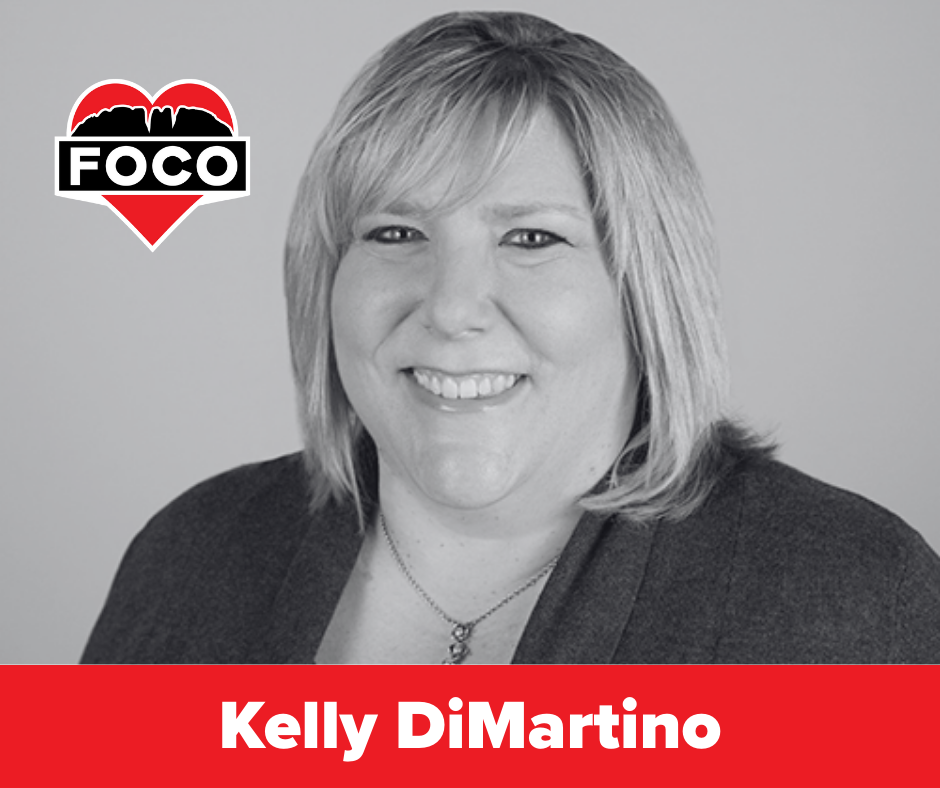

Kelly DiMartino is the City Manager for the City of Fort Collins. She began her career in communications and rose through multiple leadership positions over two decades in the city government. DiMartino is known for her collaborative leadership style and commitment to community engagement, transparency, and public service. A Nebraska native, she’s passionate about building a thriving Fort Collins where residents of all ages can live, work, and play.
Cities across the country are wrestling with how to grow sustainably while keeping their communities livable and vibrant. As regions expand and economic pressures mount, municipal leaders must navigate tough choices about development, affordability, and values. How can cities like Fort Collins balance tradition with transformation in an era of rapid change?
According to Kelly DiMartino, who serves as City Manager for the City of Fort Collins, it starts with listening, building trust, and values-based leadership. Kelly shares how her journey from communications to executive leadership has been marked by a commitment to service and a deep love for the city. With clarity and calm, she unpacks how her team manages complex challenges around housing, growth, and community engagement.In this episode of The Love FoCo Show, Jeff Faust welcomes Kelly DiMartino for a conversation about city leadership, managing growth in Fort Collins, and the power of saying yes to opportunities. Kelly shares her career path, insights on team empowerment, and what she’s most excited about in the city’s future. She also reflects on her role in stewarding community trust and planning for the next generation of residents.
Narrator: This is the Love FoCo Show.
Kelly DiMartino: We're focused in the city on rightsizing. I think some challenging conversations coming with the community, I'll say, about rightsizing sizing our services. Again, that those budget pressures real, and so we're gonna have to have honest conversations with the community about choices and trade offs. And I so appreciate that Fort Collins engages in those conversations.
Narrator: Welcome to the Love FoCo Show. Our podcast highlights the incredible people who make Fort Collins the place we're proud to call home. Each week, your host, Jeff Faust, sits down with local leaders, community champions, and change makers to share their stories, what they love about our city and how they're helping it thrive. So whether you're out on the trail, at a brewery, or walking through Old Town, thanks for tuning in.
Jeff Faust: Hey, everyone. Jeff Faust here, your host for the Love FoCo Show. So excited because today, the city manager, Kelly DiMartino, is sitting down with me to have a conversation about leadership, Fort Collins, our history, our future, and what makes this city such a great place to live. You're not gonna wanna miss this conversation. Kelly just has a wealth of experience.
She's seen so many different leadership positions and roles in our city, and it's crafted and created her into the person she is today. And again, so grateful for the time that she's sharing with us and sharing with you. Thanks for listening, and, I hope you enjoy this conversation with our city manager, the person who has so much power in Fort Collins, Kelly DeMartino.
Well, Kelly, thank you so much for giving me some of your time. I know you are probably one of the busiest people I've interviewed, with the amount of responsibilities that that come across your desk on a daily basis.
And so I'm grateful for the time that you're you're giving to me in the Love FoCo show. You're the city manager of Fort Collins, which is a huge undertaking, a huge job. I wanna get into some of the nitty and gritty and how you even prepare to get this job and and and what, you know, your daily life is like. We'll get to all of that in a moment, but I like to start every podcast the same way, just asking folks, what is your Fort Collins origin story? Like, where did you come from?
Where you know, did you did you grow up born and raised here? Did you transplant in like so many others I've met? But, yeah, just tell us a little bit about your origin story to Fort Collins.
Kelly DiMartino: Yeah. I'm happy to do that, and thanks for having me on the show. I'm looking forward to it. So I am actually a Nebraska girl. Okay.
Born and raised in Nebraska. Alright. I ended up in Fort Collins actually as a result of a job with the city. So I was working as the public information officer for the city of Grand Island, Nebraska.
Jeff Faust: Okay. Wait. Where is Grand like, in the dead center of?
Kelly DiMartino: Yeah, It's a little bit further east. Okay.
Jeff Faust: Cabela's a really big thing there.
Kelly DiMartino: Cabela's is a huge
Jeff Faust: Cabela is that their, like, headquarters and some
Kelly DiMartino: Their headquarters is actually in Sydney.
Jeff Faust: Okay. Okay.
Kelly DiMartino: Yes. So it's a little further east.
Jeff Faust: I just know I drive that interstate when I go visit my family in Iowa.
Kelly DiMartino: Oh, yeah.
Jeff Faust: And I always pass, yeah, a whole bunch of Cabela's stuff on IED.
Kelly DiMartino: Yes. Yes. So when you go past Cabela's and then you go to Kearny and you go under the big arch that's under the interstate, Grand Island's like another half an hour to the east.
Jeff Faust: Okay. Okay.
Kelly DiMartino: So wave when you go by. So that's where I was. I was in the Grand Island, and I had a coworker at the city there who brought in a, you know, flyer. It was back in the days when you still had paper. Think it's like paper newsletters.
And they brought in this fire for a job for the city of Fort Collins, Colorado. And she was originally from Golden, and she's like, hey. Fort Collins is a great little town. At that point, I was in a place where my husband at the time had gone back to school. We thought once, you know, and he was done, we probably all of our family was in that area, like, all I mean, all of my family, aunts and uncles, everyone.
Jeff Faust: It's the Midwestern way.
Kelly DiMartino: radius of one another. We thought, you know, we might wanna go with some more Yeah. Further.
Jeff Faust: So Yeah.
Kelly DiMartino: I was like, yeah. Let's and I will say at the time, I wasn't really looking for a new job, but I thought it'd just be good to have some interview experience.
Jeff Faust: Okay.
Kelly DiMartino: Because I've been in Grand Island for about four years.
Jeff Faust: Yep.
Kelly DiMartino: So applying for the job, it was a communications and public involvement coordinator here at the city and again had no interest in the job. Got selected for an interview, came out here And after the first day and round of interviews, I remember calling home distinctly and saying, well, now we have a problem.
Jeff Faust: Yeah. I'm not sure I want to go back home. I
Kelly DiMartino: I think I love this place and I want to be here.
Jeff Faust: There's a magnetism. Isn't there? Like, I mean, I talked to so many people. Like, I went on a vacation or I I went to this day or I did this little thing for a day or two or even I passed through four calls on my way to maybe Estes Park or whatever and I never wanted to leave.
Kelly DiMartino: Yeah. And it was great the interview. I will never forget the interviews were in April, and I got in on, like, a Wednesday night. The interview was Thursday morning, and it was one of those amazing spring storms that we get in Fort Collins where I came in, and it was, like, 70 degrees and sunny. And I woke up the next morning, and there was, like, 10 inches of snow.
So I remember after my interview walking down Linden Street and, you know, like walking by this, there was a little bookstore at the time and there was a bike chained to a one of the bike racks down there and it it was just like magical. I'm like, what is this place?
Jeff Faust: It really is. Then feel that way. And if you would have stayed for another forty eight hours, that snow would have been gone. Yes. Or twenty four hours.
And this is what's incredible. People don't always realize this. If you've grown up around here, snow comes and it melts and it's a beautiful sunny winter day again. That does not happen in Nebraska or where I grew up in Iowa. It snows in, let's say, October. It will stay there until April. Yeah. Or like, it would just you just keep packing snow on top of snow. The sun hides for five months straight. It's just kind of a depressing Turns a little bit.
Kelly DiMartino: Yeah. Yeah. Anyway, so it was it was lovely. I, in that moment, kind of fell in love with the place and somehow was able to get the position. I got the, got the offer, and so, I ended up saying, yep.
This is an opportunity that's too good to pass up. So moved Fort Collins in June it was 1997.
Jeff Faust: Okay.
Kelly DiMartino: And for people who have been around Fort Collins for a while, they will remember that in July 1997, we had a flood that came
Jeff Faust: Oh, really? This
Kelly DiMartino: Spring Creek flood. So I've been on the job about four weeks. And Wow. When I started here, I asked one of the things I asked in communications is, like, what's my role in an emergency? Because I was from Grand Island, which is like Tornado Alley.
Jeff Faust: Right.
Kelly DiMartino: So I knew all about emergency communications. And they basically said to me, like, we don't really have emergencies in Fort Collins.
Jeff Faust: Yeah. Okay. Yeah.
Kelly DiMartino: So four weeks later, I got this 5AM phone call saying, hey, there's been a flood. I actually thought maybe I was being punked because in my neighborhood, it was Yeah.
Jeff Faust: Swan. Yeah.
Kelly DiMartino: Exactly fine. Sadly, that was not the case. We've had five fatalities as
Jeff Faust: a rebound
Kelly DiMartino: of blood. And so, you know, immediately
Jeff Faust: And this was before my time.
Kelly DiMartino: Yeah.
Jeff Faust: Here, I I moved here, you know, about eight years ago or so. So was this one of those floods that was kind of in response to a previous fire? Like
Kelly DiMartino: No. So we had it was just, like, a cell a storm cell sort of parked right over Fort Collins along Spring Creek area. We got 14 inches of rain in a very short period.
Jeff Faust: Oh my goodness.
Kelly DiMartino: There was a train on the train tracks back by if you know where Dairy Queen is Mhmm. In College Avenue. There's a sort of elevated railroad track there. The water actually overtopped the train, fell to its side, and dumped a bunch of grain.
Jeff Faust: Wow.
Kelly DiMartino: It used to be a mobile home park down in in what that park area is, and that's where people lost their lives.
Jeff Faust: That is tragedy.
Kelly DiMartino: So it was really it was a huge tragedy for the community and in a very isolated part of the community. Right? Right. The university was pretty heavily impacted. And then, you know, again, a series of
Jeff Faust: What an introduction to your job too, especially with no crisis management like comms plan. Right. And you're out of that just it, like, speed and accelerates up your acclimation to your job and the community in a different kind of way.
Kelly DiMartino: Yeah, again, I hate to say there's a silver lining to that kind of tragedy. But for me, what it did is it introduced me to people in all parts of the city organization. I mean, would have worked here for years and not met our stormwater engineers.
Jeff Faust: Right.
Kelly DiMartino: Right? But it was quickly just became so familiar with so many people and parts of the city organization and the community. And I, in that moment, saw how, again, both the city organization and the community rallied to support people and came together. And what I quickly came to realize is that that sort of community support connection and responsiveness as an organization is not only reserved for emergencies, That's part of the ethic
Jeff Faust: Yep.
Kelly DiMartino: Of who we are and how we show up. And, you know, again, fell in love with
Jeff Faust: It's part of what makes this city so amazing. Yeah. It's not just like the yeah. They're just the the different offerings or amenities, you know, spirit of excellence and entrepreneurship. It's it's really this collective ownership in a way, to one another.
Yes. That makes the city, yeah, such a special place to live in. Boy, I can just imagine though how, yeah, sleepless nights, things that are keeping you up, figuring out how to communicate this well. And, and and in a time in '97 where comms takes a little bit longer. You know, now it's it's instant.
Yeah. I mean, if you wanna publish something, you can just publish it and get it out.
Kelly DiMartino: Yeah. One of my memories from that time, again, that so I I did have a Blackberry back then.
Jeff Faust: Okay. Yeah. That's why Yeah. You were cutting edge. You've got a Blackberry.
Kelly DiMartino: Pre texting, pre all those things. And so I got here, and I have I mean, I was working. Right? You're just in the middle of it. And later that afternoon, one of the administrative assistants from the city manager's office came down and said, look.
I really need you to take a five minute break and call your mother. She's called here three times. Because, like, the national news was reporting on this big flood
Jeff Faust: Yeah.
Kelly DiMartino: You know, I don't really lived here four weeks. She's like Yeah. Just seeing this news and thinking we're all flooded. And, I mean, again, my house was perfectly fine. Yeah.
My son was in daycare, and I was busily working.
Jeff Faust: Right.
Kelly DiMartino: It was a very different time in terms of communication and connectivity.
Jeff Faust: Yeah. Those blackberries, man. Those were an upgrade though from what I saw. So I I my first cell phone was a little Nokia. Oh.
Remember those? You could play snake on it. Yeah. And you had to hit, you know, the numbers four times to get to the right letter. And if you if you went too far, had to cycle all the way through again.
Yeah. It's it's, it's quite a bit different now. Yeah. Everybody listening who, like, had a Nokia or a BlackBerry, they didn't know exactly what we're talking about. All the all the younger folks have they have no idea of the plight that we went through.
No. I'm learning to text those days. Well, that's interesting. How long were you in that comms kind of department? And where what kind of journey did you take from that to city manager?
I would imagine there were a few steps along the way.
Kelly DiMartino: There were. So I really again, I thought four to five years is probably how long I would be here in Fort Collins and in the city organization and that is not the way it has worked out, obviously. I've just been very fortunate and blessed to be able to have a lot of different opportunities in the city. So I was in a variety of roles in the communications office, really going from being kind of a a one person communications shop to building more of a full scale communications and marketing team in city organization. So fourteen years of my career was dedicated to a variety of communication roles in the city of Fort Collins.
Jeff Faust: And you were correct. Yeah. So I just wanna make sure I'm hearing you right. So you started kind of in this role, but then the team started to grow, and you were really the the leader of that. I mean, so so you got to grow with the needs of the city, the demands of the city.
Was that your first exposure to, like, building and managing a team, or you had you done that before?
Kelly DiMartino: No. That was that was really where I got my experience was within the city organization. Yeah. I mean, I had had, you know, like an intern who worked for me or some smaller teams, but it was really in the city organization where I started to grow those leadership capabilities and and have those opportunities. So, again and some of it was just the communication needs changed in the community.
Right? Again, we were responding to what does our community need? What do they deserve and expect from us? Yep. So, again, able to really build just a great team there and and start to move more into some of the social media spaces, into more of the video, in addition to more of the traditional communication, a lot of events and more public engagement Yeah.
Of work. So that was really fun. I loved I loved that time of my career here in the city organization.
Jeff Faust: I have so many questions about that. I I I mean, like, honestly, because I lead a small team now and and that team is always growing and and then I I lead a team of a bunch of different volunteers. I I just I I wanna make sure I say it out loud so we can circle back around to this because I I'm very interested in how you've grown in your leadership capacity, what you've learned about, like, even delegating responsibilities and building those teams because now you lead way more people than just a comms team. You you're the city manager. So there's I mean, like, if anyone has a city role in one way or another, they kind of report to you.
So, let's circle back to that in a moment. But I I wanna hear the rest of your journey to the role that you have now.
Kelly DiMartino: Yeah. Well, yes. Well, I will gladly come back to that.
Jeff Faust: Okay.
Kelly DiMartino: So so from there, I moved into some other roles in the organization. One in the city manager's office in, like, an assistant to the city manager role. So, again, in
Jeff Faust: Assistant city manager or assistant to the manager? City manager. Yeah. All of our office friends out there. I know.
Kelly DiMartino: I know. So a lot of, like, special project work really. I was doing more special projects. And then so I tell people they're like, so what was your career journey or what planning did you do?
Honestly, like, I've said yes to opportunities that come up, and I try to meet needs before people necessarily saw them as a need. Like, I've had never been a person who had this mapped out path of
Jeff Faust: Yep.
Kelly DiMartino: I wanna do a, b, c. I what I wanna do is serve in a way that's helpful. Yeah. And so that led to a time in the organization where we needed some additional support in HR. So I was the acting HR director for a couple of years.
Really? I spent some time as the communication and technology services director. That was fun overseeing
Jeff Faust: Just wore a lot of hats in the city.
Kelly DiMartino: So I I wore a lot of hats. From that, moved into an assistant city manager role,
Jeff Faust: actual assistant Assistant. Yes.
Kelly DiMartino: And part of that responsibility was over all of our what we called information and employee services. So still a connection to that communications team, but now also IT, human resources, our operation services, which is our fleet and facility. Again, many of those support services that really do some of the behind the scenes work to equip the departments who are
Jeff Faust: It's really interesting because I I, you know, I remember just some of my early promotions where I at one point I was responsible just kind of for myself and and that was it. And then I remember being promoted and all of a sudden I've got a small team and that they all report to me. And then being promoted now I have some, like, managers who are over some folks and I've been on that journey with some people. And then, you know, was challenging for me to then see some of those folks that I used to have direct lines of communication with who are used to being able to just report right to me, open access to me. Now all of a sudden there's different layers of my time is being stretched in different kinds of ways.
That that was like a huge learning curve for me, and I found out a learning curve for the other people that were used to just being able to walk into my office whenever they needed to. Have you found that to be similar in your journey too?
Kelly DiMartino: Yeah. I have. And I'll I'll talk a little bit about my experience. So after so I'm gonna, like, do the last two
Jeff Faust: Oh, I know. I'm getting I'm getting sidetracked. I'm getting sidetracked.
Kelly DiMartino: So, I then moved into a deputy city manager role. And in each of these experiences, I had an opportunity to oversee different parts of the organization. So went from working with information and employee services to working with our community services team, which is parks and recreation and cultural services. Spent some time then in the deputy role with our utilities, services and our planning development and transportation. So, again, each of these kind of steps, I was working with different parts of the organization.
Then when our longtime city manager, Darin Atteberry, who I worked he was actually the person who hired me
Jeff Faust: Okay.
Kelly DiMartino: In fact Yeah. Yeah. Back in '97. When he left, city council appointed me into the interim role, and at that point went through a national search. And I didn't know if I was gonna apply for the position, to be honest.
I again, it wasn't like I'd had this career goal. But during my time in the interim role, I realized, like, I actually really I'm really enjoying this work. Yeah. And in the city management profession, I will say, it is historically, there have not been a lot of female leaders in the city management prospect profession. So there was part of it that was like, I almost feel like a sense of commitment.
I owe it to the profession in some ways to try. And
Jeff Faust: I bet this is a pretty coveted position. If you said there's a national search, I bet there were some incredible resumes, a large number of people who would have loved Yes. To move to Fort Collins and be the city manager in this beautiful place.
Kelly DiMartino: We are again, Fort Collins is a very desirable community. The organization has a really solid reputation. Again, we have a history of elected officials and council members who, like, care about the community, and that's a very attractive thing as a city manager to serve for councils like that. So it it was a highly competitive environment. And I I have this, like, learning moment during that because council, after going through the recruitment process, what they came back and said is, you know what?
We're gonna take a three month pause, and we're gonna have you continue in the interim role for three months. Yeah. And during that time, we want you to really act as though you are a sitting manager. Yeah.
Jeff Faust: Was this a three month interview? Is this what I
Kelly DiMartino: had this moment of like, wow. Like, I feel like that's what I've been doing for the months in Yeah. But their feedback was so valuable because it gave me pause, and this gets your question of, like, both how it was hard for others but hard for me too. Yeah. What I realized was like, I'm actually not.
What I'm doing is providing stability and continuing to function as though I were really in the deputy role. Yep. Right? Yeah. And the city manager role is a different role.
I report into a mayor and city council, and my job is to make sure that their vision for the community and their policy direction that we're operationalizing the organization in that way. And so it was, like, a little bit of a mental Aha for me of, I can't keep doing all the things that I've been doing, which I loved because I loved every part of my career.
Jeff Faust: Right.
Kelly DiMartino: I have to let go of some of those things in order to be able to really step into this
Jeff Faust: Yeah.
Kelly DiMartino: This role and be more available, not only for the organization, which is still a big part of my job, but more available for counsel and for the community.
Jeff Faust: Yep. So interesting because some of those relationships that get forged in those early parts of your career where there's a lot of direct reports and you're working problems and solving things together, you don't get to work in the same capacity, when you have to be moved up a level.
Kelly DiMartino: Right.
Jeff Faust: You just don't I mean, we're all limited in our energy. Our calendar space is limited. And, yeah, that that is a challenging time. I think those transition periods can be hard.
Kelly DiMartino: Yeah. And even things that, again, with a background in communication. Right? Like, and very relationship oriented. And so a lot of that, like, one on one communication, working with direct reports, it shifted to more of a, like, one on many sort of communication.
Yeah. And, again, you just, I think, have to be aware of, like, the role requires something different without losing the core of
Jeff Faust: Yeah.
Kelly DiMartino: Who you are and
Jeff Faust: Yeah. It's really interesting that you bring that up. I mean, like, reflecting on my own journey as I listen to you say that because I by trade, I'm a pastor. So they there's a certain expectation that pastors are going to be kind people and involved in in, you know, folks' lives that maybe go to their church. And I remember going from kind of like an associate pastor role where one of my main jobs is actually to, you know, pastor and shepherd the folks that call our particular church home to a lead pastor role where I find myself now.
Where now I'm actually leading a staff of pastors who are doing some of those things. I I remember feeling like a jerk for like a year. Like, I'm I just feel like a jerk to every like, they wanna meet with me. I genuinely want to meet with them. I can't do it anymore.
Right. And I just I had to, like, really wrestle with it. Is there something wrong with my heart? Is it like like, I don't love people anymore. No.
Of course, do. But I'm having to embrace some of these human limits that interact with, like, my new roles and responsibilities. I I just think that's a yeah. That's a fascinating little part of our journey as as you kind of, like, continue the career path.
Kelly DiMartino: Yeah. And I and I it's like a move from being more producing the work to now the role is empower others. It's really about empowering others and supporting. And instead of doing that to a team of individual performers, now you're doing that to, again, as I think through my whole career journey versus doing that to managers and department heads.
And now it's making sure that our other executives, right,
Jeff Faust: and provide So how did you go about doing that? Because that that is a really interesting thing that you you kinda and this brings me back to my question that I that I said, was gonna circle back around around delegation. How have you, like, grown that within yourself as a leader? Not just doing all the work myself, but entrusting it to others, giving it away, empowering others to do it. What I mean, maybe a specific question I could ask is, what's the line on how you empower and keep accountable?
And, how do you manage maybe the standards that you have and and even the methods in which someone would execute that? How do you manage kinda giving that away and and even protecting your own peace as you let go of some of those things?
Kelly DiMartino: Yeah. So I'm gonna say it's a work in progress for me.
Jeff Faust: Yeah.
Kelly DiMartino: And, you know, city organization, we have 2,400 employees. So it's a large scope of things to try and be attentive to. So at the core for me, it's about having it working with a team of people who I trust completely Yeah. And that we have, again, shared accountability and really strong communication. So I think, you know, the team that I that I work with, like, we've gotten into a good rhythm of people know, like, when do I need a heads up on something and when they're just gonna run with things.
And people have different leaders have different styles. Right? So my style is one that I I'd rather be a little bit in the mess of things early on and kind of think through, like, here are a few of the guiding principles I have or the things I wanna make sure we accomplish, and then have people go out
Jeff Faust: and Yep.
Kelly DiMartino: Run with it versus feeling like everything has to be buttoned up perfectly.
Jeff Faust: Right. Well, I I really like that phrase guiding principles. You know? Or I mean, it rhymes a little bit similar to, like, values. These are kind of the ways that the compass that we wanna do about these things.
I think getting really clear on those has gotta be super helpful.
Kelly DiMartino: Yeah. I talked about guardrails. Right? It's like, what are what are the guardrails? So that people know that, and then they can then they can
Jeff Faust: do And
Kelly DiMartino: there's there's complexity around that in the city organization. I mean, we have so much work that overlaps in our teams or different parts of the organization that are impacted. Again, the community, when you're serving the community, there are a lot of different competing, ideas and values and needs out there. And so how we navigate all of that and bring it together to use our resources in the best way. I feel like, you know, I'm doing a lot of translating and kinda making sure that everybody's staying aligned and and that's what we're gonna do.
Jeff Faust: I love that. Yeah. I just got a chance to sit down with the interim head football coach at CSU. Yeah. And I was asking him a similar question, and he said, I know the six most important hires that I want on the staff.
Yep. And he said and he listed them. This, this, this, this, this, and this. And if I can get those hires right
Kelly DiMartino: Yep.
Jeff Faust: It will help everything else on the team. And it's just so interesting. You know, I I think I've been, like, on this little learning journey as I've watched. So I I grew up playing football. I played football in college, so I've just always loved the sport.
Right now, you watch football, most of the head coaches aren't actually calling the place. Right. Which is fascinating to me. Yeah. Because, they're they're talking about culture.
They're they're talking you know, they're in it with their players, but they're not, like, saying you know, they're not even writing out like the route tree and you know, right run the route this particular kind of way. It's just so interesting to me. They've delegate delegated so much responsibility
Kelly DiMartino: Yeah.
Jeff Faust: To other people that actually greatly impacts their success and whether or not that football coach is gonna continue to have a job. And and so it's just a it's amazing. I think it's a it's a leadership class in a lot of ways. As you grow in leadership, how you can and not everybody can let go of those things and empower other people around them. That that this is skill set that you must have, like, partly innate and partly shaped over time.
It's probably a little bit of a little bit of both.
Kelly DiMartino: Yeah. It is a little bit of both for sure. And I do think somewhat I have I'm wired that way in some respects to not feel like I need to to be at the center of everything, although I'm realizing, like, oh, yeah. I have to
Jeff Faust: let them go sometime. Yeah. Yeah.
Kelly DiMartino: Sometimes. Right? Yeah. I have I've often said, like, one of my sort of my leadership superpower is take on chaos and give back calm, which is
Jeff Faust: Well, that would feel like a superpower. Yeah.
Kelly DiMartino: And and again, how that's gonna how that's gonna look and what the actual outcome of something is gonna be. Like, have to let go of some
Jeff Faust: of that.
Kelly DiMartino: Right? And
Jeff Faust: Which is as you've mentioned, it's a yeah. It's it's a and it's a process.
Kelly DiMartino: Yeah.
Jeff Faust: But were there times, like, in your childhood, like young Kelly, were were there times where you're like, actually, I am a leader? Like, was there a time where even as a as a young girl, were like, I guess if no one's gonna lead it, I'll I'm gonna do it or or were you always out in front just kind of leading the way?
Kelly DiMartino: I I do think I very much, again, step into spaces, and I won't say it's ever that I was like, oh, yeah. I'm gonna be a leader. And, absolutely, when I look back, it's like, yes. There's a class project, and it needs somebody to step up and organize and make sure things are getting done. That was me. Oh, the whatever. The Christmas, women's Christmas tea at church? Yeah. Like, sure.
Like, let's pull together I'll pull together a team and we'll cater the whole thing. Yeah. Like, I do just tend to I have all this property just tend to step into those spaces.
Jeff Faust: Now is that because I'm I'm talking to my kids about, like, the group projects right now. They're like, come home and like, I'm gonna get a bad grade because little Johnny's not doing his work. I'm like, well, look. If you wanna get a good grade sometimes your desire to get a good grade means you work harder than little Johnny over there. I mean, I don't know how else to tell you.
What was your filling those gaps more of like a, I feel like there's an easy solution to this problem or more like, well, no one else is gonna do it, then I guess I'll do it or where did you find yourself in it?
Kelly DiMartino: I mean, some of it was probably like I have I have a fairly high standard.
Jeff Faust: Yeah. Right? Yeah.
Kelly DiMartino: And so I like, if I'm part of a group and I I want it to go well Yeah. And so if I think it's at risk of not going well, I'm just gonna jump in and Yeah. Make sure it happened.
Jeff Faust: It's just so interesting. Are you like, what shapes us? You know? It's just so interesting in those little stories, those little things.
Kelly DiMartino: Old like Yeah. You know?
Jeff Faust: Yeah. I don't know. Super interesting. I wanna circle back to something you had said about city management roles because, you said there's not been a lot of stereotypically, not a lot of females that hold this space. And so now you're city manager of Fort Collins, a very desirable place to be a city manager to live, to to kind of orchestrate where we're headed, in the future.
Have you found any other female city managers? Like, I guess, do city managers talk to each other? Like, there a camaraderie that you find in other places or, yeah. What's that been like?
Kelly DiMartino: I Yeah. Absolutely. So city managers, I mean, we have networks both within the state and within the country. I mean, again, when you think about, it's a fairly small network. And so kind of across the country, you get to know one another.
Jeff Faust: Well, not every city can even probably have this kind of role.
Kelly DiMartino: Right. Right. There not every city is a council manager form of government. If it's a, like, a strong mayor form of government, they don't necessarily have a city manager. So I will say in the state of Colorado, we tend to have there are more, and I can't give you the exact percentage, but Sure.
There are actually number of city manager female city managers in the state of Colorado. So that's nice. I have kind of a existing network there. And it's not I mean, it's really about any. Right? Like, it's not about a gender specific gender. It's about that network of people who share the experience
Jeff Faust: Right.
Kelly DiMartino: Of leading in an organization where you have such a wide portfolio of services. Because, you know, leading a portfolio of police, very different than utilities, very different than streets, different than arts and culture, different than IT. Like Yeah. You know, it's almost like 39 different businesses. Yep.
So having leaders who have that same experience and then again in a setting where public demands and desires change on a regular basis and how you navigate those those interests and make sure that you are serving the community in the best way that, possible. And for me, it's really preserving trust in the community. Like, I think that's one of the things Fort Collins has done so well throughout history is really maintained and build strong trust with the community, and that's something as city employees that we take really, really seriously of being good stewards of that trust.
Jeff Faust: Yeah. That's that's yeah. I I agree with you all hardly. Finding those folks who have a shared experience where there's just like an intuitive knowledge of what you're going through, that you also don't have to lead, you know, that you can you can just be peers with.
Think that's that's that's really helpful for leaders of any any right for sure.
Kelly DiMartino: Yeah. And we're you know, again, as we all deal with, like and this is not just to local government, but it's we have shrinking resources, increasing demands, learning from others about, like, how they're approaching things. Yeah. It's just so helpful
Jeff Faust: to How do we execute the same level of excellence with less money? Right. Right. Like, this is probably not an uncommon conversation. I was like, how do we do more with less?
Yeah. Over and over and over again.
Kelly DiMartino: Yeah. And different communities value different things, but again, the approach of how you decide that. So I yeah. I really value those those peer networks.
Jeff Faust: Yeah. Oh, it's so that's so good. Well, I I find myself, like, just curious to ask you because I interviewed mayor Jenny Arndt a little while ago, and there's been an election. Gonna have a new mayor coming up, Emily, another another wonderful female leader in Fort Collins. Fort Collins has amazing female leaders all across the board.
It's it's pretty incredible to see how many powerful female leaders are in our midst. What does that look like for you then in in your day? How does that impact you? I mean, I I I guess I find myself curious and I imagine I'm not the only one that doesn't exactly know how that is gonna all work together. So what's that transition like for you and Yeah. How's that gonna impact you?
Kelly DiMartino: Yeah. So I have been in this role for four years now and, so I've been through one council transition where we had one new council member who came in. After this most recent November election, we are gonna have four new council members. So a new mayor, so it'll be my first time in this chair of going through a mayoral transition and then three new council members. And so, you know, when you think about four out of seven, that's gonna be a a pretty significant
Jeff Faust: That's a big shift. Yeah.
Kelly DiMartino: So I think, you know, again, on a kind of daily basis, Emily has been in the mayor pro tem role. And so, again, I've had the opportunity to work with her in that capacity for the last four years. She's so familiar with the work of governing and this role of city council. And so I I think that's gonna be a very smooth transition as she moves into that role. And then for the other council members, we're already, like, starting that onboarding process.
And, you know, the work doesn't change for me and that it really is the council who sets the policy direction for the city. They'll set their priorities in the January. We'll have a couple retreat days, and council will put together their priorities. And then it's really staff, myself and staff, that work to operationalize those as well as keep all of the day to day operations of the city going. So, you know, it'll be fun to get to know the new council members and and my job is
Jeff Faust: A retreat. So, like Yeah. You like will you leave Fort Collins? I mean, you don't even need to tell us where you're going, but, like, is it like a like an overnight, like, you're
Kelly DiMartino: We call it a retreat.
Jeff Faust: Trust falls and all kinds of everything.
Kelly DiMartino: Fair. We call it a retreat, but really what it means is like a Saturday where we're not in a city facility.
Jeff Faust: So Yes.
Kelly DiMartino: It'll be in Fort Collins will be at a the visit Fort Collins. I don't know if you've been in the visit Fort Collins space in Old Town. It's a beautiful Oh. Space that they Yeah. For different community.
I
Jeff Faust: have it. I'll have to look into it. Yeah. Check it out. Yeah.
Kelly DiMartino: Five, it's fantastic. So we'll be down we'll be down there, and those, you know, those meetings are still open to the public, but it's, like, not a everything we do is super, super transparent.
Jeff Faust: Right.
Kelly DiMartino: So, you know, typically, city council in all of their formal meetings, those are all televised. Yep. So, really, when I say retreat, it's, like, still open to the public. People can come, but it's not a formal sitting around the table televised meeting. It's a chance to be a little bit more informal and have a little bit more of that brainstorm and deeper dive conversation.
Jeff Faust: Yep. Super interesting. Let me let me ask you a little bit about your just kinda more particulars of of your role in because you had mentioned, you know, you are my word's not yours, so correct me where I'm wrong. Maybe like helping execute the vision of the the city council and and the mayor. So that means I mean, those aren't small things.
So we're talking budget stuff. We're talking tax, you know, increases, all kinds of different ballots and measures that come in. Then talking about a whole bunch of staff. You had mentioned how many employees the city have. Can you say that again?
I forgot the number. 2,400. So one of the larger employer employers, I I would imagine. University is probably really high on that list.
Yeah. We're the fourth largest. The hospital. Who who'd be
Kelly DiMartino: And the county.
Jeff Faust: And then the county. Then you guys. Yeah. So fourth largest that's a lot of how many people report to we're in your office right now. Like, this room must get filled with all kinds of different folks coming to to report to you or get information from you, get direction I mean
Kelly DiMartino: Yeah. Again, I mean, our structure in the city organization, so I have eight direct reports. I have a deputy city manager, Tyler Marr, fantastic. He oversees all of our utilities. So, water, wastewater, stormwater, light and power, and broadband, which is our newest Yeah.
Utility. So he oversees the full utility area as well as our sustainability services and our community services. So, again, it really is in some respects kind of a shared leadership model of he's overseeing a large portfolio of our city services. Then reporting directly into me, I have two assisted city managers, One who's focusing a lot on our city council and our city clerk's office, equity, really some of those engagement spaces in the city. Another assistant who oversees more of our internal that I mentioned earlier, like, employee information and employee services.
oversees that. And then planning, development, transportation reports directly into me, finance and HR report directly into me, and police services.
Jeff Faust: Yeah. So That is a lot of information that's coming across your desk. How are you able to, manage that level of decisions, those decision trees that even I mean, compartmentally, like, I mean, there's a lot of different spaces where you're helping make decisions because police services and utilities are two very different things.
Kelly DiMartino: Yeah. Well, so, again, I'm gonna I'm gonna say again, so much of the decision making is in the hands of those with very capable executives
Jeff Faust: Yeah.
Kelly DiMartino: Who are in department leaders. And, you know, again, there's a lot of decision making that's happening in all levels of the organization. What I'm really trying to do is in so ensure we have some good systems for checking in and accountability and driving organization priorities and council priorities. So, you know, part of the way I focus is, like, every other week, we have new employees who start, and I spend an hour with every new employee who comes into the organization. Really?
So that we're talking about the vision, mission, and values of the city because that is one of the primary things I do is drive culture in the organization. Yep. So focusing on that. We have something that's called quarterly service area reviews. So once a quarter, I'm basically meeting with every, service area level leadership team in the city, so the department heads, and we're focusing on operational issues, budget accountability, and metrics, performance metrics, talking about any, you know, maybe areas where we need to make sure we have alignment or they wanna test things.
So those are just really powerful conversations, and, again, that structure helps a lot.
Jeff Faust: Yeah. For sure. Alright. We're running out of time. So I I have, like, two questions left.
I I I wanna I wanna finish with some of the things that you're looking forward to coming, you know, towards our sea because one of one of your roles is to execute things today, but it's also to, like, plan for the future. And this city is growing. I I have so many questions about how, the city is gonna manage that growth and, like, what you guys are kind of how you're thinking about that. But before we get to that, I just even if it's just a quick answer, because I something you said thirty minutes ago, I think is so important for so many people, especially young people who are starting their careers to hear. You'd say you never, like, really sought out to have this role necessarily.
It's not like mean, maybe you did, but it doesn't sound like you went to college and took got a, you know, a bachelor's degree in city management. You were faithful to every role that you are in. As faithfulness to show up and do this really well and to do this really well. And next thing you know, you're getting moved around, you're getting more exposure, you're I mean, isn't necessarily a common word that I hear from people who are navigating career path and promotions. Is faithfulness as best as I can in the place that I'm in?
You wanna just tell us a little bit about that? Because I I that struck me as a unique answer, I I guess.
Kelly DiMartino: Yeah. I mean, I think for me, again, it was about doing the best that I could in whatever role I was in and then saying yes to opportunities that came up. And when there was a need that I saw needed to be met, not hesitating to raise my hand or step into that. Yeah. Right?
And and so I think you know? And and all of knowledge, there are people who come in with a very clear, like, this is where I wanna go, and they're working to get there. That that just wasn't my path. Right?
Jeff Faust: Yeah. My
Kelly DiMartino: path was one that was much more from a perspective of, I wanna know that I'm adding value. I wanna be fighting joy in my job. We we talked about one of the things I talked about with new employees is the it, the way, and the I, which is, like, do you know that the work is meaningful and that it's making a difference? Two, do you genuinely care about the people that you're working with, and do you know that they care about you? And then three is the eyes are your individual needs being met.
And if those three things happen, that could just be it could be the best job you've ever had. And I've had I think I need to actually count 11 or 12 different jobs in the city organization.
Jeff Faust: Wow.
Kelly DiMartino: And I feel like each one of them, can say, like, this is the best job I've ever right now, I'd say this is the best job I've ever had, but I've had other amazing
Jeff Faust: Well, think that's an incredible playbook, I I I genuinely do because I I'm talking with a lot of young people. I'm surrounded with a lot of people who are maybe at the beginnings of their career path. And, you know, everyone's a little bit different, but sometimes a lot of those conversations, they only are about I and they stay with I. Or gosh, you know, I mean, they don't say yes as much as they're they're guarding their life with no's. Mhmm.
And it may restrict some of, you know, the path that in the journey that they they get to live at 11 or 12 jobs that you've loved is a great career. It is. If we could all say we've had this many different roles and and I can, you know, genuinely say I've loved them all, That is a that's a pretty good life. You're living a good life in a great place,
Kelly DiMartino: Yeah.
Jeff Faust: At that point. So let me let me just close with this kind of and you can you can riff on this for five minutes or so or whatever, but it's a growing city. Growing cities don't you know, it's nothing that grows in a linear fashion anymore. There's complex changes and and there's complex struggles as well as a lot of blessings that come with growth as well. Even just driving to your office today, I I saw more buildings that are getting a little bit taller than that because there's not as much room to just so tell me a little bit about how you're managing that growth as the city manager, and and maybe a couple things you're really looking forward to with the city of Fort Collins.
Kelly DiMartino: Yeah. Happy to. So the the community is changing, quite a bit, and it's interesting when we talk about growth because I think people have a perception that the community is rapidly or still really growing, and we're actually in a period where we're not adding a lot of population right now.
Jeff Faust: It's just kinda migrating a little bit, though. Right?
Kelly DiMartino: Shifting a little bit. The region is growing a lot, and that is something that we are attentive to. And, you know, again, it has it has challenges that come with that and also some wonderful things as the region grows, but the community's aging somewhat. And so we're really talking more about how do we make sure that we keep this a vibrant community for all ages? Yeah.
You know, if if you were to talk to someone at the school district again and and heard some of the community conversations around just school potential school closures, and that's about the size of classrooms shrinking. And Right. And so how do we make sure that we're keeping this place for for families? Big part of that is housing.
Jeff Faust: It's affordability. Right? I mean, that's gotta be something that keep your role that keeps you up at night. Like, how can we tackle this?
Kelly DiMartino: It it does. And there's some things that local government can do, and we also have to recognize that we're not you know, we don't provide affordable housing.
Jeff Faust: Right.
Kelly DiMartino: So what are the conditions and the things that we're doing that influence that? I mean, some of it is if you think about parts of the community where housing might be super affordable and the quality of life is not nearly as good. Right? Yeah. So some of the things that we have done and invested in the community that make this such a fantastic place that everybody loves are then part of what becomes the challenge
Jeff Faust: Yeah.
Kelly DiMartino: Making it affordable. So I think, you know, a few conversations and things that I'm excited about as we think about growth of the community in terms of housing supply. Northeast Fort Collins is really where we're gonna see some opportunity there. And so how do we build that out that area out in a way that, again, fits our community vision around Yeah. More neighborhood centers, more housing choice, denser development so that things are bikeable, walkable.
So I'm I think a lot about that. The economic health of the community is something that we're talking more about. One of the ways that we're gonna have families living here is having good jobs for people. And not having to commute. So I think a greater intentionality around economic health than what we have had in maybe some recent years.
Jeff Faust: I've talked with Anne Hutchinson before and Leadership Fort Collins. I I was around the circle in this idea around, like, talent acquisition. How it can be challenging. I mean, now if you're at, like, upper management or, you know, a c suite type level, you'll be able to recruit those folks and they'll be able to afford to live here. It's not gonna be a problem.
But if you have to take an entry level position and you can't afford to live here, that becomes a challenge for the community. So this is kind of that space that that becomes challenging. Right? How can we create affordability for these entry levels so that they can live in the community where they work?
Kelly DiMartino: Yes. Absolutely. Live, work, play. That's what we talked about. We want this to be a community where people can afford to live, work, and play.
Again, I think some partnerships with the university there, we're very fortunate to have Colorado State University in our midst. And when we talk about economic opportunity, that's gonna be a place where we're gonna continue to focus more. I also wanna make sure we're not losing sight of the things that, again, have made Fort Collins such a desirable place, like our downtown is truly a gem. How do we preserve that? And, also, how do we foster, spaces like that on the South part of town.
Kelly DiMartino: Yep. And, again, in more of these neighborhood centers. The Urban Renewal Authority, which includes city council, but it's actually a separate entity, has been doing some really great things for North College. So, again, you've probably heard that the Albertsons property has been purchased. Yep.
A couple of former hotels up there where I think that we're gonna start to see real transformation of the vitality of the North College Corridor, and I'm very excited about where that's
Jeff Faust: That is exciting.
Kelly DiMartino: So, you know, we're focused in the city on rightsizing. I think some challenging conversations coming with the community, I'll say, about rightsizing sizing our services. Again, that those budget pressures are real, and so we're gonna have to have honest conversations with the community about choices and trade offs. And I so appreciate that Fort Collins engages in those conversations. Right?
The community is invested. They step up. They're willing to help, make some of those informed trade offs, and and then ultimately, you know, again, counsel will will help set those levels.
Jeff Faust: You know?
Kelly DiMartino: A lot of a lot of exciting work ahead.
Jeff Faust: Very exciting. And, man, this has just been such a great conversation. I mean, just even selfishly for me, just to sit under your leadership, to pick your brain a little bit about delegating and accountability, setting culture, things like that, and and even just hearing your journey, I think, is really, really sweet. I know a lot of people will love hearing that as well. I just want you to know from me and I think from many others, we're grateful for the work that you're doing.
We're thankful for your leadership. This is a big task. It's a big job with a lot of, like, implications to the decisions that you help guide, that you give away, of course, to to your incredible team. I'm thankful for you. And there are so many of us that are rooting you on because we love this city.
We truly love this city. It's been great for many many years and we wanna keep it that way for for decades to come. And so thank you for the way that you're managing the city and and continuing to provide such a wonderful place to work, live, and play. Thank you, Kelly.
Kelly DiMartino: Thank you so much. I love this place too. I love our community.
Jeff Faust: That's great.
Narrator: Thanks for listening to the Love FoCo Show. If today's conversation inspired you, share it with a friend who loves Fort Collins as much as you do. Don't forget to subscribe so you never miss an episode, and leave us a review. It helps more people discover us. To learn more about Love FoCo and find opportunities for loving our city one life at a time, visit lovefoco.com.
For now, keep loving Fort Collins well.

