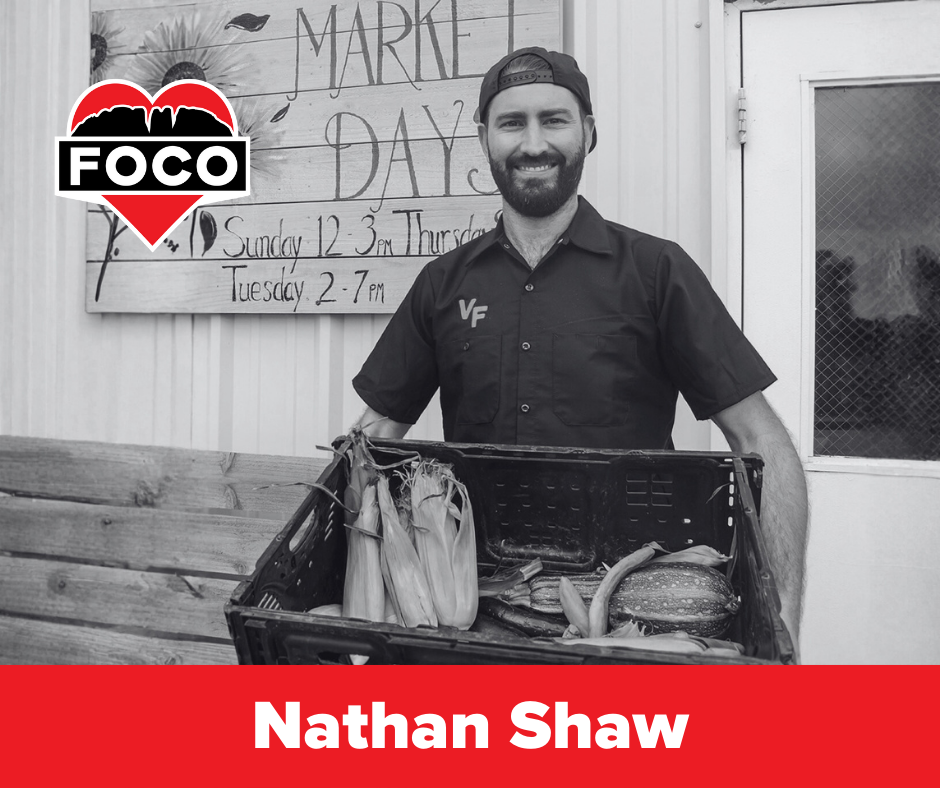
Nathan Shaw is the Executive Director of Vindeket Foods, a nonprofit organization dedicated to food rescue and distribution in Northern Colorado. Forty percent of all food the United States produces ends up in a landfill. The Vindeket team is rescuing this food before it reaches the trash and providing it to the community. Nathan’s hands-on leadership style reflects his deep belief in restoration, sustainability, and community-powered change.
Food waste in the U.S. is a growing problem, with millions of pounds of edible food discarded every year. Despite expiration dates and aesthetic imperfections, much of this food is still safe and nutritious. How can we rescue this food and get it into the hands of people who need it?
According to Nathan Shaw, who leads Vindeket Foods in Fort Collins, it starts with shifting our mindset and logistics. His nonprofit rescues food from grocery stores, restaurants, and distributors that would otherwise end up in landfills. With the help of volunteers and community support, they sort, store, and distribute rescued food through their no-cost market and to partner nonprofits.
In this episode of The Love FoCo Show, Jeff Faust welcomes Nathan Shaw for a conversation about food rescue, why Fort Collins is the perfect home for this mission, and how volunteers and donors alike can be part of a more sustainable, compassionate solution.
Narrator: This is the Love FoCo Show.
Nathan Shaw: We really wanna educate people to use your taste buds, use your sense of smell, use your mind, use your common sense, like think about it, you know, especially like canned foods, right? It's like, again, all these dates have nothing really to do with food safety. They're mainly freshness and quality.
Narrator: Welcome to the Love FoCo Show. Our podcast highlights the incredible people who make Fort Collins the place we're proud to call home. Each week, your host, Jeff Faust, sits down with local leaders, community champions, and change makers to share their stories, what they love about our city, and how they're helping it thrive. So whether you're out on the trail, at a brewery, or walking through Old Town, thanks for tuning in.
Jeff Faust: Have you ever wondered what happens to the thousands of pounds of food that don't get sold at your grocery stores and distribution centers? Today, we're sitting down with Nathan, the executive director of Vindeket Foods, and he is going to talk to us about his nonprofit that specializes in food rescue. I'm so excited for you to jump in on this conversation where Nathan and I get to talk about his origin story and how he's always been a man who wants to bring order to chaos and restore the things around him. But more importantly, how Vindeket Foods is helping families and businesses and our environment one step at a time. So grateful that you're tuning in for another episode.
My name is Jeff, your host for the Love FoCo Show, and I'm so excited to share this conversation with you today.
Well, Nathan, thank you so much for joining us on the Love FoCo Show. I've been looking forward to this conversation with you for a couple of weeks now because the work that you're doing in our city is incredible. I think it's a really interesting story. I think it's a story that's not often told.
And so I'm thankful that you're giving me some time so we can tell this story together. I want Fort Collins to learn what you're doing. And we'll get to everything that you're doing with in terms of Vindeket foods and leaving that in the way you're you're loving our city one life at a time. But I wanna start our conversation where I start every podcast. Just tell me a little bit about how you got to Fort Collins.
Like, if this was a comic book, like, what is your Fort Collins origin story? How'd you get here and and what was life before Fort Collins like for you?
Nathan Shaw: Love it. Love it. Well, thank you, Jeff, for having me. So originally from Texas, I got to visit Fort Collins because my cousin, shout out to Nicole, was I think she was maybe a junior or sophomore in college. I don't know.
I came to visit her. I think it was maybe my last year in college. And I was like, you kidding me? A town like this exists? Like this is ridiculous.
Think Yeah. Came on Tour de Fat. It came during September. It was a beautiful day.
Jeff Faust: Oh, so the odds were stacked in your Yeah.
Nathan Shaw: I was like, this is insane. Yeah. I definitely had in my mind that I would love to live here. Fast forward, you know, maybe a year later or something, I was out of college and looking for a job and ended up living with actually my her that same cousin's parents in Colorado Springs, and and and was able to to get up here to Colorado. Eventually made my way up to Fort Collins.
I landed a job up here in 2012, and, just have loved being in the city ever since. I love how involved the community is in the city. I love the, obviously, access to the outdoors, just all the things that that we all love about, Fort Collins, the local businesses, the nonprofits, the festivals, the the free things going on in our community.
Jeff Faust: I think that there's just so many people like you either rather like they visit once and they're like, wait, what?
Nathan Shaw: Yeah. I know.
Jeff Faust: What is that like? I've been I mean, didn't grow up in Texas, but I can like I grew up in Iowa. Yeah. So like and then Iowa to Kansas City to Fort Collins. And I remember thinking, like, where has this place been?
Nathan Shaw: Alright. It's incredible. You meet the same same thing.
Jeff Faust: So like, where did you grow up in Texas? I mean, Texas is basically its own country. Yeah. State is huge. Yeah.
Where were you at in Texas? And
Nathan Shaw: Yeah. So I grew up in Corpus Christi. I went to college at Texas A&M. So I was living in College Station. And when I think I came to visit here, and I I already, you know, was kind of in a college town.
I already rode my bike everywhere, all that kind of thing. But I when I came here, I was like, oh, wow. Okay. This is this is it, you know, kind of thing. And and little did I know that because of that same feeling of this community that, you know, fast forward a few years that a community led project such as what I'm doing now would really take off in a place like this, unlike potentially other places that I've lived, you know.
So that Yep. I think getting a look back, that's kind of a nice little coincidence, I think I'd say. Such receptive people to caring about their earth and comparing about, you know, their community and and wanting to to do the the next best thing, you know. Yeah. So
Jeff Faust: Okay. So Corpus Christi, you became an Aggie.
Nathan Shaw: Yeah. Yeah. Exactly.
Jeff Faust: Before you you came here, which is also like CSU is now also has Yeah. Background.
Nathan Shaw: So I
Jeff Faust: mean, that's that's interesting to me. Yeah. I am curious though, growing up did because Vindeket foods, again, we'll we'll get into, you know, food rescue, the way you're caring for earth and people through this wonderful nonprofit that you lead. But I I do find myself curious, like, you interested in this kind of stuff growing up or like I mean, you're leading a nonprofit now. Were you have you always been a leader?
Like, where
Nathan Shaw: You mean.
Jeff Faust: This stuff come from?
Nathan Shaw: I yeah. That's a great question. I probably need to think about that more often. But I I haven't always necessarily been a leader. I mean, maybe among some of my friends and things like that potentially.
But I've always been someone who cares a lot about things. I mean, heck, I was talking with one of my drivers yesterday, but we were talking about skating, right, skateboarding. And I remember, like, in seventh grade, I told my dad, I'm never gonna stop skateboarding. You know, I just I can get so passionate about certain things. Right?
And get really, like, feeling like this is the thing I need to do. So so, growing up, it was yeah. Whether it was like surfing or skateboarding or or finding old surfboards at pawn shops that were all banged up and fixing them and then reselling them or using them. You know, I've always had that mindset I think a lot when I look back about, you know, why why the food rescue and where that came from. I've always cared about the earth.
Jeff Faust: I mean, I hear restoration there.
Nathan Shaw: Yeah. Restoration.
Jeff Faust: I I hear restoration.
Nathan Shaw: Finding things on the side of I mean, in college, finding stuff, you know, on the side of the road and fixing stuff and I think a dresser I had found, like, repainted, you know, just always having that mindset of of what is kind of a cast about that's not normal. Right? Or things that I was really passionate about.
Jeff Faust: So I'm just like I just I'm I find myself really interested in that. So because there's so many different personalities and even temperaments, are you the kind of guy that loves like looking for the discarded item?
Nathan Shaw: Yeah.
Jeff Faust: And there's something about or is it more like the finished product or the journey in between? Like, what caught your eye at first?
Nathan Shaw: It it is really bringing I mean, the the here here's a perfect example. I was walking my dog five minutes ago. I found this in the street for you viewers out there. A little piece of metal with holes in it that I'm like, this will be a great thing to attach something to something like and you know, I mean, I don't wanna be like, you know, too much of it. I I I piddle and tinker too much sometimes.
But like this this is a useful piece of metal that I will use here at this building because I need to attach something that's coming apart. And so finding things that are like discarded and then really just trying to make things better, you know, finding, you know, whether it's it's me fixing our walk-in cooler or working on an alternator on a truck or, you know, whatever. It's it's seeing things that that could be better and and kind of creating order out of chaos, you know.
Jeff Faust: I love that. Creating order out of chaos. Also, if you're not paying attention, let me just draw out from something you just said. As a nonprofit leader, you're leading the organization, you're probably writing thank yous, you're fundraising, you're fixing alternators and stuff around.
I mean, you gotta be a jack of all trades to lead an organization like this.
Nathan Shaw: Really, yeah, bootstrapping it too and really building it from nothing and really, you know, really being careful with every single penny that someone donates here is is is so important to me when someone donates to us that that it is going to the most good. It's not wasted frivolously. Like, if it's something that I can do, I'm gonna try to do it. Obviously, I have to put boundaries on stuff if I'm gonna make something worse or if I'm gonna take fifteen hours to do something that I could pay someone, you know, a technician to do in two minutes, like or, you know, two hours, I have to be smart too. But I I try to do as much as I can, you know.
Jeff Faust: Yep. So. Alright. So that's I mean, thanks for sharing part of that with me. Out of curiosity, was your made did you major in nonprofit leadership?
No. What'd you what'd you study?
Nathan Shaw: Geology. So more along that earth science and natural resource love and, you know, growing up caring about the ocean or coming out to Colorado and caring about the mountains and obviously getting to do that during during school was super just formulative to where I'm at now. I mean, lot of people are like, what? A degree in geology? And I'm like, well, yeah, it is kinda different, but also I I care about the world.
I care about the earth. I care about resources. I don't wanna see, you know, food going in the landfill. Like, that's it all comes from that same shared love, you know, which I think is is cool to to be able to draw those comparisons now.
Jeff Faust: Well, like you said, I I love that even the line of work that you have, it fits Fort Collins.
Nathan Shaw: Yeah.
Jeff Faust: There are receptive hearts. There's a community that wants to surround you. Before we jump full into that, I just I I mean, I I do think you had touched on, but it's one of the things that makes this city amazing. Yeah. Is it it's a community driven city.
I mean, I mean, sounds redundant to say that Yep. But it really is. The reason why this city works is because so many people are engaged Right. And involved and like give a crap. But I really wanna make a difference.
Nathan Shaw: Well, it's funny you say give a crap. If you look at the back of all our trucks, I have this dumb little slogan that I feel like 50% of people get and 50% don't. But it's "Give a rip."
Jeff Faust: Yeah.
Nathan Shaw: You know? And so it's like it's like give a people are like, what is that mean? Like, well, give a crap. Yeah. Know?
So Yeah. That's that's
Jeff Faust: Is that like a Texan saying or is that because I feel like I've heard that in the
Nathan Shaw: past. Know.
Jeff Faust: Not so much of front range.
Nathan Shaw: I'm not really sure where it came from. I think my brother might have said it a couple times and I think maybe no, I was gonna say I've seen a couple t shirts that say like let's rip. Yeah. But what I you know.
Jeff Faust: Like if I ever see a Vindeket truck driving around and says give a crap then I'll know this conversation.
Nathan Shaw: Yeah. Yeah. Has made a difference. Yeah.
That'd be funny. That would be
Jeff Faust: would be funny. But what a great time to visit for one of your first times during Tour de Fat.
Nathan Shaw: I know.
Jeff Faust: I mean, that's like as much as people love this city, they also love their beer.
Nathan Shaw: Oh, yeah.
Jeff Faust: I mean, it like, I remember coming out for a job interview and seeing on my itinerary that we were gonna go to a brewery.
Nathan Shaw: Cool.
Jeff Faust: Now, like my day job is I'm a I'm a pastor by trade. And so I remember showing it to my wife. We're coming from the Bible Belt. Right. And I remember saying like, is this test?
Like what? You know? Yeah. And it was a test. Like if you're not comfortable having a beer, like you might not fit this culture Yeah.
Very well. Because it's just Right. The breweries are are everywhere which has been a a sweet
Nathan Shaw: surprise for It's and and a lot of them are really generous. They they support, you know, Odell specifically support almost all of our events.
Jeff Faust: Yeah. No. I'm looking at your your kind of awareness campaigns, your posters, your fundraisers. I mean, I see Odell's as a sponsor. Yeah.
And I mean, I don't know. I'd love to we should do a podcast with someone from Odell's, but I've heard they they have a very keen eye towards caring for the environment.
Nathan Shaw: They do.
Jeff Faust: Yeah. Water sourcing, things like that.
Nathan Shaw: Yep. River cleaning
Jeff Faust: And giving back to the community.
Nathan Shaw: Absolutely. It's
Jeff Faust: really sweet to see that.
Nathan Shaw: It's it's it's really neat to see a lot of local businesses in our community that care about what what people are doing and come alongside to support us. Several of them have donated, to help us get into this building, you know, that, our capital campaign from last year was was huge to be able to purchase our own buildings. So Yeah.
Jeff Faust: Yeah. Well, let's jump into that because, know, cheered a little bit on your origin story. I mean, tour to fat, all things that that make this city incredible. I I wanna jump in quickly to to what you do because, when I first heard about this, I was super intrigued. I mean, it just caught my attention.
It caught my heart, not just my mind. And I would love to give you just kind of some open space to talk about Vindeket foods because I really see this. I know it's a whole team, but I I just I'm having the conversation with you. This is part of how you're loving our city. It's part of how you're loving our city one life at a time and even beyond that.
So tell us, you know, what is Vindeket foods? What are you guys up to food rescue? Like, take me on that journey on maybe how that began and and what you're doing day to day here.
Nathan Shaw: Absolutely. So I'll give a quick brief overview. So food rescue kind of refers to the term of, you know, basically keeping food from ending up in the landfill. So it it can take a lot of different forms. But what we do here is we work with, you know, grocery stores, restaurants, farms, anywhere that has food, shipping companies, shippers, truckers, and we are able to accept it or we'll go pick it up.
And this is all food that's still good. Still able to go to people and and, you know, maybe pass its expiration. It may be damaged. It may be overstocked. Thousands of reasons why we can get it.
But then we, you know, basically go through it, make sure it's all good to go, store it properly, safe temperatures, all that, and then give it out to our community at no cost at our market three days a week. Now we also work with about 30 ish different nonprofits that we also give food to as well. So that's kind of that's kind of what we do slash food rescue. But our origin story is we actually were were teamed up with Surf six point eight back in 2017. They gave me the opportunity nonprofit in Northern Colorado.
Yep. Gave us the opportunity to kinda launch this idea under them, and we were there for about two and a half years before we we gained kind of enough mass to be basically become our own nonprofit, then moved into our own building in early twenty twenty, and we're able to just keep growing this thing. So we started, you know, I think, with, you know, maybe three stores that we picked up with. And, I mean, honestly, I I frankly don't even know how many we pick up with now because we have so many regular scheduled pickups. We have so many on calls.
We have people who hit us at once. We have people who hit us up 500 times. We've had people hit us up three times. We have a lot of places like, you know, your your regular grocery stores, Costco, Trader Joe's, Whole Foods that we're at weekly. But we also, you know, clear down to sometimes pick up things in Denver, Longmont, Rogan, Out East, Colorado, Cheyenne, and, you know, we're we're kinda all over the place if there's if there's food that needs to be rescued and that would otherwise be trashed, we're we're gonna wanna
Jeff Faust: get it. Yeah. So tell me a little bit about that because you had mentioned a couple different things whether it's expiration date
Nathan Shaw: Yeah.
Jeff Faust: And if you're in the food world, you know that Yep. You know, not every expiration date is actually a termination date. Right. There there's some wiggle room there. So but I heard you say that.
I heard you hear say like overstock. Did you give me like a little bit more of a rundown Yeah. On why grocery foods are they giving you the food or are you paying for it at lower price or are they don't are they donating it to you? Yeah. So they get a little bit of a write off.
Nathan Shaw: Yeah. They're donating it. It's a it's a tax write off. Yep. I mean, some donors don't even care to get that and some of them really do.
Right? There's lots of reasons why people donate. But, yeah, it it it again can be like thousands of reasons why it's somebody there's a packaging error. It's still safe. Right?
There's a marketing error. There's a sale that's not going on anymore. The day after things October, we got lots of calls to pick up pumpkins. Well, pumpkins are edible and also pumpkins are still like a fall thing. So people are still gonna want them on their front porch.
Right? All the way down to like yogurt that's just passed by expiration day or it's Best Buy or, you know, meats that are passed or sell by or freeze by that are already frozen or we freeze that are still safe down to prepared foods that, you know, reach the end of their freshness guarantee. But again, a lot of these dates are just suggestions. You know? I mean, you may some people there's usually two types of people.
There's somebody who who looks at the date and says, oh, it's bad. I'm tossing it. And then there's another person who is like, wait, is that yesterday the milk was fine, but today it's not?
Jeff Faust: Yeah. How did it just happen
Nathan Shaw: over the Should I just should I maybe pour it in a glass and smell and taste it before I just assume? Or this box of lettuce is yesterday it was guaranteed or freshest buy or best buy, but today it's not and still looks fine.
Jeff Faust: I mean
Nathan Shaw: Yeah. We really wanna educate people to use your your taste buds, use your sense of smell, use your mind, use your common sense, like think about it, You know, especially like canned foods. Right? It's like, again, all these dates have nothing really to do with food safety. They're mainly freshness and quality.
It's basically the manufacturer wants
Jeff Faust: to Then it gets into people's heads too. Like, there's a psychological game there. Right? So, yeah, like you said, there's a whole, you know, I don't know, half the population is just gonna walk by that. Yeah.
Now, Costco or King Supers, they won't they won't put it out on the shelf. They won't Yeah.
Nathan Shaw: Sell it. I mean, there's some nice markdowns going on at a lot of stores now. But yeah, we we really are our main goal is to educate folks on like, hey, this food is still good. Like,
Jeff Faust: use Yeah.
Nathan Shaw: Use your your your senses to figure this out for yourself. And just because the the Laura bar, the Bobo's bar, the, you know, the NutriGain, NutriValley, you know, bar is past its best buy. It doesn't mean that it's bad. Yeah. It may start taste a little like plastic or cardboard, but it's not gonna make you sick.
Right? Right. It's just past its freshness up just how the manufacturer want it to be.
Jeff Faust: And like you said, if it's mislabeled.
Nathan Shaw: That too. We've got
Jeff Faust: tons of Super interesting. I mean, reminds me of like a clothing store that has like a factory outlet. Yep. Irregular. Yeah.
Concept. Yeah. So like Yeah. That actually might be a pair of, you know, large Yeah. Whatever.
Pair of large stuff pants. But it's actually an extra large. Someone mislabeled it, now we can't sell it
Nathan Shaw: at. Exactly.
Jeff Faust: Similar idea.
Nathan Shaw: Yep. There's tons of quality control kind of issues from stores. Corporate stores have certain brand standards. I mean, I I think I've heard of of of lawsuits happening when someone said, oh, this product was supposed to be this. It was described as this, but it's not.
And there's a loophole there for a lawsuit. And so a manufacturer, a major retailer might not want to take that risk. So they'd rather just donate it to us knowing that it's still fine and suitable for consumption. Know, that's basically our our our IRS and food safety guidelines is we're able to offer a tax, you know, deductible receipt if someone's donating food that's fit and suitable for consumption with no negligence or malintent involved. And so it's it's it's covered.
And so there hasn't been major lawsuits against people donating in good faith, right, to to nonprofits. That's a that's a bill part of the Bill Emerson Good Samaritan Act is a federal act that allows this donation to work, which is really really great. So
Jeff Faust: And and without you, what happened? I mean, food just gets tossed? I mean, it's just like dumpsters or fit like what
Nathan Shaw: mean, we started because, you know, I was seeing a lot of food being tossed. There's another fun story with that for maybe for another day, but Okay. But
Jeff Faust: It sounds like a story I would want to have.
Nathan Shaw: Yeah. Yeah. Yeah. But, you know, the the local food banks also do a lot of food rescue as well. So a lot of stores do donate to food banks, and we definitely don't wanna get in the way of that.
But there's enough food being tossed all over this country that we need multiple types of organizations doing this type
Jeff Faust: of Do you have like do you have like an idea off the top? I mean, if I just quiz I'm not trying to quiz you, but do you have like any idea? You say a large amount of food's being thrown away.
Nathan Shaw: Oh, yeah. I
Jeff Faust: mean Maybe what close? Yeah.
Nathan Shaw: I mean, ballpark is? They're constantly doing different, you know, data sets and trying to figure this out. But back in 2012, was that big number. The 40% of all food produced in The United States was wasted. So I think we've we've done a lot better than that, but I definitely don't think it's better than 30.
I think at the same time, also Europe had reported about 30% of all food produced was wasted. So they're a little ahead of us, but still a significant amount. And most people know that. If you have an apple tree in your backyard between the bugs, the squirrels, the the weird deformed apples that are growing or the the ones that fall on the ground and bruised. Like, you know that your apple tree I mean, what?
I mean, what do you think? 50% perfect? Maybe 40% perfect fruit on there? Yeah. Luckily, we have a lot of companies who like, know, make juice and applesauce and things like that.
But still, most people know when they grow stuff, like not every tomato you're gonna grow is gonna be perfect. Right? Some of them may have blemishes or have two or have a, you know, a little spot where they got bit or whatever. So, you know, we have these standards as consumers of perfection. Right?
And that's another thing that we
Jeff Faust: It's an American standard.
Nathan Shaw: I think it's an American standard. We really want we wanna we wanna fight against that as well. Not only is, like, is food still still good and does it last longer than we think, but also that we don't need perfection. Like, that's a that's kind of a sickness across the the humankind is that we want things to we wanna present this and we wanna look good and we wanna have this perfection for us. And so that's the stores aren't the problem.
I always like to let people know that the companies aren't the problem. It's we want these things. Consumer. We spend our hard earned money and there's one water bottle left on the shelf. We're like, that's weird or we don't wanna buy a bruised apple right now.
If it's discounted, maybe we would consider it because we're making a pie. But, most folks, you know, you don't wanna spend your hard earned money on kind of goofy things. You know? And so we realized that, you know, it does take time, and it does take a sacrifice to to, you know, sort through pears that are kind of a little beat up or to make a sauce with them or to whatever, know, things aren't gonna be perfect. But that's that's the magic.
Right? It's taking that extra step to to redeem something that would otherwise be trash because of, you know, these standards we put on stuff. And seeing just here, you know, the millions of pounds of food that we've rescued just at one smaller nonprofit here in Colorado. We we meet with, you know, several other nonprofits across the nation that are doing similar food rescue type work and food banks. And I mean, there's so much happening in this space of like the kind of the salvage food space.
It's pretty remarkable to see even just at our nonprofit alone. Like, I mean, last year, we hit just under 2,000,000. This year, we're gonna probably just pass 2,000,000 pounds. Yeah. In a year.
Yeah. That's amazing. It's wild. Yeah. Especially when, like, one of these box trucks brings in anywhere from 200 pounds to maybe 10,000 pounds max.
Like, I mean, we have trucks going in and out every day pulling and stuff, you know, and and we drop off. Sheer amount I know.
Jeff Faust: Of food being moved in our county alone.
Nathan Shaw: It's wild.
Jeff Faust: I mean, that's incredible. It's wild.
Nathan Shaw: Yeah. Yeah. Where a trucker calls us off I 25, hey, got 40,000 pounds of onions. Guys want it? And we're like, yeah.
Come on in. That happens. Yep. So
Jeff Faust: That is a lot of onions.
Nathan Shaw: Yep. And we've had we've had all sorts of crazy stuff from truckload of paper towels, truckload of tomatoes, onions. We had a bunch of body armor drinks not that long ago. Like Yeah. Just the craziest
Jeff Faust: things. Just like an ordering fiasco.
Nathan Shaw: Order ordering breaks down. Yeah. Reefers out. Like what I mean, just thousands of reasons why. It's always something different.
You know, we gotta How
Jeff Faust: do you get on their radar? Like, how how did you become known to Yeah.
Nathan Shaw: I spent a good amount of time my time, like, networking with with companies and getting getting our name out there, but people Google us or people hear about us or you know a local bagel shop calls us when they, you know, start up a business here.
Jeff Faust: So someone's listening right now.
Nathan Shaw: Hopefully so. I I have food actually.
Jeff Faust: I run a bakery or I do this or I know someone who knows someone.
Nathan Shaw: Maybe you own a fleet
Jeff Faust: of trucks. Yeah.
Nathan Shaw: Trucks. Yeah.
Jeff Faust: Mean, that would be helpful.
Nathan Shaw: You're you're moving you're you're moving food every day all up and down the major interstates and now you know a place that you can drop it off. I mean, it cost truckers thousands of dollars to discard product that maybe just tempt one degree off or something like that, you know, that got rejected. Right? Or or may we had one came down from a, I think, a Walmart DC in Cheyenne that there was a couple of black specks on a couple of the peppers out of six pallets of peppers. I mean, it was probably, you know, 8,000 pounds or 10,000 pounds of peppers that just got rejected just because there was a couple black spots.
Yeah. We're They're
Jeff Faust: a feared of like contagion.
Nathan Shaw: Well, we're like, we'll just pick out the bad peppers.
Jeff Faust: Throw those ones away?
Nathan Shaw: Throw them. Well, we actually compost. So we actually work with a lot of local farmers to either compost or get our scraps to their animals. And so we're one step further from keeping it from the landfill as well. That's our last resort.
If it's like, yeah, like you said, a contagion or an actual issue that we know is a recalled product or it had a foodborne illness like E. Coli or something attached to it, obviously, we're gonna we're gonna toss that. Some damaged cans, you know, that could could potentially develop botulism, things like that we have to be careful of. So we do have standards. You know, we we're not just like, oh, we'll take it.
You know, we we definitely observe it. You know, things that are cut open that were open to outside contaminants or environmental issues, like, you know, pests or rodents or or or dust or, you know, we're we're we're still we're pretty careful. We're we're still, yeah, feeding the you know, serving the community. So Yeah. Yeah.
We wanna do that.
Jeff Faust: I think that's incredible. I I was just talking with someone. We we do I do a fair amount of work with another humanitarian called Convoy of Hobes. We were talking about some of the the work that that we're doing nationally and internationally. And one of their, you know, leaders or whatever dropped this quote that's just kind of stuck with me is that, you know, in in The United States, our garbage disposals eat better than a third of the world.
Nathan Shaw: So bad. Yeah.
Jeff Faust: And I that really stuck with because it's just a picture. Right? I mean, it's easy to flip that switch and suck
Nathan Shaw: some stuff down there and See it gone. I was like, wow.
Jeff Faust: Like, I I actually I'm part of that.
Nathan Shaw: Yeah.
Jeff Faust: You know, I'm part of that problem.
Nathan Shaw: So Easy. Yeah.
Jeff Faust: Yeah. Just a fascinating thing that stuck with me. And then, you know, I I discover you guys. And in preparation for me spending time with you, I wanted to come and get a first hand look at like Vindeket Foods and what is this like. And so I came and I parked out in your parking lot.
I waited in line right outside and I walked through your your whole warehouse. I mean, I don't know if that's what you called warehouse or
Nathan Shaw: Market.
Jeff Faust: Market. Yeah. Mean Walking through the market and I saw one incredible hospitality. Like, you've obviously done a great job training your people to be a hospitable environment. I stood in line.
This is what the thing that was like really fascinating to me. There was every single type of person you can imagine in Fort Collins in that line. Yeah. I mean, there were singles, there were families, there were senior citizens, there were young adults, there were children with their parents, there were white, black, and brown. Mhmm.
Every kind of socioeconomic background. Yep. I mean, I saw nice cars and I saw, you know, cars that were struggling. Yeah. Everything in between waiting in line.
And then I walked through your market. I saw all kinds of different foods. And then there was at one point where I could kinda sneak my way or sneak my eyes around the corner in your warehouse. And I saw probably half a dozen people sorting food.
Nathan Shaw: Yes.
Jeff Faust: And just getting ready to restock shelves. So tell me a little bit about like all the working pieces that go into some because it there's an incredible team. Yep. And because of that team, you're serving a wide range of people at our center.
Nathan Shaw: You hit the nail on the head. It's so good to hear that because this is not about needing. It's not it's it's about people coming together to keep food on the landfill. So we we are open to anyone. Anyone is welcome to come through our doors, and we wanna serve everyone in the best way possible.
And and also rely on people to help us do this. Right? So it's I it's me. I have one other full time staff and one other part time staff, and then I have about 220 volunteers that kick butt every day of the week. Seven days a week people are out there driving trucks, sorting food, compost and stuff, putting stuff on our shelves, operating the market three days a week.
And so, yeah, when we get six gay lords of, six pallets of squash and we need to sort through a few bad ones, we can get it done. And it's really empowering to see a group come around here, work hard, doing good, keeping food out of the landfill, and serving their neighbor and and doing that without question. You know, it's it's really powerful to see people care about doing that.
Jeff Faust: I I love it so much and and man, I you've given me a lot of time already. I would love just like two or three more minutes because I have a specific question I wanna talk about with when it comes to funding. Yeah. But I I I do just wanna reiterate what I am experiencing today just being here with you but also what I experienced you know a few weeks ago when I came through. What I what I really hear is this is you've got good stewardship going on
Nathan Shaw: Yeah.
Jeff Faust: In this nonprofit. I mean, you've got a few employees, but you've got a host of volunteers.
Nathan Shaw: Yep.
Jeff Faust: So that keeps operating budgets down. Yep. You've got people driving all over the place, bringing food to you. So I'm hearing all kinds of ways that they people can plugged in with you. Yep.
If you know where food is at, they can reach out to you. We'll we'll put contact information in our show notes for sure. If they know how to drive a truck and they know how to to load and unload or sort or if they know people who just wanna be part of this food rescue either purchasing or volunteering, they can be part of Indicate Foods too. But I also know you run a non profit. Yep.
Which doesn't mean there's no money involved. Right. It just means you're not taking a profit off of that. So Yep. Tell me a little bit about your financial needs.
You know, hopes and dreams that you have for your, you know, meeting your annual budget. Mhmm. Depending on when people listen to this, it might be towards the end of the year or they might be looking at a a year of generosity ahead of them that they can get involved What do you have a need for and how can people get involved with you financially?
Nathan Shaw: It's great great question. Thanks for asking, Jeff. So we obviously, yeah, have bills to pay. So we we we just gotten to this new facility. Last year, we did a capital campaign to to purchase this building, and now we're in it, is great.
We're doing a second phase of the capital campaign currently in this year to build it out. So we've been doing a lot of code updates. We've been doing a lot of lighting, electrical, concrete, plumbing. We're we have plans to expand some of our walk in cooler, refrigeration capacity, and freezers. We're looking at really just making this place super functional.
We just got a cardboard baler installed. Just really trying to to do the best we can with with the with the building that we've been basically working so hard to to to get. And with that, though, we still have our normal operating stuff. So, you know, we spend, you know, easily 35, sometimes $40,000 a month just on making this thing happen. So that's the truck, that's staffing, that's insurance, that's building maintenance, that's utilities.
I mean, there's a lot of inputs to keeping food cold and keeping food at the right storage temperatures and environments and, obviously, you know, paying all the fuel that goes into driving the structure on. So a lot of ways that people can get involved just in a in a monthly donor. So I encourage people to go to our website, check out our donate page.
Jeff Faust: You guys have a great website
Nathan Shaw: by the way. Check out our
Jeff Faust: Like, it's really well done. There's good videos, there's good visuals, good storytelling.
Nathan Shaw: Yep. We have our capital and campaign site on there as well, talking about divisions for the future of this building. We have a piece of land out front that I'd I'd love to buy to so we can have a place to feature expand or maybe expand our parking lot. Right? As as you probably experience parking, it even gets tighter on here sometimes.
So yeah. So it's it's it's a lot of fun.
Jeff Faust: Big donors and tons of small Yeah. Sustaining monthly donors. I mean
Nathan Shaw: And and that's something that's unique to our nonprofit is at the market. You can actually donate if you want to to support what we're doing. You don't have to, so it is technically a no cost market is what we call it. Yeah. But what's really cool is a lot of those small donations start to add up, and that's a lot of of how we're you know, it only is about 40% of our of our revenue.
We still rely on a lot of private donors, corporate donors, things like that. But still a significant amount of our revenue by design is helping us pay our bills.
Jeff Faust: Well, if you're listening to this and you've ever been around nonprofits, I I hope you're hearing that because really as a nonprofit leader myself, revenue streams from multiple different places is the ticket. Yeah. So you've got the ability for people to not only receive food and give what they can give. Yep. So that's a revenue stream.
You've got grants, you've got foundations, you've got private corporate donors. I mean, that's a lot of different revenue stream. I I'm sure you would love for those to increase. Yeah. But that's a really good starting place to be.
Yep. Making sure that there's multiple kind of spots where that's all coming. Yeah. Coming in. I I know that will help you guys a ton and now I'm just yeah.
Mike, as one nonprofit leader to another, I'm super encouraged to hear that.
Nathan Shaw: Thank you. I need you guys have
Jeff Faust: thought through some of that stuff and it means that, you know, a gift today isn't gonna be being wasted. No. It's gonna help you guys propel into the future for for many many many years. Yep. Well, Nathan, listen, I I appreciate your time.
We can wrap up here. I'd love to have another conversation with you. Maybe maybe as you guys expand, we'll come back and have another conversation. We'll make sure to put all the notes, everything that you had said in the show notes for people to check out. I'm just so encouraged.
I mean, we say a lot of love FoCo that we want to tell stories of people who are loving our city one life at a time. And in just the last thirty five minutes with you, it's not just lives. I mean, you are loving people, you know, loving our city one life at a time. But you're also loving our environment. You're you're loving our businesses that that maybe don't know what to do.
Truck drivers that would have to spend money and fuel to to dump their food somewhere else can now, you know, give it to you. So there's a multifaceted impact that you're making in our community. And, man, I'm I'm grateful to learn more.
Nathan Shaw: Thank you.
Jeff Faust: And I'm grateful to share your story with so many others.
Nathan Shaw: Thanks so much. Jeff. This is this is great.
Narrator: Thanks for listening to the Love FoCo Show. If today's conversation inspired you, share it with a friend who loves Fort Collins as much as you do. Don't forget to subscribe so you never miss an episode, and leave us a review. It helps more people discover us.
To learn more about Love FoCo and find opportunities for loving our city one life at a time, visit lovefoco.com. For now, keep loving Fort Collins well.

